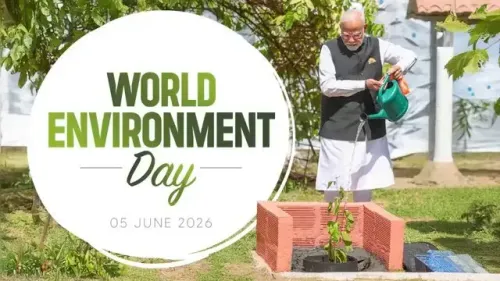
PM Modi Marks World Environment Day, Cites India's Conservation Gains

Synopsis
Prime Minister Narendra Modi marked World Environment Day on 5 June 2026 by crediting a decade of government policy for gains in India's green cover and animal populations, while reaffirming commitment to sustainable growth and India's multilateral climate pledges.
Key Takeaways
Prime Minister Narendra Modi posted World Environment Day greetings on 5 June 2026 , highlighting environmental progress under his government.
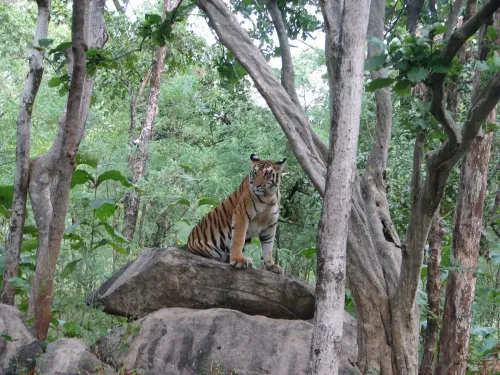
India's tiger population rose from 1,411 in 2006 to 3,167 by 2022 under the expanded Project Tiger programme.
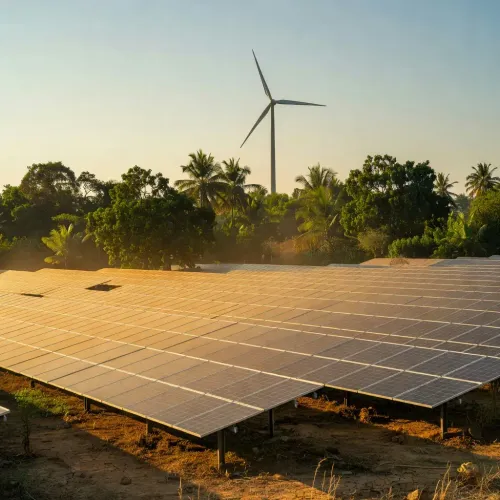
India committed to 50% non-fossil fuel electricity by 2030 and a net-zero target by 2070 under its updated climate pledges.
The International Solar Alliance , co-launched by India in 2015 , now counts more than 120 member countries .
The next India State of Forest Report and All-India Tiger Estimation , both due in 2026 , will provide updated official data on conservation outcomes.
Modi credited 'collective efforts, policies, belief in science and innovation' as drivers of environmental improvement.
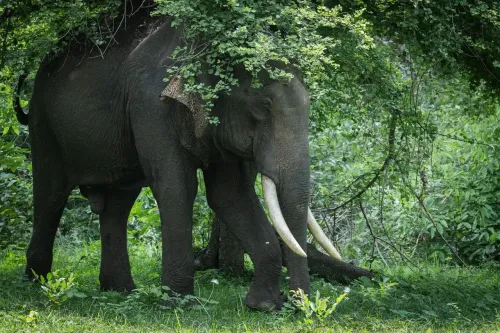
Prime Minister Narendra Modi on Friday, 5 June 2026 extended greetings on World Environment Day, highlighting what he described as a decade of government-led environmental progress, including expansion of green cover and recovery in several animal populations.
Context
World Environment Day, observed annually on 5 June, is the United Nations' principal platform for raising global awareness on environmental action. This year's observance comes as India awaits the release of the next India State of Forest Report and the All-India Tiger Estimation, both scheduled for 2026, which will provide the most current official data on green cover and wildlife numbers.
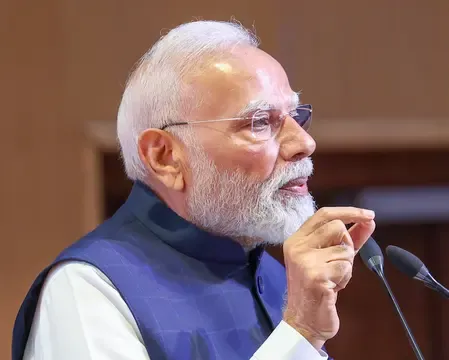
In his post, Modi wrote: 'I would like to applaud all those passionate about environmental conservation. This is a day to reaffirm our commitment to protecting our environment and furthering growth that is sustainable.'
Policy Backdrop
Since taking office in 2014, the Modi government has pursued a dual track of infrastructure expansion and targeted environmental programmes. India's Project Tiger — originally launched in 1973 — recorded a rise in tiger numbers from 1,411 in 2006 to 3,167 by 2022, according to official census data. The government has pointed to this as a flagship conservation success.
On climate, India ratified the Paris Agreement in 2016 and updated its Nationally Determined Contributions in 2022, committing to generating 50 per cent of electricity from non-fossil fuel sources by 2030. At COP26 in Glasgow in 2021, Modi announced a net-zero emissions target for India by 2070. The International Solar Alliance, co-launched by India in 2015, has grown to more than 120 member countries.
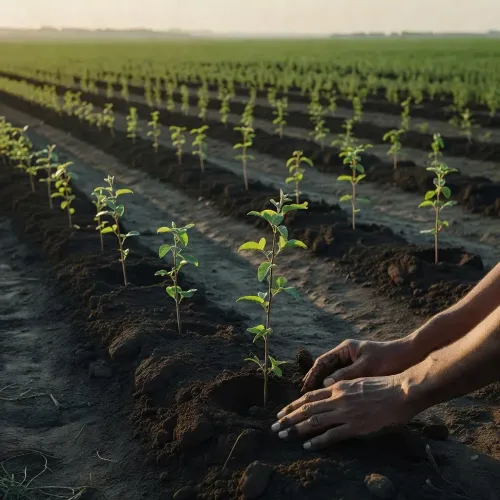
The Cheetah Reintroduction Project, commenced in 2022 after 70 years of local extinction, is among the more visible recent wildlife initiatives the government has cited. The Green India Mission, one of eight missions under the National Action Plan on Climate Change launched in 2008, continues to guide afforestation efforts.
Stakeholders and Impact
Environmental messaging of this kind reaches multiple constituencies: forest communities whose livelihoods are tied to conservation outcomes, wildlife groups tracking species recovery, and renewable energy developers who benefit from policy signals on clean growth. The Prime Minister's framing — crediting 'collective efforts, policies, belief in science and innovation' — is consistent with an approach that avoids positioning environmental goals against economic development.
Biennial India State of Forest Reports published by the Forest Survey of India have documented gradual increases in national forest and tree cover since 2015, though independent researchers have at times questioned methodology and the distinction between natural forests and commercial plantations.
What's Next
The upcoming India State of Forest Report and new tiger census data, both expected in 2026, will be closely watched as the first official measure of environmental indicators since the last published figures. Any revision to India's Nationally Determined Contributions ahead of COP31 will also signal the government's updated climate ambition. The World Environment Day statement sets a public benchmark against which those forthcoming numbers will be assessed.
Point of View
Forest cover figures, solar capacity — rather than regulatory tightening, a framing that allows the government to hold climate commitments and infrastructure ambitions simultaneously. With fresh tiger census data and a forest report both due in 2026, the statement functions as a pre-emptive narrative stake: if numbers improve, they validate the policy arc; if they disappoint, the emphasis on 'collective effort' distributes accountability. The invocation of science and innovation also signals continued alignment with India's multilateral climate posture ahead of COP31, where updated NDCs will be expected. Domestically, the message reinforces the BJP's positioning that development and ecology are complementary rather than competing national goals.
NationPress
20 Oct 2026
Frequently Asked Questions
What did PM Modi say on World Environment Day 2026?
PM Modi extended greetings on World Environment Day, applauded conservation advocates, and highlighted what he called a decade of government-led environmental progress, including gains in green cover and animal populations.
How many tigers are there in India now?
The last official All-India Tiger Estimation, conducted in 2022, recorded 3,167 tigers , up from 1,411 in 2006. A new census is expected in 2026 and will provide updated figures.
What is India's net-zero target?
India announced a net-zero greenhouse gas emissions target by 2070 at the COP26 climate summit in Glasgow in 2021.
What is the International Solar Alliance?
The International Solar Alliance is a treaty-based organisation co-launched by India in 2015 to scale solar energy deployment. It has more than 120 member countries.
When is the next India State of Forest Report due?
The next India State of Forest Report , published biennially by the Forest Survey of India, is scheduled for release in 2026 and will provide the most current official data on national forest and tree cover.