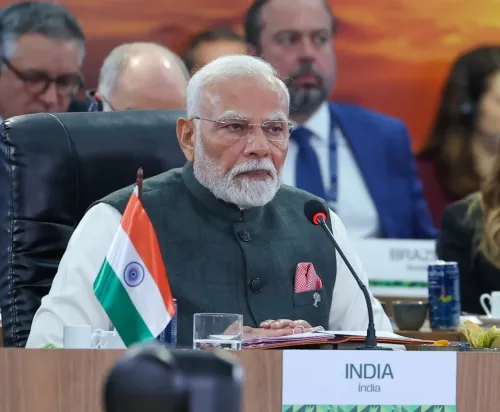
PM Modi marks World Environment Day with Vedic verse

Synopsis
On World Environment Day, 5 June 2026, Prime Minister Narendra Modi shared a Rigveda verse on X, arguing that nature conservation is not just a duty but an inseparable part of India's culture and civilisational values — consistent with the government's long-standing framing of environmental policy through a heritage lens.
Key Takeaways
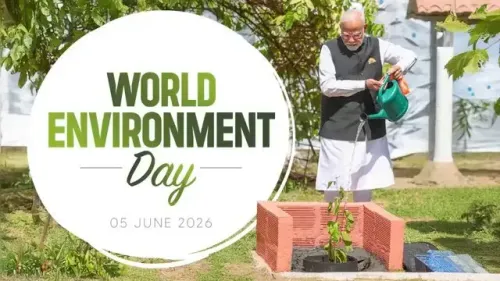
Prime Minister Narendra Modi posted on X on 5 June 2026 , marking World Environment Day .
He stated that nature conservation is 'an integral part of our culture and values', not merely a duty.
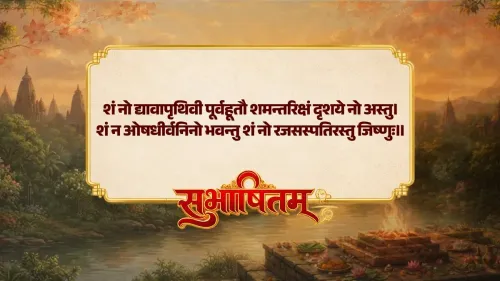
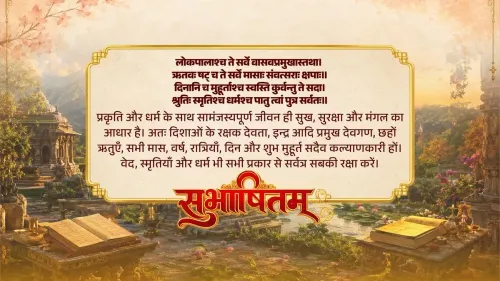
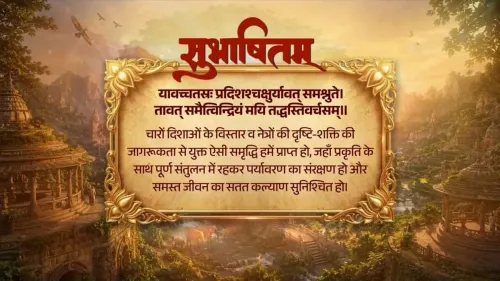
The post included a shloka from the Rigveda's Madhu Sukta , invoking natural harmony between humanity and the environment.
The cultural framing of conservation has been a consistent feature of the government's environmental messaging since at least 2018 , when India hosted World Environment Day .
India has cited traditional ecological knowledge alongside targets such as net-zero by 2070 in multilateral climate forums.
Policy watchers will monitor for linked scheme launches or new conservation commitments in the period ahead.
Prime Minister Narendra Modi marked World Environment Day on Friday, 5 June 2026 by sharing a Vedic verse on X, framing nature conservation as inseparable from India's civilisational culture and values.
Context
In his post, Modi wrote: 'प्रकृति का संरक्षण केवल एक दायित्व नहीं, बल्कि हमारी संस्कृति और संस्कारों का भी अभिन्न हिस्सा है' — 'Protection of nature is not merely a duty, but an integral part of our culture and values.' He followed this with a shloka from the Rigveda: 'मधु वाता ऋतायते मधु क्षरन्ति सिन्धवः। माध्वीर्नः सन्त्वोषधीः' — broadly rendered as: 'The winds blow sweetness, the rivers flow with sweetness, may the herbs be sweet for us.' The verse, drawn from the Madhu Sukta of the Rigveda, is a traditional invocation of harmony between humanity and the natural world.
Policy Backdrop
The current government has consistently tied environmental messaging to ancient Indian texts and civilisational identity, positioning conservation as a cultural inheritance rather than solely a regulatory obligation. This framing has appeared across India's interventions at COP climate summits, where delegates have cited traditional ecological knowledge alongside hard targets such as net-zero emissions by 2070. In 2018, when India hosted World Environment Day, Modi similarly highlighted the cultural and civilisational roots of India's approach to sustainability in a high-profile address.
The approach also underpins domestic campaigns that blend heritage references with policy announcements on solar energy, river rejuvenation, and biodiversity conservation. By invoking Vedic texts, the government signals continuity between ancient Indian thought and present-day environmental commitments, a narrative that resonates with a broad domestic audience while also carrying weight in multilateral forums.
Stakeholders and Impact
The post is directed at the general public and environmental groups, reinforcing the message that ecological responsibility is rooted in everyday Indian culture. For India's 1.4 billion citizens, the invocation of a familiar Vedic verse on a globally recognised day serves as a soft-power reminder that sustainability is not an imported concept. Environmental organisations have long noted that cultural framing can be a powerful tool for driving grassroots conservation behaviour.
At the international level, India's positioning as a civilisation-state with deep ecological traditions strengthens its voice in negotiations over climate finance, biodiversity targets, and loss-and-damage frameworks. The message reinforces India's argument that its development trajectory is guided by values that predate modern environmentalism.
What's Next
Attention will now turn to whether India follows the symbolic messaging with substantive announcements — including updates to the National Biodiversity Action Plan or new targets ahead of the next COP cycle. The government's track record suggests that World Environment Day posts of this nature often precede or accompany policy-level communications on conservation or clean energy. Observers will watch for any linked scheme launches or international commitments in the coming weeks.
Point of View
Not merely a cultural gesture. By anchoring conservation in ancient scripture, the government reinforces its broader civilisational nationalism narrative while simultaneously projecting India as a country whose ecological consciousness predates Western environmentalism. This dual messaging — domestic cultural pride and international soft power — has proved durable across COP negotiations and bilateral summits. The consistency of the framing over nearly a decade suggests it is now a structural feature of India's environmental diplomacy rather than an ad-hoc rhetorical choice.
NationPress
20 Oct 2026
Frequently Asked Questions
Why did PM Modi post a Vedic verse on World Environment Day 2026?
Modi posted the Rigveda verse to mark World Environment Day on 5 June 2026, arguing that nature conservation is an integral part of India's culture and civilisational values, not only a modern regulatory duty.
What does the Rigveda verse in Modi's post mean?
The verse, from the Madhu Sukta of the Rigveda, translates broadly as: 'The winds blow sweetness, the rivers flow with sweetness, may the herbs be sweet for us.' It is a traditional invocation of harmony between humanity and the natural world.
How has the Indian government linked culture and environment policy?
The government has consistently framed conservation as rooted in ancient Indian texts and traditions, citing this connection at COP climate summits and in domestic campaigns, and pointing to India's net-zero target of 2070 as consistent with civilisational values.
When did India last host World Environment Day?
India hosted World Environment Day in 2018, when Modi highlighted the cultural and civilisational basis of India's approach to environmental protection.
What policy announcements might follow Modi's World Environment Day post?
Observers are watching for updates to India's National Biodiversity Action Plan, new conservation scheme launches, or fresh climate commitments ahead of the next COP cycle, as cultural messaging has often preceded policy-level communications in previous years.