PM Modi Meets Australian Opposition Leader Angus Taylor
Synopsis
Prime Minister Narendra Modi met Australian Opposition Leader Angus Taylor on 10 July 2026, holding talks on India-Australia ties. The meeting highlights bipartisan Australian support for the Comprehensive Strategic Partnership, underpinned by the 2022 ECTA and Quad cooperation.
Key Takeaways
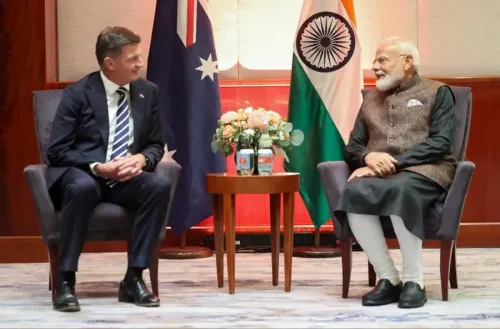
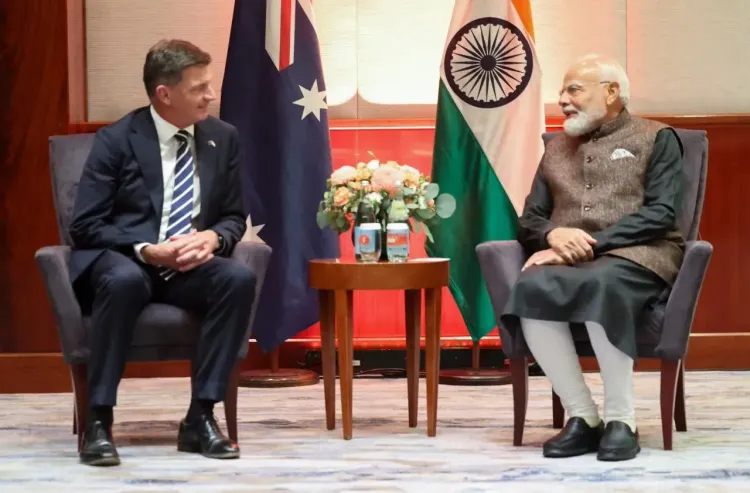
Prime Minister Narendra Modi met Angus Taylor , Leader of the Opposition of Australia, on 10 July 2026 .
Modi described the conversation as 'engaging' and said he deeply values the 'warmth and broad support' the partnership enjoys across Australia.
India and Australia have held a Comprehensive Strategic Partnership since June 2020 , covering defence, trade, and education.
The India-Australia ECTA , signed in April 2022 , remains a cornerstone of bilateral economic engagement.
Both countries are members of the Quad alongside the United States and Japan, and have participated in the Malabar naval exercise since 2020.
The meeting signals bipartisan Australian political support for deepening ties with India .
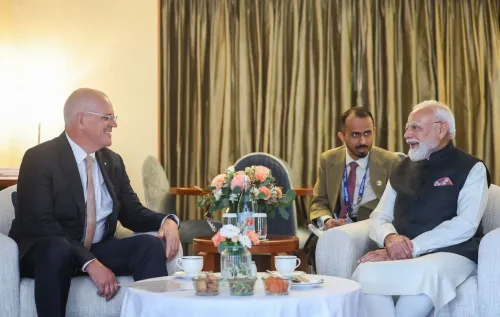
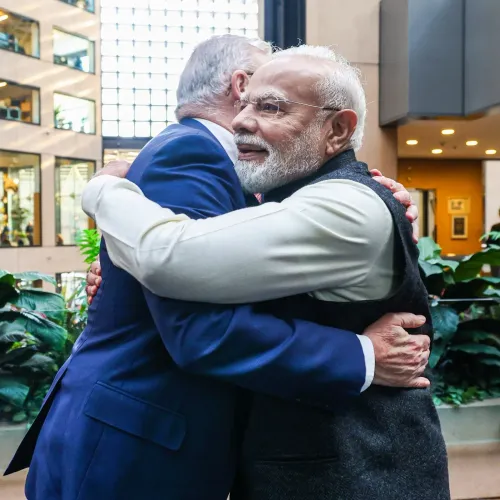
Prime Minister Narendra Modi met Angus Taylor, Leader of the Opposition of Australia, on Friday, 10 July 2026, holding talks that covered the growing strength of bilateral ties and the many opportunities ahead in the India-Australia partnership.
Context
Prime Minister Modi described the meeting as 'an engaging conversation,' noting that he 'deeply values the warmth and broad support' that the India-Australia partnership enjoys across Australia. The meeting with an opposition leader underscores that relations between the two countries enjoy bipartisan backing in Canberra, a signal New Delhi has long sought to cultivate.
Angus Taylor is a senior figure of Australia's Liberal Party who has held multiple shadow cabinet portfolios, including energy and climate policy. His engagement with the Indian Prime Minister reflects the cross-party consensus in Australia on deepening ties with India as a key Indo-Pacific partner.
Policy Backdrop
India and Australia elevated their relationship to a Comprehensive Strategic Partnership in June 2020, formalising cooperation across defence, trade, education, and science and technology. That upgrade was followed by the landmark India-Australia Economic Cooperation and Trade Agreement (ECTA), signed in April 2022, which cut tariffs on a wide range of goods and opened new market access for services exporters on both sides.
The two countries are also partners in the Quad — the Quadrilateral Security Dialogue alongside the United States and Japan — and have held annual leaders' summits and 2+2 ministerial dialogues covering foreign affairs and defence. Australia joined the Malabar naval exercise in 2020, deepening maritime cooperation in the Indo-Pacific.
Stakeholders and Impact
The meeting carries significance for a wide range of stakeholders. Defence establishments in both countries benefit from expanding joint exercises and technology-sharing frameworks, while trade negotiators continue to explore pathways to a broader and more comprehensive trade deal building on the ECTA.
Education providers and the large Indian diaspora in Australia — one of the fastest-growing migrant communities on the continent — also stand to gain from any fresh momentum in bilateral engagement. India is among Australia's largest sources of international students, and people-to-people ties have consistently been cited as a foundation of the partnership.
What's Next
Attention will now turn to the next scheduled India-Australia annual leaders' summit and any legislative or parliamentary follow-up to deepen the ECTA framework. With bipartisan Australian support for the partnership now visibly on display, New Delhi's Indo-Pacific strategy gains an additional layer of political durability regardless of which party holds power in Canberra.
The meeting reinforces a broader pattern in Indian foreign policy: engaging ruling governments and opposition leaderships alike to build durable, long-term strategic relationships that outlast electoral cycles on either side.
Point of View
Insulated from the electoral fortunes of any single party. This approach has become a recognisable feature of New Delhi's diplomatic playbook, particularly with Quad partners. For Australia, bipartisan engagement with India also reflects a domestic political consensus that the Indo-Pacific relationship is too consequential to be left to one side of politics. The meeting adds political depth to a partnership that has moved quickly from a basic diplomatic relationship to a comprehensive strategic one within half a decade.
NationPress
10 Jul 2026
Frequently Asked Questions
Who is Angus Taylor and why did PM Modi meet him?
Angus Taylor is the Leader of the Opposition in Australia and a senior Liberal Party politician. PM Modi met him to discuss the growing strength of India-Australia ties and future opportunities, reflecting the bipartisan support the partnership enjoys in Australia.
What is the India-Australia Comprehensive Strategic Partnership?
India and Australia elevated their bilateral relationship to a Comprehensive Strategic Partnership in June 2020 , covering defence, trade, education, science and technology, and people-to-people ties.
What is the India-Australia ECTA?
The India-Australia Economic Cooperation and Trade Agreement (ECTA) , signed in April 2022 , is a landmark trade deal that reduces tariffs and opens market access for goods and services between the two countries.
Is Australia part of the Quad with India?
Yes. Australia is a member of the Quad — the Quadrilateral Security Dialogue — alongside India , the United States , and Japan . Australia also joined the Malabar naval exercise in 2020.
Why does India engage with opposition leaders in other countries?
India engages ruling governments and opposition leaders alike to build durable, long-term strategic relationships that remain stable regardless of electoral outcomes in partner countries — a core feature of New Delhi 's foreign policy approach.