PM Modi meets BRICS NSAs on security cooperation
Synopsis
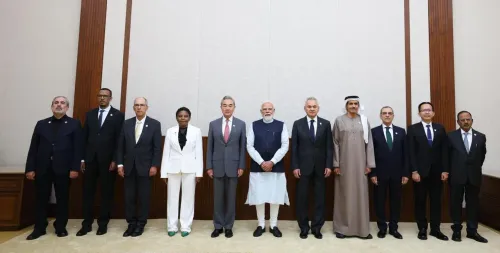
Prime Minister Narendra Modi met National Security Advisors of BRICS countries on June 23, 2026, calling for deeper security cooperation on terrorism, cyber threats, and emerging technologies as the grouping's agenda continues to expand beyond economics.
Key Takeaways
Prime Minister Narendra Modi met National Security Advisors and senior security officials from BRICS member countries on June 23, 2026 .
Modi called for deeper BRICS cooperation on terrorism, cyber security, and emerging technologies .
BRICS was founded in 2009 and expanded in 2024 ; it established a Counter-Terrorism Working Group in 2015 .
NSA-level meetings have become a regular parallel track to annual BRICS summits, addressing transnational security threats.
India has consistently used BRICS to advance its demand for a comprehensive global counter-terrorism framework.
Outcome documents and new working-group mandates on emerging technologies are expected to be watched ahead of the next full BRICS Summit .
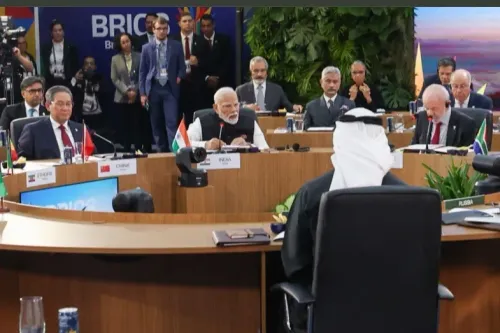
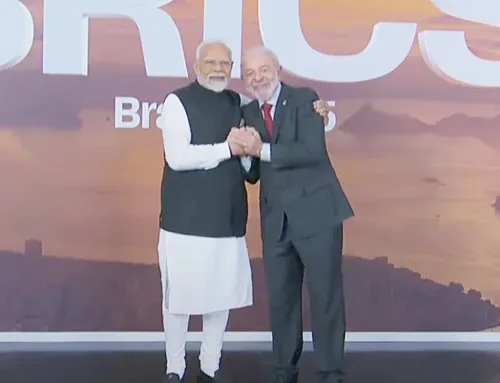
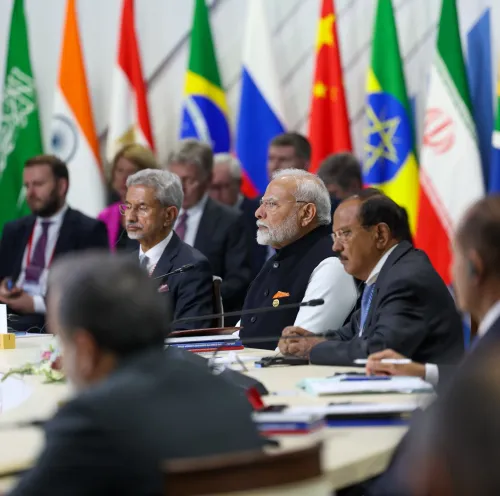
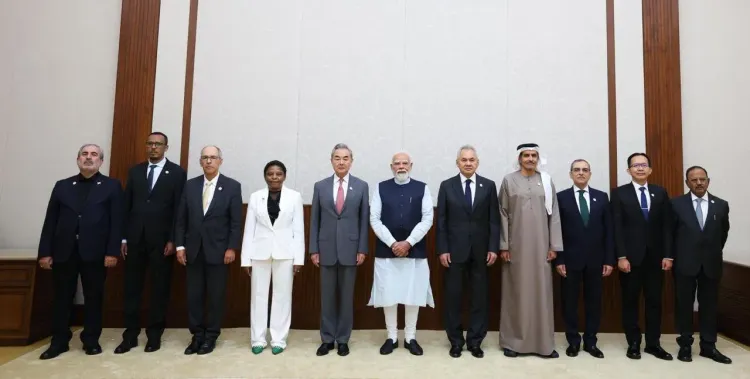
Prime Minister Narendra Modi on Tuesday, June 23, 2026, met with National Security Advisors and senior security officials from BRICS member countries, underscoring the grouping's expanding role in addressing transnational threats in a shifting global order.
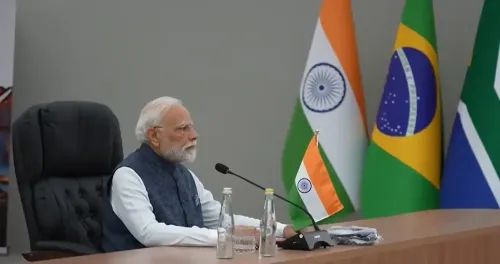
Sharing his remarks after the meeting, Modi said he was 'pleased to meet National Security Advisors and senior security officials of BRICS countries,' and stressed that 'in a changing global landscape, BRICS has a vital role in deepening security cooperation and addressing shared challenges, from terrorism and cyber security to emerging technologies.'
Context
BRICS — the intergovernmental grouping of Brazil, Russia, India, China and South Africa, expanded in 2024 — has evolved well beyond its origins as an economic coordination forum. NSA-level meetings have emerged as a parallel diplomatic track to annual summits, allowing security establishments to engage on issues that do not always surface in leaders' communiqués.
The meeting comes at a moment when member states are navigating a complex global environment marked by technological disruption, cross-border terrorism, and intensifying competition in cyberspace. Modi's public remarks signal India's intent to keep these issues at the centre of the BRICS agenda.
Policy Backdrop
BRICS was formally constituted in 2009 as a forum for emerging economies seeking a greater voice in global governance. The grouping established a dedicated Counter-Terrorism Working Group in 2015 to facilitate information-sharing and coordinate responses to terrorist threats — an institutional mechanism that has since grown in scope.
India chaired a virtual BRICS Summit in 2021 that reaffirmed collective commitments to action against terrorism and cyber threats. The current NSA-level engagement builds on that lineage, reflecting a broader preference among member states for multipolar institutions capable of delivering strategic autonomy outside Western-led frameworks.
The inclusion of emerging technologies on the security agenda marks a notable expansion. Artificial intelligence, quantum computing, and next-generation communications infrastructure are increasingly viewed by BRICS governments as domains where coordinated norms and safeguards are essential.
Stakeholders and Impact
The primary stakeholders are the security establishments of BRICS member states, whose agencies deal daily with terrorism financing, ransomware, disinformation, and the dual-use risks of emerging technologies. Closer coordination at the NSA level can translate into faster intelligence-sharing and more aligned positions at multilateral forums such as the United Nations.
For India specifically, the meeting offers an avenue to press its long-standing demand for a comprehensive global framework against terrorism — a priority that New Delhi has consistently advanced in multilateral settings. Cyber security cooperation also carries direct domestic relevance given the scale of India's digital economy and the frequency of state-linked cyber intrusions targeting critical infrastructure.
What's Next
Attention will now turn to whether the NSA-level discussions produce outcome documents or new working-group mandates ahead of the next full BRICS Summit. Any agreed framework on emerging technologies or a strengthened counter-terrorism protocol would represent a concrete institutional advance beyond existing mechanisms.
Observers will also watch whether the expanded BRICS membership — which now includes countries from the Middle East, Africa, and South Asia — translates into broader participation in security-track discussions, potentially amplifying the grouping's collective weight on global security governance.
Point of View
Not merely ceremonial. By explicitly naming terrorism, cyber security, and emerging technologies in a single breath, New Delhi is pushing to widen the grouping's security mandate at a time when the expanded BRICS membership gives such frameworks greater global reach. This fits a consistent pattern in Indian foreign policy: using non-Western multilateral platforms to build coalitions around priorities — particularly counter-terrorism — that have faced resistance in Western-led bodies. The emphasis on emerging technologies also suggests India is positioning itself as a norm-shaper in a domain where BRICS has yet to produce binding commitments.
NationPress
23 Jun 2026
Frequently Asked Questions
What did PM Modi say at the BRICS NSA meeting in 2026?
Prime Minister Narendra Modi said he was 'pleased to meet National Security Advisors and senior security officials of BRICS countries' and stressed that BRICS has a vital role in deepening security cooperation on terrorism, cyber security, and emerging technologies in a changing global landscape.
What is the BRICS Counter-Terrorism Working Group?
The BRICS Counter-Terrorism Working Group was established in 2015 to facilitate information-sharing among member states and coordinate collective responses to terrorist threats. It operates as part of BRICS's expanding security agenda alongside the annual summits.
Which countries are part of BRICS in 2026?
BRICS originally comprised Brazil, Russia, India, China, and South Africa. The grouping expanded in 2024 to include additional countries from the Middle East, Africa, and South Asia, making it a larger multipolar forum for economic and security coordination.
Why does India prioritise BRICS for security cooperation?
India uses BRICS as a platform to advance its demand for a comprehensive global counter-terrorism framework and to build coalitions on cyber security and emerging technologies — areas where New Delhi has faced difficulty achieving consensus in Western-led multilateral institutions.
What comes after the BRICS NSA meeting in June 2026?
Observers are watching for outcome documents or new working-group mandates, particularly on emerging technologies, ahead of the next full BRICS Summit. Any agreed protocols on counter-terrorism or cyber security would mark a concrete institutional advance for the grouping.