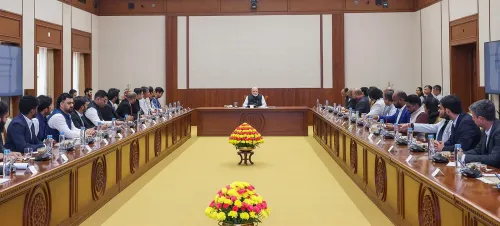
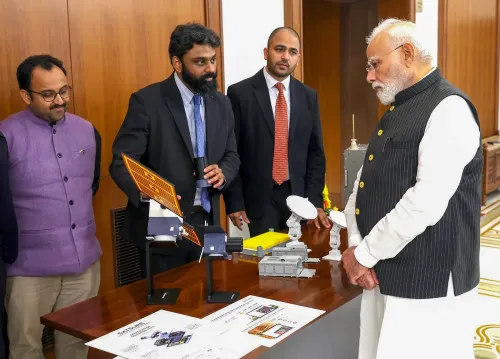
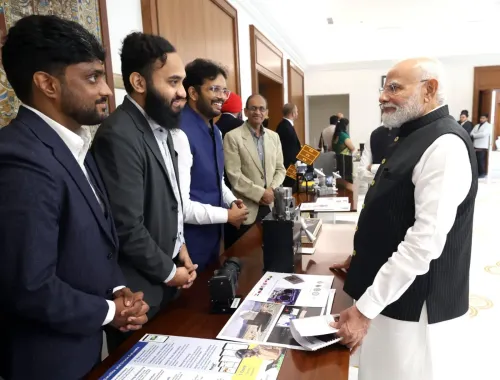
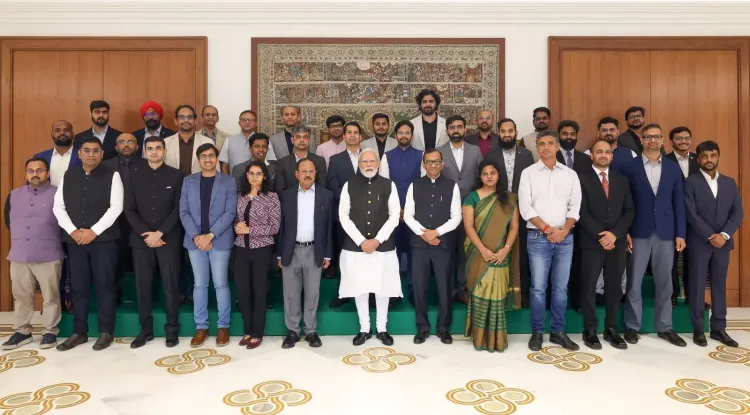
PM Modi meets young space entrepreneurs, hails their courage
Synopsis
Prime Minister Narendra Modi met young Indian space entrepreneurs on 21 August 2026, calling them the 'Yuva Urja' of the sector and crediting India's 2020 space-sector reforms and IN-SPACe for enabling private participation in a once state-dominated industry.
Key Takeaways
PM Modi met young space-sector entrepreneurs and innovators on 21 August 2026 , calling them the 'Yuva Urja' of India's space sector.
He praised their risk-taking and consistency, framing their success as proof that the government's reform process is working.
India's landmark June 2020 space-sector reforms opened satellite manufacturing, launches, and data services to private companies for the first time.
IN-SPACe (Indian National Space Promotion and Authorisation Centre) was created in 2020 as the dedicated regulator and promoter of private space activity.
The liberalisation mirrors earlier government moves in civil aviation and defence manufacturing under the Atmanirbhar Bharat framework.
Upcoming IN-SPACe launch clearances and new rules on space manufacturing and spectrum allocation will be key milestones to watch.
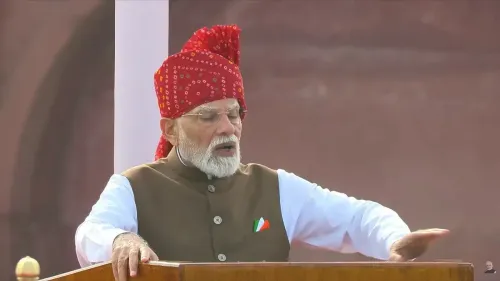
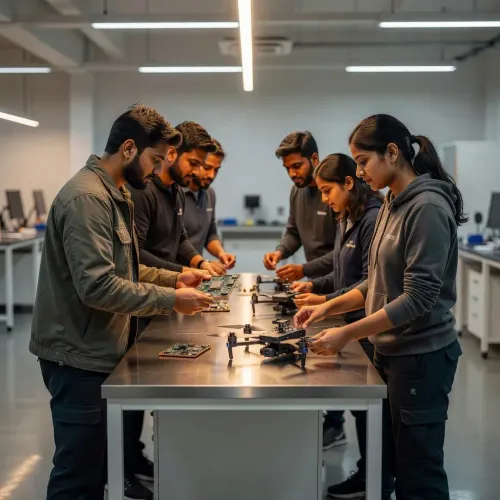
A new generation of Indian space founders got a rare audience with Prime Minister Narendra Modi on Friday, 21 August 2026 — and the Prime Minister made clear he was impressed. Calling them the 'Yuva Urja' (young energy) of India's space sector, Modi praised their willingness to enter a domain that demands both technical depth and entrepreneurial nerve.
Modi described the young entrepreneurs and innovators as people who 'have taken risks, trusted the reform process and remained consistent in their efforts' — a pointed acknowledgement that building a space company in India is not for the faint-hearted, even after the landmark liberalisation of the sector.
The 2020 reforms that made the room possible
The entrepreneurs Modi met are, in a real sense, products of a policy decision taken six years ago. In June 2020, the government threw open satellite manufacturing, launch services, and space-data businesses to private companies — a structural break from the decades-long model in which ISRO, founded in 1969, held a near-monopoly on every facet of India's space activity. Central to that opening was the creation of IN-SPACe — the Indian National Space Promotion and Authorisation Centre — a dedicated body set up to regulate, hand-hold, and greenlight private players. Where ISRO once did everything from design to launch, IN-SPACe now serves as the gateway for startups seeking access to launch infrastructure, spectrum, and government contracts.Atmanirbhar Bharat's most high-altitude bet
The meeting fits a deliberate pattern. Since 2020, successive Union Budgets and policy documents have steadily lowered entry barriers for space startups, mirroring earlier liberalisation waves in civil aviation and defence manufacturing. The government's framing — private risk-taking underpinned by state-built infrastructure — is a defining feature of the Atmanirbhar Bharat programme as applied to deep technology. For the founders in the room, the stakes are concrete: access to ISRO's launch pads, IN-SPACe clearances, and the credibility that comes with a Prime Ministerial endorsement can meaningfully accelerate fundraising and talent acquisition in a capital-intensive industry. Watch for the next wave of private-sector satellite launches cleared by IN-SPACe, and any new rules on space manufacturing or spectrum allocation expected in the months ahead — the policy architecture is still being built, and these founders are helping shape it in real time.Point of View
' the Prime Minister ties private-sector success directly to BJP-era policy decisions. The framing also serves a talent and investment function: a Prime Ministerial endorsement lowers perceived risk for venture capital and attracts engineers who might otherwise look abroad. The broader arc here is a deliberate rebranding of India's space programme from a state-led scientific mission to a commercially competitive ecosystem — a transition that IN-SPACe is still mid-way through executing.
NationPress
5 Oct 2026
Frequently Asked Questions
Who are the young space entrepreneurs PM Modi met in August 2026?
The post does not name specific individuals, but they are young founders and innovators working in India's private space sector, which opened to private participation after the government's June 2020 reforms.
What is IN-SPACe and what does it do?
IN-SPACe, the Indian National Space Promotion and Authorisation Centre, was set up in 2020 to regulate and promote private-sector participation in space activities, giving startups access to ISRO infrastructure and government clearances.
When did India open its space sector to private companies?
The Government of India announced space-sector reforms in June 2020 , allowing private companies to enter satellite manufacturing, launch services, and space-data businesses for the first time.
What does 'Yuva Urja' mean in the context of PM Modi's post?
'Yuva Urja' is a Hindi phrase meaning 'young energy.' Modi used it to describe the new generation of entrepreneurs and innovators driving India's emerging private space industry.
How does India's space liberalisation connect to Atmanirbhar Bharat?
The space reforms are a core pillar of the Atmanirbhar Bharat (self-reliant India) programme, designed to build domestic capability in deep technology by encouraging private risk-taking backed by state-built infrastructure like ISRO's launch facilities.