PM Modi to space startup CEOs: World is now searching for Indian players
Synopsis
Modi told 20 space startup founders that the world is actively looking for Indian players — and challenged them to become a magnet for global talent. The meeting signals a deliberate government push to position India’s private space ecosystem as a serious international contender, not just a cost-competitive alternative.
Key Takeaways
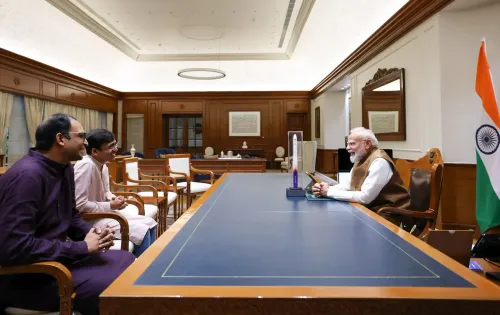
PM Narendra Modi met 20 Indian space startup CEOs and founders at Seva Teerth, New Delhi on a Friday, with the video released on 23 August .
Modi said the world is now 'searching for Indian startups' following breakthroughs in the private space sector.
Startups at the meeting covered rockets, reusable launch vehicles, avionics, satellites, propulsion, space debris removal, and AI-powered weather intelligence .
The Prime Minister called for India to attract global talent, including professionals returning from abroad, by building a world-class space ecosystem.
Modi urged cross-sector partnerships — including space debris firms with environmental organisations and agri-tech space companies with agricultural universities.
Founders credited the government’s decision to open the space sector to private players as the catalyst for the current wave of innovation and investment.
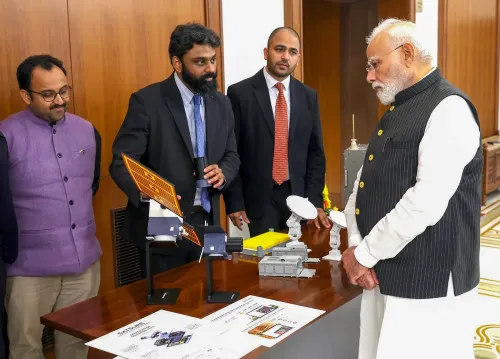
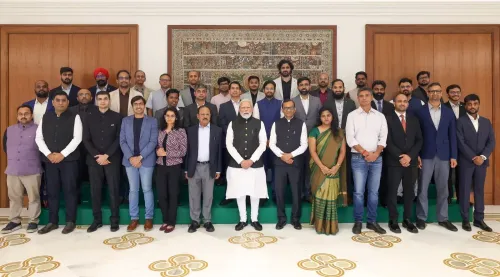
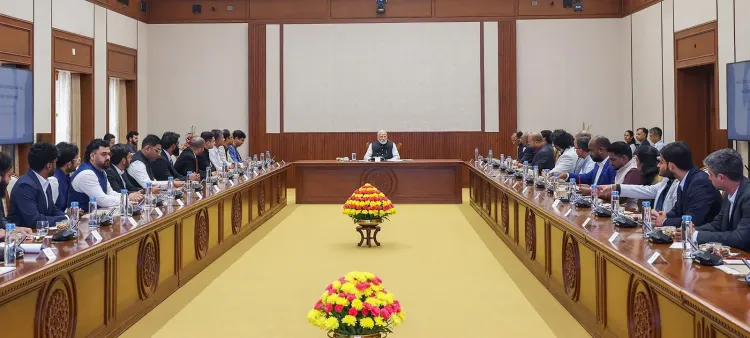
Prime Minister Narendra Modi met with the CEOs and founders of 20 Indian space startups at Seva Teerth in New Delhi, praising the country's rapid rise in private space technology and urging deeper collaboration to establish India as a global hub for the sector. A video of the interaction, held on Friday, was released on Sunday, 23 August.
What Modi Said to the Founders
Addressing the startup leaders, Prime Minister Modi expressed confidence that India's private space sector has caught the world's attention. 'The world must now be searching for Indian startups, wondering, ‘Who are the players in this?’ Because whenever a breakthrough occurs, people’s attention turns to it immediately,' he said.
Modi also acknowledged the trust the founders had placed in the government. 'The biggest thing is that you placed your trust in the word of the government. It has always been my view that whatever decision we take, we must remain consistent in it, so that even if someone wants to take a risk they do that without fear,' he said.
India's Cost and Talent Edge
The Prime Minister underscored India’s competitive strengths in the global space race. He said that in terms of cost, India is 'highly competitive,' and added: 'When it comes to talent, there is no question at all. And the risk-taking capacity of our countrymen is naturally quite high. Because of that, we can establish our position very rapidly.'
Modi also called on Indian space companies to act as a magnet for global talent, including professionals who had previously moved abroad. 'I believe we should create such an aura that across the world, people in this sector feel, ‘If you want to build a career, go to India.’ Connect with Indian startups. Connect with Indian space agencies,' he said.
Who Was in the Room
The 20 startups represented a broad cross-section of the emerging private space ecosystem, spanning rocket development, reusable semi-cryogenic launch vehicles, avionics, satellites, advanced propulsion systems, space and defence intelligence, space debris removal, and AI-powered hyperlocal weather and climate intelligence. The founders highlighted the indigenous development of their technologies and expressed gratitude for government support since the sector was opened to private participation.
Cross-Sector Collaboration Push
Modi encouraged space startups to look beyond their core domains. He specifically suggested that companies working on space debris removal could partner with environmental organisations, while those operating in agriculture technology could collaborate with agricultural universities and government departments to help farmers make better-informed decisions. The Prime Minister framed this as a broader mandate: space technology must translate into tangible improvements in people’s daily lives.
What the Industry Said
Startup founders noted that the government’s decision to open the space sector to private players had generated significant enthusiasm and unlocked new industrial opportunities. Several companies outside the space sector are now reportedly exploring how to adopt technologies developed by these startups. Industry leaders also highlighted the strong ecosystem being built through inter-company collaboration and government backing, with teams described as highly motivated to meet ambitious goals.
With global attention increasingly turning to India’s private space capabilities, the next phase will test whether policy momentum translates into commercial scale and international partnerships.
Point of View
Sectors where India did eventually punch above its weight. The harder question is whether the regulatory and funding infrastructure can keep pace with the ambition: opening the sector to private players was step one, but sustained commercial launches, export contracts, and deep-tech financing pipelines are what will determine whether this moment becomes a turning point or another well-photographed interaction.
NationPress
8 Oct 2026
Frequently Asked Questions
Why did PM Modi meet Indian space startup CEOs?
Prime Minister Narendra Modi met with CEOs and founders of 20 Indian space startups at Seva Teerth to acknowledge the sector’s rapid progress, encourage cross-sector collaboration, and call for India to be positioned as a global hub for space technology. The meeting was held on a Friday, with footage released on 23 August.
What did PM Modi say about India’s position in global space technology?
Modi said the world is now actively searching for Indian startups, noting that breakthroughs in the sector draw immediate global attention. He also highlighted India’s competitive cost base, deep talent pool, and high risk-taking capacity as structural advantages.
Which areas do the 20 space startups cover?
The startups work across rocket development, reusable semi-cryogenic launch vehicles, avionics, satellites, advanced propulsion, space and defence intelligence, space debris removal, and AI-powered hyperlocal weather and climate intelligence — representing a broad cross-section of India’s private space ecosystem.
What cross-sector collaborations did Modi propose?
Modi suggested that space debris removal companies partner with environmental organisations, and that space-agriculture technology firms collaborate with agricultural universities and government departments to help farmers make better decisions and improve productivity.
How has India’s private space sector changed since opening to private players?
According to startup founders at the meeting, the government’s decision to allow private participation generated significant enthusiasm and created new industrial opportunities. Several companies outside the space sector are now reportedly exploring adoption of technologies developed by these startups, and a strong collaborative ecosystem is taking shape.