PM Modi Meets Mongolia's President Khurelsukh in Bishkek
Synopsis
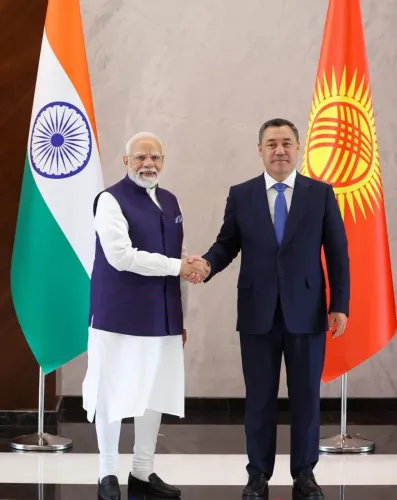
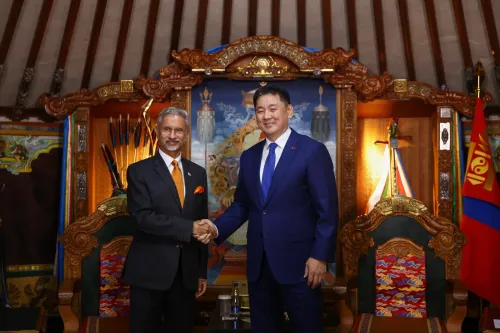
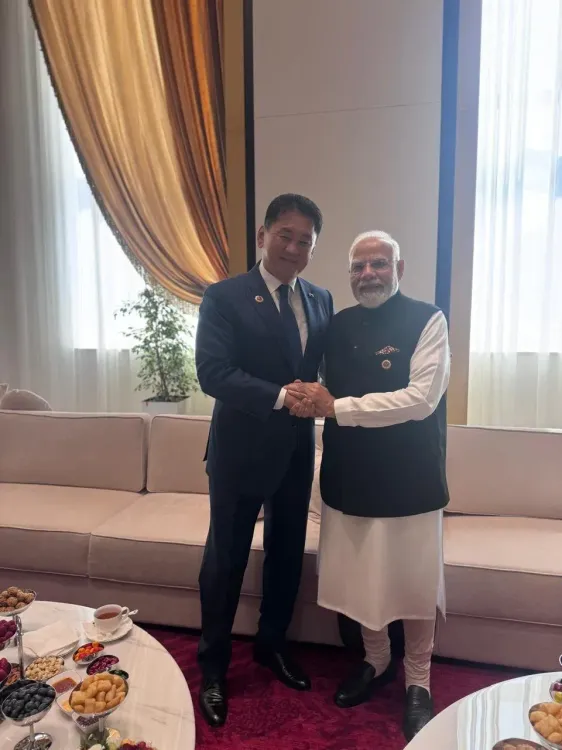
Prime Minister Narendra Modi met Mongolian President Ukhnaa Khurelsukh on the sidelines of a multilateral summit in Bishkek on September 1, 2026, reaffirming the India-Mongolia strategic partnership built on shared Buddhist heritage, democratic values, and two decades of defence cooperation.
Key Takeaways
PM Modi met Mongolian President Ukhnaa Khurelsukh on the sidelines of a summit in Bishkek on September 1, 2026 .
The two leaders discussed 'a wide range of subjects' centred on the India-Mongolia strategic partnership .
India elevated ties with Mongolia to a Strategic Partnership in 2015 , when Modi became the first Indian PM to visit Mongolia .
India and Mongolia have conducted the joint military exercise Nomadic Elephant annually since 2004 .
Mongolia's foreign policy follows a 'third-neighbour' doctrine, using ties with democracies like India to balance China and Russia.
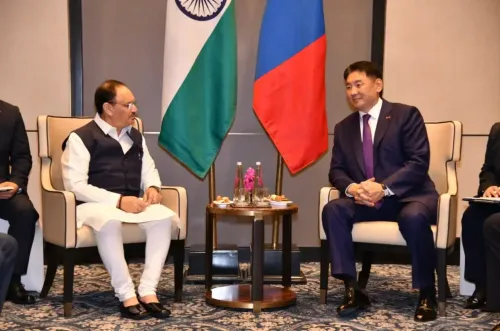
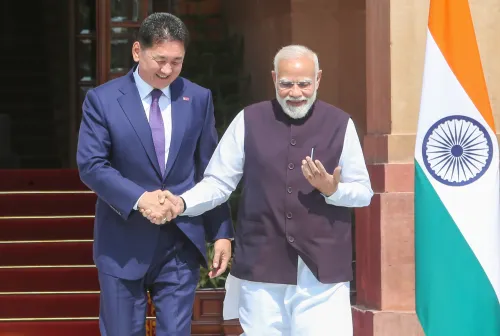
On the sidelines of a multilateral summit in Bishkek, Prime Minister Narendra Modi held a bilateral meeting with Mongolian President Ukhnaa Khurelsukh on Tuesday, September 1, 2026, describing deliberations at the summit as ongoing and reaffirming what both nations have built over decades of quiet, steady friendship.
Modi noted that the two leaders discussed 'a wide range of subjects, including the strong India-Mongolia friendship' — language that signals substance beneath the diplomatic brevity. The meeting on the summit's margins is itself a familiar feature of Modi's foreign-policy playbook: using multilateral gatherings to stack bilateral conversations, maximising every hour abroad.
A Partnership Rooted in Buddhist Ties and Democratic Values
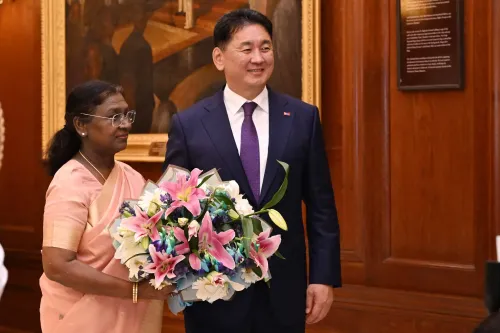
The India-Mongolia relationship was elevated to a Strategic Partnership in 2015, when Modi made history as the first Indian Prime Minister to visit Mongolia. That visit produced a Joint Declaration and cemented a bond the two governments have since described as grounded in shared Buddhist heritage and democratic values — a rare combination in a neighbourhood dominated by authoritarian giants.
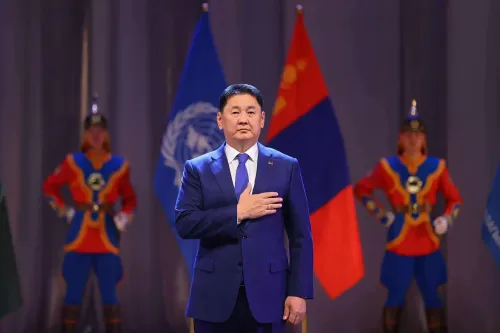
President Khurelsukh has been Mongolia's head of state since June 2021, having previously served as Prime Minister from 2017 to 2021. He represents continuity in Ulaanbaatar's foreign policy, which has long pursued a 'third-neighbour' doctrine — cultivating ties with democracies like India to balance the gravitational pull of China and Russia, its two immediate neighbours.
Nomadic Elephant and the Defence Thread
Beneath the diplomatic pleasantries runs a concrete defence partnership. India and Mongolia have conducted the joint military exercise Nomadic Elephant annually since 2004 — one of the longer-running bilateral exercises in India's neighbourhood engagement portfolio. That continuity of defence cooperation gives the relationship a durability that outlasts any single summit handshake.
Bishkek, Kyrgyzstan's capital, has hosted multiple regional gatherings involving India and Central Asian states, making it a recurring venue for exactly this kind of margin-of-summit diplomacy. Modi's engagement with Khurelsukh fits a broader pattern of India's eastward and Central Asian outreach — using every multilateral platform to deepen bilateral threads one conversation at a time.
The question now is whether a joint statement or fresh agreements emerge from Bishkek — because when Modi says 'a wide range of subjects,' the fine print tends to follow.
Point of View
Bilateral meetings on multilateral margins are a deliberate diplomatic multiplier, converting summit attendance into a stack of one-on-one relationship advances. The reference to a 'wide range of subjects' hints at defence and capacity-building threads that rarely make headlines but steadily thicken the bilateral rope. Watch whether Bishkek produces a joint statement — that would signal the partnership is moving beyond symbolism into deliverables.
NationPress
1 Sept 2026
Frequently Asked Questions
Where did PM Modi meet Mongolia's President Khurelsukh?
The meeting took place in Bishkek , the capital of Kyrgyzstan, on the sidelines of a multilateral summit on September 1, 2026 .
What is the India-Mongolia strategic partnership?
India and Mongolia elevated their bilateral relationship to a Strategic Partnership in 2015 during PM Modi's historic visit to Ulaanbaatar — the first ever by an Indian Prime Minister. The partnership is rooted in shared Buddhist heritage, democratic values, and defence cooperation.
What is the Nomadic Elephant exercise?
Nomadic Elephant is an annual joint military exercise conducted by the Indian Army and the Mongolian Armed Forces. It has been held every year since 2004 , making it one of India's longest-running bilateral defence exercises.
Who is Ukhnaa Khurelsukh?
Ukhnaa Khurelsukh has served as President of Mongolia since June 2021 . Before that, he was Prime Minister from 2017 to 2021 .
Why does Mongolia seek close ties with India?
Mongolia follows a 'third-neighbour' foreign policy doctrine, cultivating strong relationships with democracies like India to balance the influence of its two immediate neighbours, China and Russia .