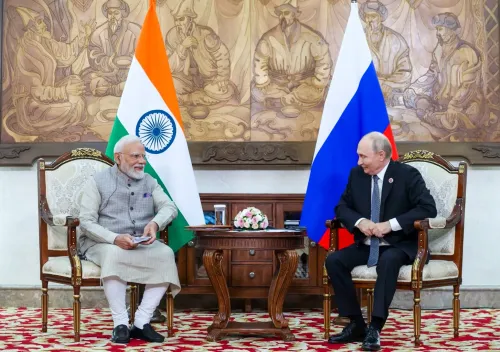
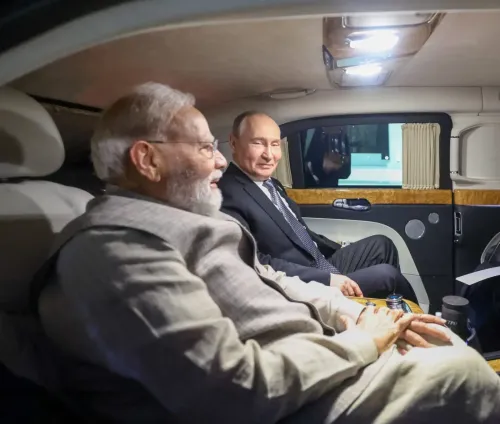
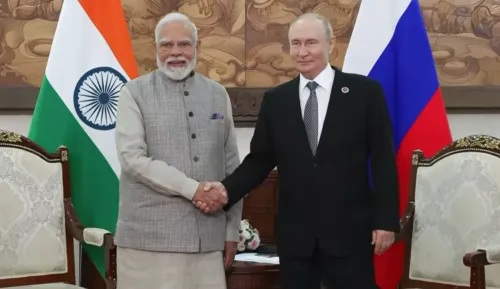
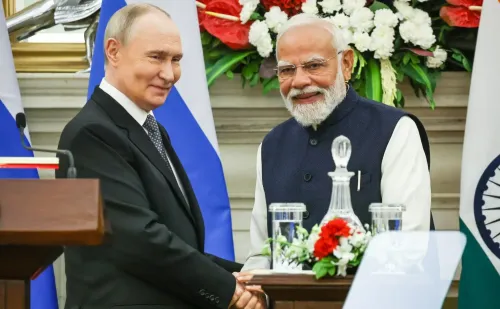
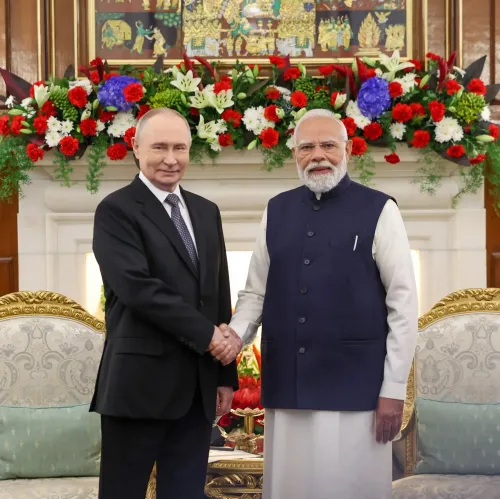
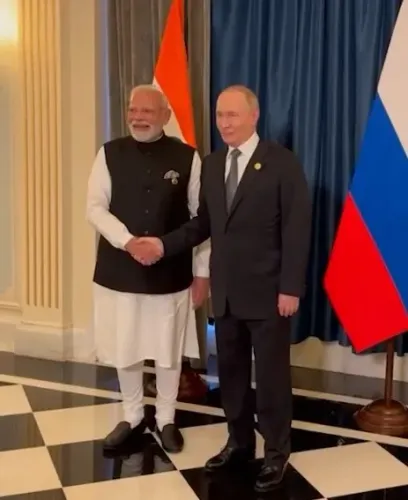
PM Modi meets President Putin in Bishkek, shares remarks
Synopsis
Prime Minister Narendra Modi met Russian President Vladimir Putin in Bishkek, Kyrgyzstan, sharing remarks from their meeting under the framework of India and Russia's special and privileged strategic partnership, with defence, energy, and SCO coordination among the enduring pillars of the relationship.
Key Takeaways
PM Narendra Modi met President Vladimir Putin in Bishkek, Kyrgyzstan , describing it as 'always a delight.' Modi shared his remarks from the meeting publicly via social media.
India and Russia maintain a 'special and privileged strategic partnership' built over more than two decades of annual summits.
The meeting took place on the sidelines of multilateral engagements in Bishkek , a regular venue for SCO summits.
Key pillars of the relationship include defence supply chains, oil and gas trade, and coordination within the SCO .
Full details of the agenda will emerge from the shared remarks and any subsequent joint statement.
Prime Minister Narendra Modi met Russian President Vladimir Putin on the sidelines of multilateral engagements in Bishkek, Kyrgyzstan, describing the encounter as 'always a delight' and sharing his remarks from the meeting.
A meeting rooted in decades of strategic partnership
India and Russia have maintained what both sides formally call a 'special and privileged strategic partnership' — a framework built over more than two decades of annual summits and regular leader-level contact. Modi and Putin have met multiple times across bilateral and multilateral settings, with the relationship anchored in longstanding defence supply chains, energy trade, and coordination inside forums such as the Shanghai Cooperation Organisation (SCO), which counts Bishkek among its storied summit venues.Bishkek as a diplomatic crossroads
Kyrgyzstan's capital has previously served as a key gathering point for SCO leaders, making it a natural stage for India-Russia engagement on the margins of broader Central Asian diplomacy. Indian leaders have consistently used such multilateral venues to hold substantive bilateral conversations — compressing what might otherwise require a dedicated summit into a focused pull-aside. The shared remarks Modi referenced are expected to shed light on the specific agenda the two leaders addressed.Balancing act at the centre of Indian foreign policy
The Modi-Putin meeting lands against a familiar backdrop: India threading a careful path between its deep legacy ties with Moscow — rooted in defence imports and discounted oil purchases — and its growing strategic convergence with Washington, Tokyo, and other Quad partners. New Delhi has consistently declined to characterise that balance as a contradiction, instead presenting it as strategic autonomy. Each leader-level meeting with Putin is therefore read closely — both for what is said and for what the optics signal to other capitals. Watch for the full text of the shared remarks and any follow-up joint statement, which will clarify whether this meeting produced concrete deliverables or served primarily as a relationship-maintenance touchpoint ahead of the next formal India-Russia bilateral summit.Point of View
Yet the public sharing of remarks signals that India is comfortable with visibility. Analysts will parse the released remarks for any shift in tone on Ukraine, defence procurement timelines, or energy pricing — the three fault lines where India-Russia ties face the most external scrutiny.
NationPress
1 Sept 2026
Frequently Asked Questions
Where did PM Modi meet President Putin in 2026?
PM Modi met President Putin in Bishkek , the capital of Kyrgyzstan , on the sidelines of multilateral engagements there.
What is the India-Russia special and privileged strategic partnership?
It is the formal framework governing India-Russia ties, established in the early 2000s, covering defence cooperation, energy trade, and diplomatic coordination in forums like the SCO .
Why does Modi meet Putin at multilateral venues like Bishkek?
Multilateral venues such as SCO summits allow leaders to hold substantive bilateral conversations on the margins without the full protocol of a dedicated state visit, making them efficient diplomatic touchpoints.
What are the main areas of India-Russia cooperation?
The core pillars are longstanding defence supply arrangements, oil and gas trade — including discounted Russian crude imports — and coordination inside the Shanghai Cooperation Organisation .
What should we watch for after the Modi-Putin Bishkek meeting?
The full text of Modi's shared remarks , any joint statement, and announcements ahead of the next formal India-Russia bilateral summit will clarify the concrete outcomes of the meeting.