PM Modi Meets Queen Máxima, Discusses India's DPI-Led Financial Inclusion
Synopsis
Prime Minister Narendra Modi met Queen Máxima of the Netherlands, the UN's Special Advocate for Financial Health, on 25 June 2026. They discussed how India's Digital Public Infrastructure — built on Aadhaar, UPI, and the Account Aggregator framework — is driving financial inclusion at scale and serving as a model for developing nations worldwide.
Key Takeaways
PM Modi met Queen Máxima of the Netherlands on 25 June 2026 to discuss India's Digital Public Infrastructure and financial inclusion.
Queen Máxima serves as the UN Secretary-General's Special Advocate for Financial Health , a role focused on connecting underserved populations to formal financial systems.
India's DPI stack — comprising Aadhaar, UPI (launched 2016 ), and the Account Aggregator framework — has enabled large-scale financial access for previously unbanked citizens.
The Pradhan Mantri Jan Dhan Yojana , launched in 2014 , laid the groundwork by opening bank accounts for millions of unbanked Indians.
During its G20 Presidency in 2023 , India championed DPI as a global public good adoptable by developing nations.
The meeting signals continued Indian diplomatic efforts to position its digital governance model as a scalable solution for global financial inclusion challenges.
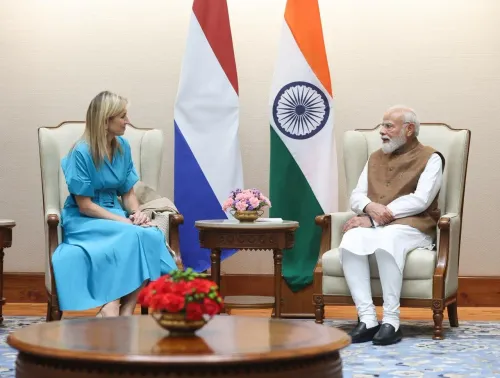
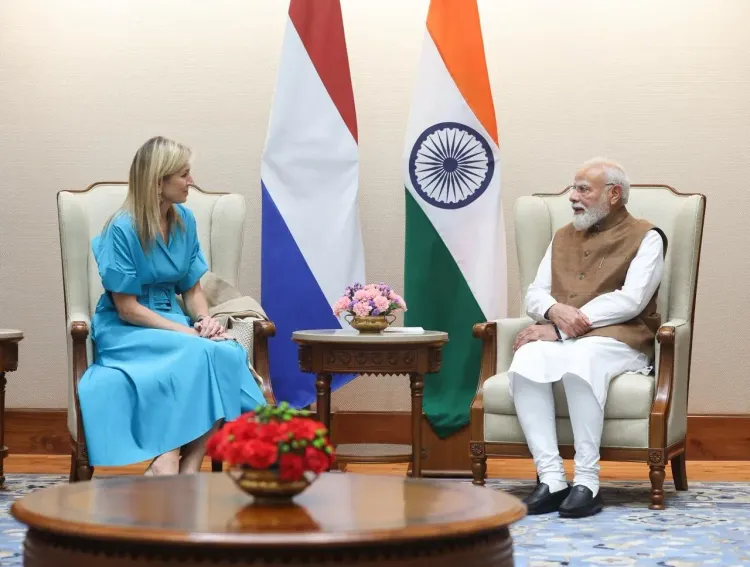
Prime Minister Narendra Modi met Her Majesty Queen Máxima of the Netherlands on Thursday, 25 June 2026, holding discussions on how India's Digital Public Infrastructure (DPI) is advancing financial inclusion at scale. Queen Máxima also serves as the UN Secretary-General's Special Advocate for Financial Health, making her a key global voice on the intersection of digital tools and economic access.
Sharing the update on social media, Prime Minister Modi described being 'delighted' to meet the Queen, noting her role as 'a long-standing global voice for financial inclusion.' The two leaders discussed how India's DPI-led revolution is reshaping access to financial services for millions of citizens.
Context
India's Digital Public Infrastructure is an integrated digital stack built on three foundational pillars: Aadhaar (digital identity), the Unified Payments Interface (UPI) (real-time interoperable payments), and the Account Aggregator framework (consent-based financial data sharing). Together, these systems have enabled previously unbanked and underbanked populations to access formal financial services at a pace and scale that has drawn international attention.
The Pradhan Mantri Jan Dhan Yojana, launched in 2014, first opened bank account access to tens of millions of Indians without formal banking relationships. UPI, rolled out in 2016, then created the low-cost, real-time payments layer that made those accounts practically usable for everyday transactions.
Policy Backdrop
India used its G20 Presidency in 2023 to actively frame DPI as a global public good, advocating for its adoption by developing nations as a scalable, sovereign alternative to proprietary fintech platforms. The government has consistently positioned the DPI model not as an export product but as an open architecture that other countries can adapt to their own contexts.
Queen Máxima's mandate as UN Special Advocate for Financial Health directly aligns with this agenda. Her office works with governments and multilateral institutions to promote policies that connect underserved populations to formal financial systems — a mission that India's DPI experience directly informs.
Stakeholders and Impact
The primary beneficiaries of India's DPI model are the country's previously unbanked populations — hundreds of millions of citizens who now transact digitally, access credit, and receive government transfers through linked accounts. Beyond India, developing nations across Africa, Southeast Asia, and Latin America have expressed interest in replicating elements of the Indian stack.
Fintech developers and multilateral development institutions also stand to benefit from any framework that emerges from such bilateral engagements, as shared standards and interoperability agreements can open new markets and reduce the cost of cross-border financial services.
What's Next
Observers will watch for follow-up announcements from either the Indian government or the United Nations on concrete cooperation frameworks tied to this meeting. Any joint initiative could accelerate DPI adoption in third countries, particularly those where Queen Máxima's advocacy office is already active.
The meeting reinforces India's broader diplomatic strategy of using digital governance achievements as a pillar of its international engagement, a pattern that is likely to continue as the country deepens ties with multilateral institutions and like-minded partners ahead of upcoming global development forums.
Point of View
New Delhi is effectively seeking multilateral endorsement for an approach it has already begun exporting bilaterally. This fits a deliberate pattern in which India leverages high-profile diplomatic encounters to build normative consensus around its digital governance frameworks, reinforcing its self-positioning as a development partner rather than merely a recipient of global aid. If the engagement yields a concrete UN-linked initiative, it would mark a significant step in institutionalising India's DPI diplomacy beyond the G20 context.
NationPress
26 Jun 2026
Frequently Asked Questions
Who is Queen Máxima and why did PM Modi meet her?
Queen Máxima is the reigning Queen of the Netherlands and also serves as the UN Secretary-General's Special Advocate for Financial Health. PM Modi met her on 25 June 2026 to discuss how India's Digital Public Infrastructure is advancing financial inclusion globally.
What is India's Digital Public Infrastructure (DPI)?
India's DPI is an integrated digital stack comprising Aadhaar for identity, UPI for real-time payments, and the Account Aggregator framework for consent-based financial data sharing. Together they have enabled millions of previously unbanked Indians to access formal financial services.
What is UPI and when was it launched?
UPI, or Unified Payments Interface, is an interoperable real-time digital payments system launched in India in 2016. It allows instant money transfers across banks and has become one of the world's largest digital payments platforms by transaction volume.
How has India promoted its DPI model internationally?
India used its G20 Presidency in 2023 to frame DPI as a global public good, advocating for its adoption by developing nations. The government has also engaged bilaterally and through multilateral forums to share its open-architecture approach with interested countries.
What is the Pradhan Mantri Jan Dhan Yojana?
Pradhan Mantri Jan Dhan Yojana is a financial inclusion scheme launched in 2014 to open bank accounts for millions of previously unbanked Indians. It formed the foundational demand-side layer upon which India's broader DPI stack was subsequently built.