PM Modi pays tribute to Maharaja Agrasen on his Jayanti

Synopsis
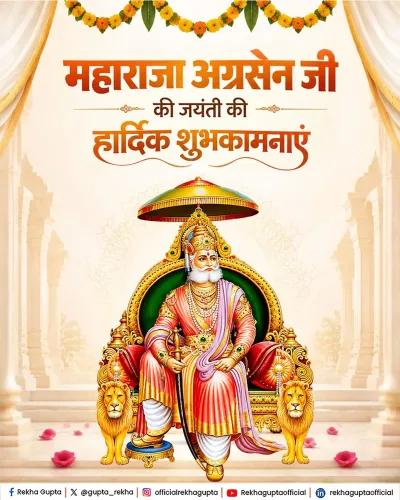
Prime Minister Narendra Modi on October 11, 2026 paid tribute to Maharaja Agrasen on his Jayanti, honouring the legendary king as a pioneer of public service, social harmony, and India's cultural uplift.
Key Takeaways
PM Narendra Modi offered tribute to Maharaja Agrasen on his Jayanti on October 11, 2026 .
Modi hailed Agrasen as a praneta — a pioneer — of public service ( janseva ) and social harmony ( samajik sadbhav ).
Maharaja Agrasen is the legendary founder of Agroha in present-day Haryana and venerated progenitor of the Agrawal community .
His Jayanti falls on Ashwin Shukla Dashami and is celebrated widely across Delhi, Haryana, Rajasthan, and Uttar Pradesh .
Modi called Agrasen's ideals a 'source of inspiration for the cultural uplift of India.'
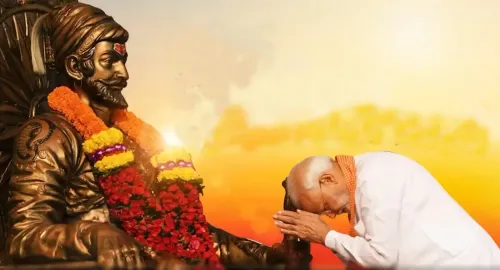
On the birth anniversary of Maharaja Agrasen, Prime Minister Narendra Modi on Sunday, October 11, 2026, offered reverent homage to the legendary king, hailing him as a pioneer of public service and social harmony whose ideals continue to illuminate the path of humanity.
In his post, the Prime Minister wrote — 'Janseva aur samajik sadbhav ke praneta Maharaja Agrasen ji ko unki Jayanti par koti-koti naman' — offering crores of salutations to the trailblazer of public welfare and communal amity. Modi added that Maharaja Agrasen's life and ideals offer an enduring lesson to walk the path of humanity, and that his great thoughts 'will forever remain a source of inspiration for the cultural uplift of India.'
Who was Maharaja Agrasen?
Maharaja Agrasen is venerated in Indian tradition as a legendary king believed to have founded the city of Agroha in present-day Haryana. He is revered as the progenitor of the Agrawal community, one of India's prominent trading and business communities. According to tradition, he championed the radical principle of equal distribution — gifting each new settler one brick and one coin — a vision of collective welfare that resonates with modern ideas of equity and social solidarity.
His Jayanti is observed each year on Ashwin Shukla Dashami in the Hindu calendar and draws celebrations across the country, particularly in states with a significant Agrawal community presence such as Delhi, Haryana, Rajasthan, and Uttar Pradesh.
A cultural touchstone in Indian public life
For decades, paying tribute to Maharaja Agrasen on his Jayanti has been a consistent feature of Indian political culture, reflecting the deep cultural and social resonance the figure holds. His legacy is institutionalised through organisations such as the Akhil Bharatiya Agrawal Sammelan and numerous trusts and hospitals bearing his name across India. The values he symbolises — selfless service, communal harmony, and equitable prosperity — are frequently invoked in conversations about India's civilisational ethos.
Agrasen Jayanti is not merely a community commemoration; it has long functioned as a moment of cultural reckoning, bringing together millions who identify with the ideals of a king who, legend holds, chose welfare over conquest.
As India marks another Agrasen Jayanti, Modi's tribute places the ancient king's vision of service and harmony at the centre of contemporary national consciousness — a reminder that some blueprints for a just society are older than any modern statute.
Point of View
With a significant commercial and philanthropic footprint across north India, represents a constituency that resonates with BJP's broader outreach to trading and business classes. Invoking Agrasen's foundational values of equity and public welfare also allows the PM to frame Indian tradition as inherently progressive — a recurring theme in his cultural communication.
NationPress
11 Oct 2026
Frequently Asked Questions
Who was Maharaja Agrasen?
Maharaja Agrasen was a legendary Indian king traditionally regarded as the founder of Agroha in present-day Haryana and the progenitor of the Agrawal community. He is revered for his principles of equal distribution and public welfare.
When is Agrasen Jayanti celebrated?
Agrasen Jayanti is celebrated on Ashwin Shukla Dashami according to the Hindu calendar. In 2026, it falls on October 11.
What did PM Modi say about Maharaja Agrasen on Jayanti 2026?
PM Modi offered 'crores of salutations' to Maharaja Agrasen, calling him a pioneer of public service and social harmony, and said his ideals will forever inspire India's cultural uplift.
Why is Maharaja Agrasen important in Indian culture?
Maharaja Agrasen symbolises the values of communal harmony, equitable prosperity, and selfless service. His legend — of gifting every new settler one brick and one coin — is seen as an early vision of collective welfare.
Which communities celebrate Agrasen Jayanti in India?
Agrasen Jayanti is celebrated primarily by the Agrawal community and their organisations across states including Delhi, Haryana, Rajasthan, and Uttar Pradesh.