CM Gujarat: PM Modi Flags Full Electronics Value Chain at Sanand
Synopsis
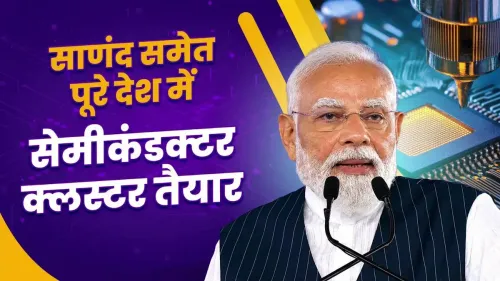
Prime Minister Narendra Modi, speaking at Sanand, Gujarat, described building a complete domestic electronics value chain — products, components, and semiconductors — as the roadmap for a developed India, in remarks shared by the Chief Minister's Office of Gujarat on 4 July 2026.
Key Takeaways
The Chief Minister's Office of Gujarat shared PM Modi's remarks at Sanand on 4 July 2026 , tagging the event #SemiconHubBharat .
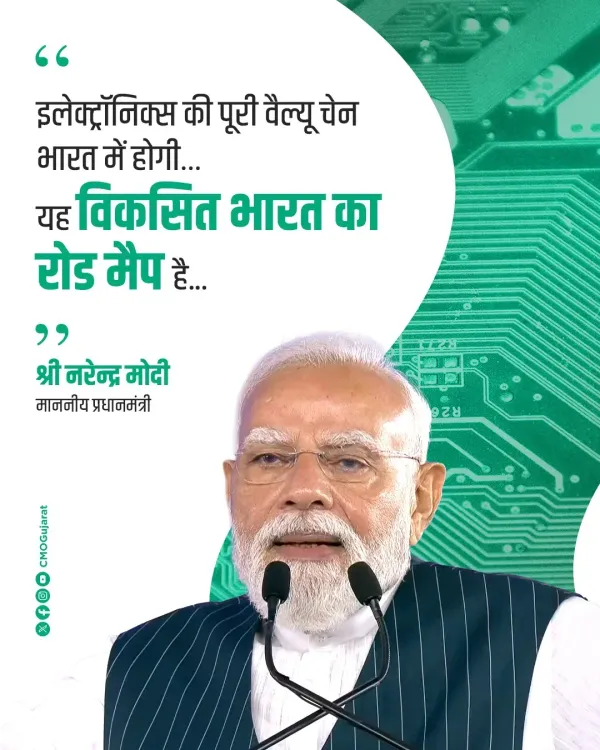
PM Modi described building the full electronics value chain — products, components, and semiconductors — as the roadmap for Viksit Bharat .
The India Semiconductor Mission backs domestic chip manufacturing with an outlay of Rs 76,000 crore .
The PLI scheme for electronics and IT hardware , notified in 2020 , targets component manufacturing to reduce import dependence.
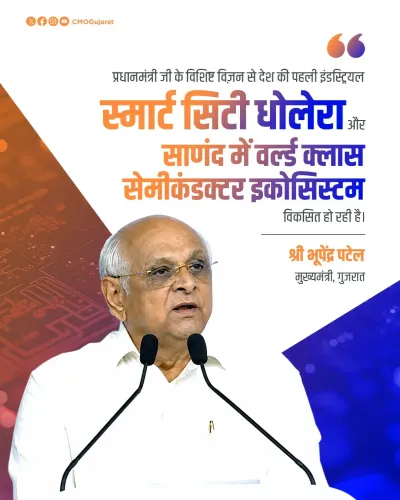
Sanand, Gujarat has become a key destination for electronics and semiconductor investment under central and state facilitation.
Investor focus will now be on commissioning timelines for approved fabrication and assembly projects in Gujarat.
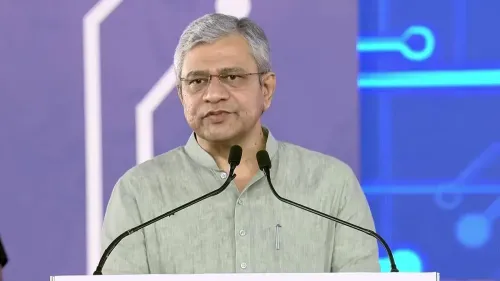
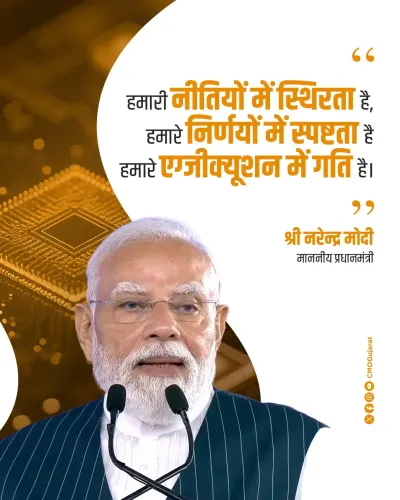
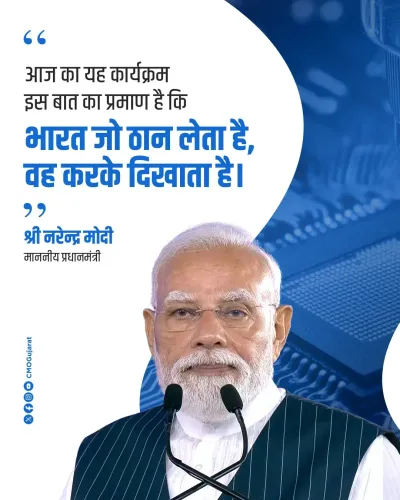
The Chief Minister's Office of Gujarat shared a post on Saturday, 4 July 2026, highlighting remarks by Prime Minister Narendra Modi at Sanand, Gujarat, where he described building a complete domestic electronics value chain — from products and components to semiconductors — as the roadmap for a developed India.
The post, published in Gujarati, quotes the Prime Minister as stating that electronic products, components, and now semiconductors represent a full value chain that must be built within the country. The post was tagged #SemiconHubBharat and #PMinSanand, signalling the occasion's focus on positioning India — and Gujarat in particular — as a future semiconductor and electronics hub.
Context
Sanand has emerged over the past decade as one of Gujarat's most significant industrial corridors, attracting large-scale electronics and semiconductor investment. The Prime Minister's presence and remarks there underscore the strategic importance the central government places on this corridor as a manufacturing anchor for the broader national semiconductor mission. The emphasis on building the 'entire value chain' — rather than only final assembly — marks a shift in ambition. Earlier policy phases focused on attracting finished-product manufacturers; the current push explicitly targets upstream component and chip fabrication capacity.Policy Backdrop
India's semiconductor self-reliance drive is anchored by the India Semiconductor Mission, approved with a financial outlay of Rs 76,000 crore to support fabrication, display, and chip assembly and test units. The scheme provides direct fiscal incentives to approved projects to offset the high capital costs of semiconductor manufacturing. Complementing this is the Production Linked Incentive (PLI) scheme for electronics and IT hardware, notified in 2020, which has already drawn commitments from global and domestic manufacturers for component production. Together, the two schemes are designed to reduce India's dependence on imports and diversify supply chains that have historically been concentrated in East Asia.Stakeholders and Impact
Electronics manufacturers, semiconductor investors, and the Gujarat industrial workforce are the primary stakeholders watching these developments. For manufacturers, a domestic component and chip supply base would reduce logistics costs and supply-chain vulnerability. For workers, approved fabrication and assembly projects in Gujarat represent a pipeline of skilled and semi-skilled employment. Global chip supply-chain disruptions — visible most sharply during the 2020–2022 semiconductor shortage — have reinforced the strategic case for domestic capacity. India's pitch to investors frames the country as both a large consumer market and a credible alternative manufacturing base.What's Next
Attention will now turn to the groundbreaking and commissioning timelines of semiconductor fabrication and assembly projects approved under the India Semiconductor Mission in Gujarat. The Prime Minister's remarks at Sanand are likely to be read by investors as a signal of continued top-level political commitment to the programme. As India advances its 'Viksit Bharat' — or developed India — vision, the electronics and semiconductor sector is being positioned as a core pillar, with Gujarat serving as a test case for whether state-level facilitation can translate central incentives into operational manufacturing capacity.Point of View
The government is reinforcing Gujarat's role as the flagship proof-of-concept for its semiconductor strategy. The Rs 76,000 crore India Semiconductor Mission now has explicit prime-ministerial branding attached to its outcomes, raising the political stakes for delivery. If approved projects in Gujarat hit their commissioning targets, it will validate the state-facilitation model; delays, conversely, will invite scrutiny of the gap between vision and execution.
NationPress
3 Oct 2026
Frequently Asked Questions
What did PM Modi say about semiconductors at Sanand?
PM Modi said that building a complete domestic electronics value chain — covering electronic products, components, and semiconductors — is the roadmap for a developed India, as reported by the Chief Minister's Office of Gujarat on 4 July 2026.
What is the India Semiconductor Mission?
The India Semiconductor Mission is a central government programme approved with an outlay of Rs 76,000 crore to provide financial support for semiconductor fabrication, display manufacturing, and chip assembly and test units in India.
Why is Sanand important for India's semiconductor plans?
Sanand, an industrial area in Gujarat, has emerged as a major destination for electronics and semiconductor investment, supported by both central incentives and state-level facilitation, making it a key node in India's chip manufacturing ambitions.
What is the PLI scheme for electronics?
The Production Linked Incentive scheme for electronics and IT hardware, notified in 2020, offers financial incentives to manufacturers of electronic components and products to boost domestic production and reduce India's import dependence.
What does Viksit Bharat mean in the context of electronics?
'Viksit Bharat' means 'developed India' and refers to the government's long-term vision for India's economic development; in the electronics context, PM Modi has described building a full domestic value chain from products to semiconductors as a core part of that roadmap.