PM Modi Meets NZ Opposition Leader Chris Hipkins, Reviews Strategic Ties
Synopsis
Prime Minister Narendra Modi met New Zealand Opposition Leader Chris Hipkins on 11 July 2026, discussing trade, technology, and people-to-people ties. The meeting highlights India's bipartisan diplomatic outreach and its effort to deepen the strategic partnership with New Zealand across successive governments.
Key Takeaways
PM Narendra Modi met New Zealand Opposition Leader Chris Hipkins on 11 July 2026 , covering trade, technology, and people-to-people ties.
Chris Hipkins served as New Zealand's Prime Minister from January to November 2023 and now leads the Labour Party in opposition.
India and New Zealand have maintained diplomatic relations since 1950 , with cooperation spanning trade, defence, education, and multilateral issues.
Negotiations for a Comprehensive Economic Cooperation Agreement (CECA) between the two countries have been ongoing since 2010 with intermittent progress.
The meeting reflects New Delhi's consistent practice of engaging both government and opposition leaders in partner democracies to ensure policy continuity.
Progress on stalled India-New Zealand trade negotiations and new technology cooperation frameworks remain key areas to watch.
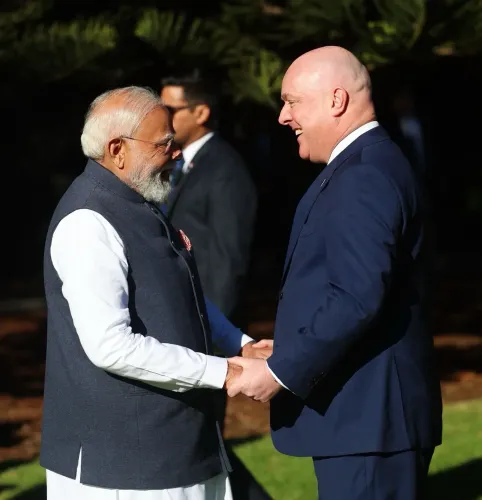
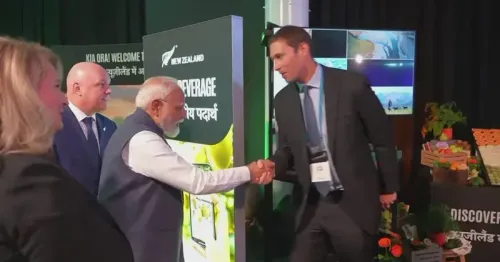
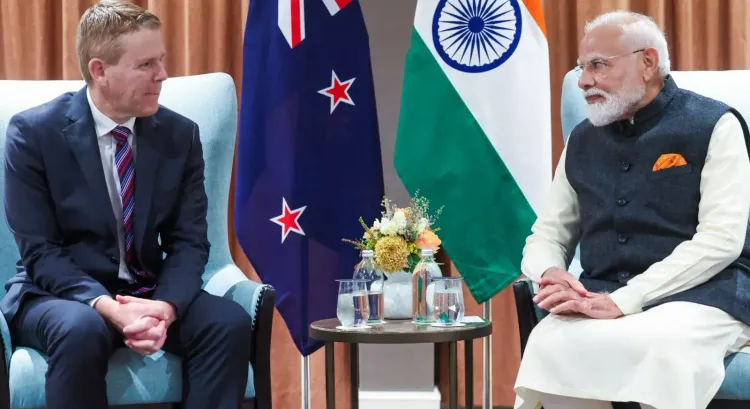
Prime Minister Narendra Modi met New Zealand's Leader of the Opposition, Chris Hipkins, on Saturday, 11 July 2026, holding discussions that spanned trade, technology, and people-to-people ties between the two countries. The meeting underscored the depth of the India-New Zealand strategic partnership, with both sides affirming the broad bipartisan backing that continues to define the relationship.
Context
In his post on X, PM Modi noted that the discussion 'covered key aspects of our strategic partnership, including trade, technology and people-to-people ties,' adding that 'strong bipartisan support for our relationship remains one of its defining' features. The meeting with Hipkins — who led New Zealand as Prime Minister from January to November 2023 before his Labour Party lost the general election — reflects New Delhi's established practice of engaging both ruling and opposition figures in partner democracies to ensure policy continuity regardless of electoral outcomes.
Policy Backdrop
India and New Zealand have maintained diplomatic relations since 1950, with cooperation spanning trade, education, defence, and multilateral issues across the Indo-Pacific. Negotiations for a Comprehensive Economic Cooperation Agreement (CECA) were launched in 2010, though progress has been intermittent. Periodic leaders' meetings and agreements on civil nuclear cooperation and defence have marked the bilateral relationship since the early 2000s, building a layered architecture that successive governments on both sides have sought to deepen.
The emphasis on trade and technology aligns with New Delhi's broader Indo-Pacific outreach strategy, which prioritises economic diversification and technology partnerships with advanced economies. New Zealand, with its strengths in agri-tech, clean energy, and education, represents a complementary partner for India's growing technology and services sectors.
Stakeholders and Impact
The Indian diaspora in New Zealand — one of the fastest-growing communities in the country — stands to benefit from stronger people-to-people linkages, which can translate into smoother visa pathways, educational exchanges, and cultural programmes. Trade and technology businesses on both sides are closely watching any movement on the long-pending CECA negotiations, which, if concluded, could significantly expand bilateral commerce.
The bipartisan dimension of the meeting carries practical weight: by engaging Hipkins alongside the ruling government, PM Modi signals that India views the relationship as a state-to-state priority rather than one contingent on which party holds power in Wellington. This approach has been a consistent feature of New Delhi's diplomacy with key democratic partners.
What's Next
Observers will watch for any follow-up on stalled India-New Zealand trade negotiations and whether this engagement translates into a renewed push on the CECA framework. Potential technology cooperation agreements and enhanced defence ties in the Indo-Pacific context are also areas to monitor in the months ahead. The meeting adds momentum to a bilateral relationship that both sides have described as underutilised relative to its potential.
Point of View
India insulates the relationship from the volatility of electoral cycles in partner countries. The explicit mention of 'bipartisan support' as a defining feature signals that both sides view this as an institutional strength worth publicly reinforcing. Set against the backdrop of stalled CECA negotiations and India's accelerating Indo-Pacific outreach, the meeting also carries a quiet economic signal: New Delhi wants Wellington's full political spectrum aligned before any major trade or technology agreement can move forward. Whether this diplomatic groundwork translates into concrete deliverables on the CECA or technology cooperation fronts will be the real measure of its significance.
NationPress
10 Oct 2026
Frequently Asked Questions
Who is Chris Hipkins and why did PM Modi meet him?
Chris Hipkins is the Leader of the Opposition in New Zealand and former Prime Minister who led the country from January to November 2023. PM Modi met him on 11 July 2026 to discuss trade, technology, and people-to-people ties as part of India's practice of engaging both ruling and opposition figures in partner democracies.
What is the current state of India-New Zealand trade relations?
India and New Zealand launched negotiations for a Comprehensive Economic Cooperation Agreement (CECA) in 2010, but progress has been intermittent. The two countries cooperate on trade, education, defence, and multilateral issues, though the bilateral relationship is widely seen as underutilised relative to its potential.
What did PM Modi and Chris Hipkins discuss in their meeting?
According to PM Modi's post on X, the discussion covered key aspects of the India-New Zealand strategic partnership, including trade, technology, and people-to-people ties, with both sides noting the strong bipartisan support that defines the relationship.
How long have India and New Zealand had diplomatic relations?
India and New Zealand have maintained diplomatic relations since 1950, with cooperation expanding over decades to include trade, education, defence, and multilateral engagement in the Indo-Pacific region.
What is India's broader strategy behind meeting New Zealand's opposition leader?
India routinely engages both government and opposition figures in key partner democracies to secure policy continuity across electoral cycles. This approach ensures that bilateral agreements and partnerships are not disrupted by changes in government, reflecting New Delhi's long-term view of strategic relationships.