PM Modi Visits Giant Tortoise Enclosure in Seychelles
Synopsis
Prime Minister Narendra Modi visited the Giant Tortoise Enclosure at the Seychelles National Botanical Garden alongside President Dr. Patrick Herminie on 27 June 2026, spotlighting the Aldabra Giant Tortoise and India's growing emphasis on environmental diplomacy in the Indian Ocean region.
Key Takeaways
Prime Minister Narendra Modi visited the Giant Tortoise Enclosure at the Seychelles National Botanical Garden on 27 June 2026 .
The visit was conducted alongside Seychelles President Dr.
Patrick Herminie , reflecting the bilateral character of the engagement.
The Aldabra Giant Tortoise , native to the Aldabra Atoll — a UNESCO World Heritage Site — is one of the largest and longest-living land animals on Earth.
The visit is part of a sustained pattern of Indian high-level outreach to Indian Ocean island states since 2014 .
India's SAGAR doctrine, announced during Modi 's 2015 Seychelles visit, frames environmental and security cooperation as complementary pillars of regional engagement.
Joint conservation or climate-resilience agreements may follow as part of the broader bilateral agenda.
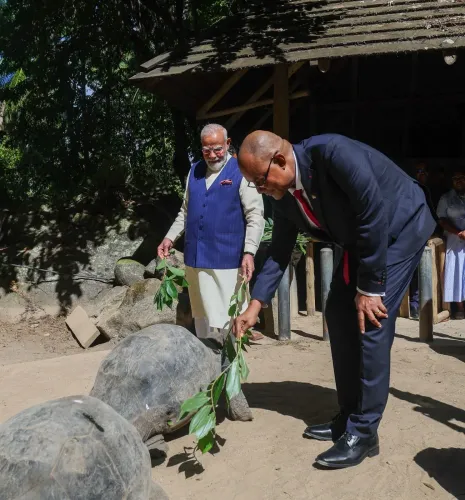
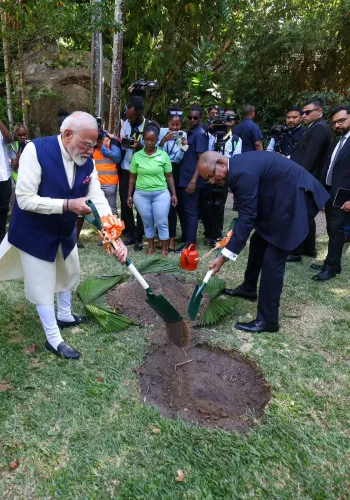
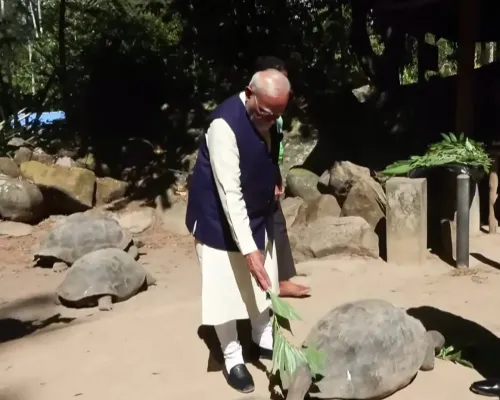
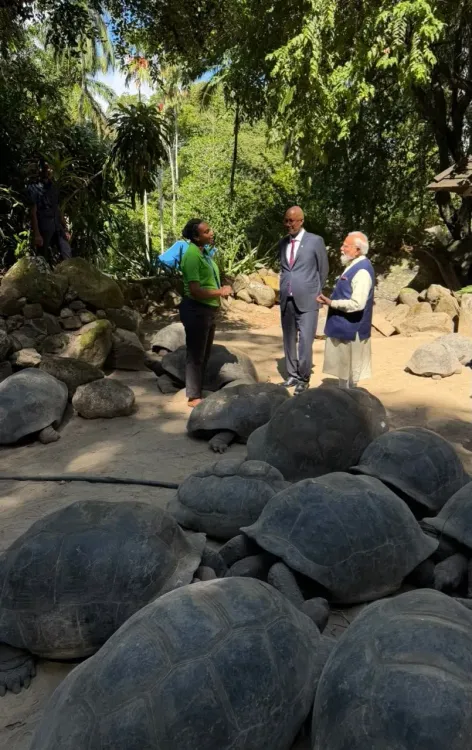
Prime Minister Narendra Modi visited the Giant Tortoise Enclosure at the Seychelles National Botanical Garden on Saturday, 27 June 2026, alongside President Dr. Patrick Herminie of Seychelles, highlighting the conservation significance of one of the world's most iconic species.
Sharing photographs from the visit, Prime Minister Modi noted that the Aldabra Giant Tortoise, native to Seychelles, is 'among the largest and longest-living species on Earth, with some of them witnessing over two' centuries of life — a detail that underscores the species' extraordinary biological legacy.
Context
The Seychelles National Botanical Garden, located in the capital Victoria, is home to a resident population of Aldabra Giant Tortoises and serves as one of the most visited conservation landmarks in the Indian Ocean region. The tortoises are native to the Aldabra Atoll, a UNESCO World Heritage Site and one of the largest raised coral atolls on the planet. The species is recognised globally for its longevity, with individuals known to live well beyond 100 years.
The visit took place during Prime Minister Modi's bilateral engagement with Seychelles, continuing a pattern of high-level Indian diplomatic outreach to Indian Ocean island states that has intensified since 2014. Visits to Mauritius, Seychelles, and the Maldives have been a recurring feature of India's neighbourhood-first and ocean-first foreign policy.
Policy Backdrop
India's engagement with Seychelles is anchored in the SAGAR (Security and Growth for All in the Region) doctrine, which Prime Minister Modi outlined during his 2015 visit to the archipelago. The doctrine frames India as a net security provider and partner in sustainable development across the Indian Ocean.
Biodiversity and environmental diplomacy have become increasingly prominent threads within this framework. Small Island Developing States like Seychelles are acutely vulnerable to climate change and ocean-level shifts, making conservation cooperation a natural area of shared interest between New Delhi and Victoria.
Stakeholders and Impact
The Aldabra Giant Tortoise is listed as a conservation-dependent species and is central to Seychelles' eco-tourism economy. International visibility from a visit by a head of government of India's stature draws global attention to the conservation challenges facing island ecosystems.
For India, the optics of a senior leader engaging directly with wildlife conservation in a partner nation reinforces its positioning as a responsible stakeholder in Indian Ocean environmental governance — a message directed as much at multilateral forums as at bilateral audiences.
What's Next
Observers will watch for any joint statements, memoranda of understanding, or cooperative frameworks on marine conservation or climate resilience that emerge from the broader bilateral agenda of this visit. Prime Minister Modi's travel to Indian Ocean nations has historically been accompanied by substantive agreements on infrastructure, security, and capacity-building alongside the ceremonial and cultural engagements.
As India deepens its role in Indian Ocean geopolitics, moments of environmental diplomacy such as this visit signal that conservation and strategic partnership are increasingly treated as complementary — not competing — priorities in New Delhi's regional playbook.
Point of View
Modi signals that conservation is a legitimate pillar of bilateral diplomacy, not merely a backdrop. This fits a broader arc in which New Delhi has used high-profile visits to small island states to project soft power while simultaneously advancing strategic interests. The visit is likely to be accompanied by substantive deliverables that give the imagery lasting policy weight.
NationPress
27 Jun 2026
Frequently Asked Questions
Why did PM Modi visit Seychelles in June 2026?
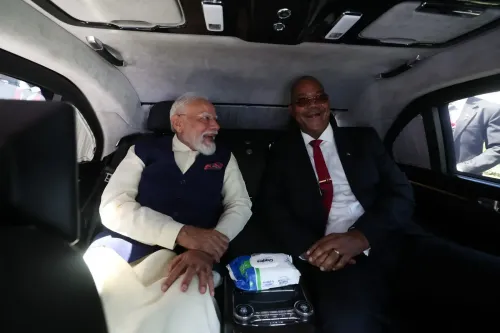
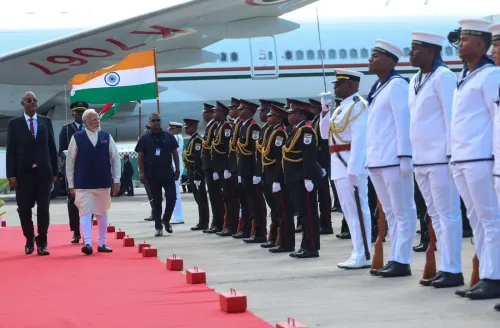
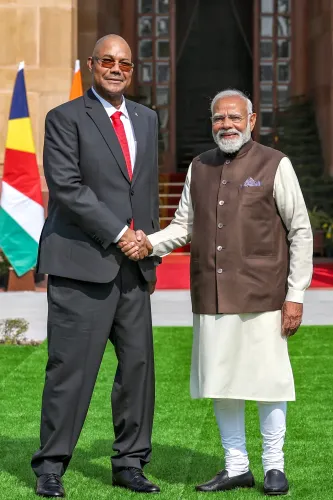
Prime Minister Narendra Modi visited Seychelles for a bilateral engagement with President Dr. Patrick Herminie , combining diplomatic meetings with cultural and conservation activities including a visit to the Giant Tortoise Enclosure at the Seychelles National Botanical Garden .
What is the Aldabra Giant Tortoise?
The Aldabra Giant Tortoise is one of the largest and longest-living land animals on Earth, native to the Aldabra Atoll in Seychelles , a UNESCO World Heritage Site . Some individuals are known to live well beyond 100 years .
What is India's SAGAR doctrine?
SAGAR stands for Security and Growth for All in the Region , a doctrine announced by Prime Minister Modi during his 2015 visit to Seychelles that positions India as a net security provider and development partner across the Indian Ocean .
How often does India's Prime Minister visit Seychelles?
India and Seychelles have maintained regular high-level bilateral engagement since 2014 , with visits forming part of a broader pattern of Indian outreach to Indian Ocean island states including Mauritius and the Maldives .
Where is the Seychelles National Botanical Garden?
The Seychelles National Botanical Garden is located in Victoria , the capital of Seychelles , and is one of the country's most prominent conservation and eco-tourism landmarks.