CM Bhupendra Patel backs Bharat Taxi cooperative model

Synopsis
Gujarat Chief Minister Bhupendra Patel has endorsed Bharat Taxi, a cooperative-model taxi initiative that gives drivers direct profit participation, calling it a landmark expansion of India's cooperative sector beyond agriculture into urban mobility under PM Modi and Amit Shah's policy direction.
Key Takeaways
Gujarat CM Bhupendra Patel publicly backed Bharat Taxi , a cooperative taxi initiative, on 27 June 2026 .
The initiative extends India's cooperative sector — traditionally limited to agriculture and dairy — into urban taxi and mobility services.
Drivers ('sarathis') receive direct profit participation in proportion to their labour, distinguishing the model from conventional aggregator platforms.
The scheme is framed under PM Modi's 'Shramev Jayate' principle and the broader Atmanirbhar Bharat push for decentralised economic models.
The Ministry of Cooperation , established in July 2021 under Amit Shah , has been the institutional driver of this sector diversification.
Regulatory amendments to the Multi-State Cooperative Societies Act may be needed to support national-scale rollout of service-sector cooperatives like Bharat Taxi.
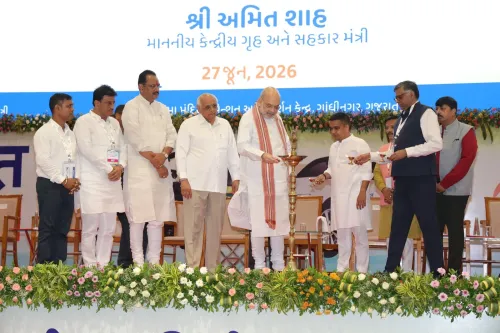
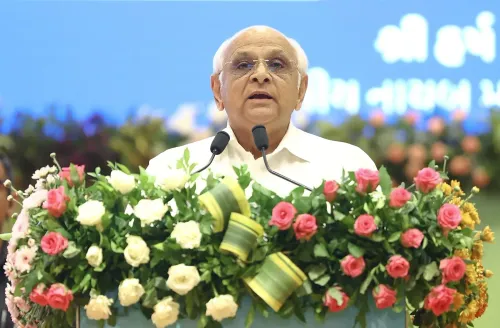
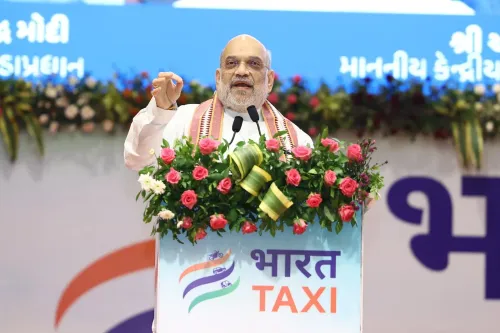
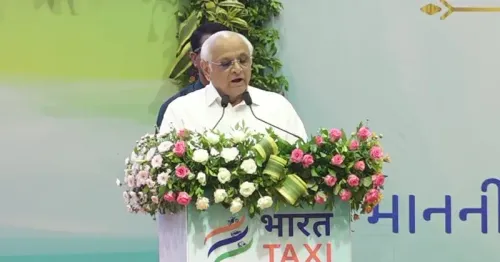
Gujarat Chief Minister Bhupendra Patel on Saturday, 27 June 2026 praised the expansion of India's cooperative sector into urban mobility, highlighting Bharat Taxi — a cooperative-based taxi initiative — as a transformative step toward driver welfare and economic self-reliance.
Writing in Gujarati on X, CM Patel credited Prime Minister Narendra Modi and Union Home and Cooperation Minister Amit Shah for steering the cooperative sector beyond its traditional boundaries. He stated that cooperatives, once confined to agriculture and animal husbandry, have now entered the taxi and mobility space through a 'novel idea' in the form of Bharat Taxi.
Translating his post: 'અત્યાર સુધી સહકાર ક્ષેત્ર માત્ર કૃષિ અને પશુપાલન જેવા અમુક જ સેક્ટરો પૂરતું મર્યાદિત ગણવામાં આવતું હતું' ['Until now, the cooperative sector was considered limited to only certain sectors such as agriculture and animal husbandry']. He added that Bharat Taxi places driver welfare at its core, offering drivers direct profit participation in proportion to their labour — embodying Prime Minister Modi's 'Shramev Jayate' ['Labour is supreme'] principle.
Context
The Ministry of Cooperation was established in July 2021 — the first dedicated central ministry for the sector — to provide focused institutional support and modernise India's cooperative movement. The move was widely seen as an effort to bring cooperatives into sectors beyond dairy and agriculture, where bodies like AMUL had already demonstrated the model's potential at scale.
Amit Shah, who holds the Cooperation portfolio alongside Home Affairs, has consistently championed the diversification of cooperatives into logistics, retail, and service industries. Bharat Taxi is presented as a direct product of this policy direction, extending the cooperative ownership model to urban transport and gig-economy drivers.
Policy Backdrop
The cooperative taxi concept aligns with the broader Atmanirbhar Bharat framework, which emphasises decentralised, worker-owned economic models as an alternative to platform-based gig employment. Under conventional ride-hailing platforms, drivers typically receive a fixed commission with no ownership stake; the cooperative model, by contrast, allows drivers — referred to in the post as 'sarathis' (charioteers) — to share directly in the venture's profits.
The Multi-State Cooperative Societies Act governs such entities at the national level, and any expansion of cooperative taxi societies across state lines may require amendments or fresh regulatory frameworks to accommodate service-sector cooperatives. Policymakers and cooperative law experts have flagged this as a key watch point for the initiative's scalability.
Stakeholders and Impact
The primary beneficiaries of Bharat Taxi are taxi drivers and cooperative society members who gain both livelihood security and a share of profits — a departure from the commission-only earnings structure of commercial aggregator platforms. For riders, the cooperative model could translate into competitive fares, as the absence of external shareholders reduces the pressure for profit extraction.
Broader cooperative societies and their federations stand to gain institutional precedent from this expansion. If the Bharat Taxi model is validated at scale, similar frameworks could be replicated in logistics, renewable energy, and retail cooperatives — sectors that have been discussed in policy circles as the next frontier for cooperative diversification.
What's Next
The state-level rollout of Bharat Taxi cooperative societies will be closely watched, particularly in large states like Gujarat, Maharashtra, and Uttar Pradesh, where urban mobility demand is high. Regulatory clarity on profit-sharing norms and cooperative registration for service-sector entities will determine how quickly the model can scale nationally.
As the Ministry of Cooperation continues to push the sector into non-agricultural domains, Bharat Taxi may serve as a template for India's broader ambition to bring gig and platform workers under a more equitable ownership structure — one that could reshape the political economy of urban labour in the years ahead.
Point of View
The messaging positions the cooperative model as a worker-first alternative to foreign-origin aggregator platforms. This fits a broader pattern since 2021 of using the Ministry of Cooperation to build a visible, BJP-associated institutional ecosystem in the cooperative space. The success of Bharat Taxi at scale will be a key test of whether cooperative diversification can move from political symbolism to structural economic change.
NationPress
27 Jun 2026
Frequently Asked Questions
What is Bharat Taxi?
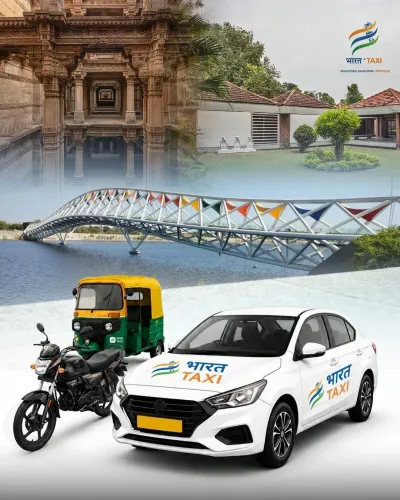
Bharat Taxi is a cooperative-model taxi initiative under which drivers receive direct profit participation based on their labour, rather than a fixed commission from a platform company. It is designed to extend India's cooperative sector into urban mobility services.
Who launched Bharat Taxi in India?
Bharat Taxi has been developed under the policy direction of the Ministry of Cooperation , led by Union Minister Amit Shah , as part of a broader effort to diversify India's cooperative sector beyond agriculture and dairy.
How is Bharat Taxi different from Ola or Uber?
Unlike conventional ride-hailing aggregators where drivers earn a set commission, Bharat Taxi operates on a cooperative ownership model in which drivers share directly in the profits of the venture, giving them a stake in the business rather than just a service fee.
What is India's Ministry of Cooperation?
The Ministry of Cooperation was established in July 2021 as India's first dedicated central ministry for the cooperative sector, with Amit Shah as its minister. Its mandate is to modernise and diversify cooperatives across sectors.
What is 'Shramev Jayate' and how does it relate to Bharat Taxi?
'Shramev Jayate' — meaning 'Labour is supreme' — is a principle associated with Prime Minister Narendra Modi that emphasises the dignity and reward of workers. CM Bhupendra Patel invoked it to describe how Bharat Taxi's profit-sharing model directly rewards drivers for their effort.