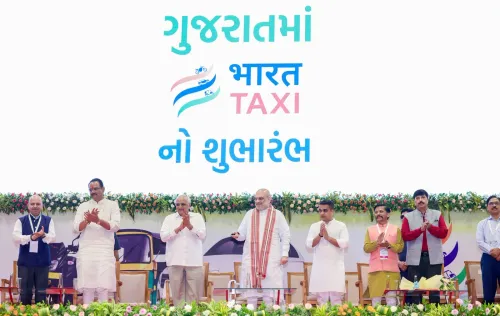
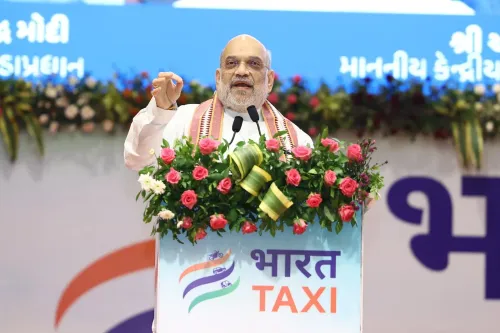
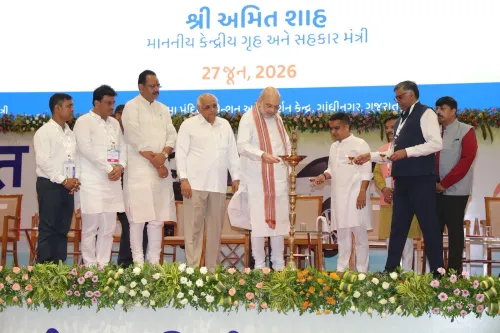
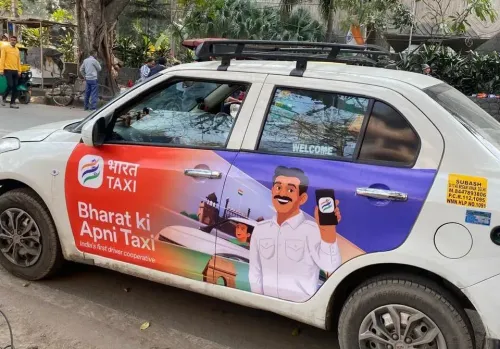
Gujarat CMO hails Bharat Taxi as world's largest mobility cooperative
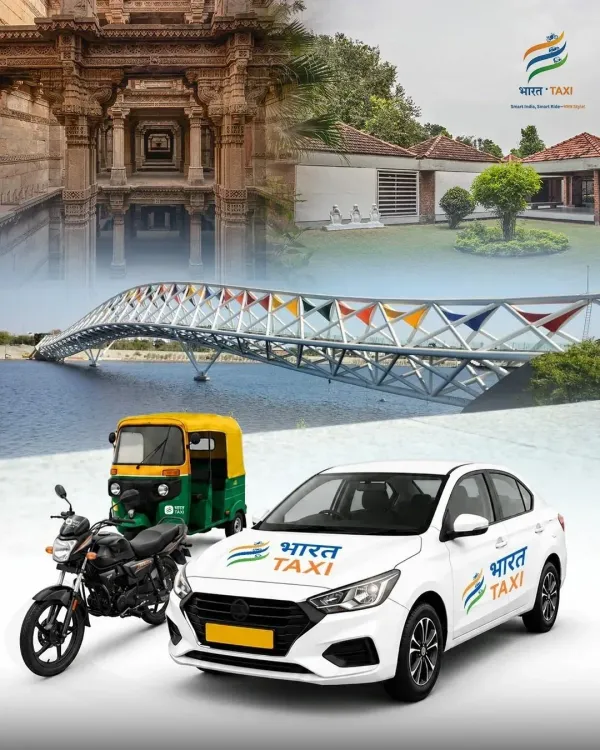
Synopsis
The Chief Minister's Office of Gujarat promoted Bharat Taxi on 29 May 2026, calling it the world's largest mobility cooperative. The platform claims 25-30% driver income gains, 15% passenger savings, training for over 10,000 drivers, and an SOS link with Gujarat Police — all under the central government's 'prosperity through cooperation' agenda.
Key Takeaways
The Chief Minister's Office of Gujarat on 29 May 2026 highlighted Bharat Taxi as the world's largest mobility cooperative.
Drivers affiliated with the platform reportedly see a 25% to 30% rise in monthly income through a cooperative ownership model.
Passengers are said to save approximately 15% compared to conventional aggregators due to transparent pricing.
Over 10,000 drivers have received professional training in soft skills and digital handling under the initiative.
An SOS integration with Gujarat Police provides a safety layer for both drivers and passengers.
The initiative aligns with the Ministry of Cooperation , established in July 2021 under Amit Shah , to expand cooperative models into new economic sectors.
The Chief Minister's Office of Gujarat on 29 May 2026 highlighted Bharat Taxi, describing it as a revolutionary initiative in India's cooperative sector and positioning it as the world's largest mobility cooperative, crediting the leadership of Prime Minister Narendra Modi and Union Home and Cooperation Minister Amit Shah.
Context
The Gujarat CMO's post, written in Gujarati, describes Bharat Taxi as 'ek krantikari pahel' (a revolutionary initiative) that realises the vision of 'Sahkarathi Samridhi' — 'prosperity through cooperation'. The platform is presented as a story of thousands of drivers whose livelihoods have been transformed under a cooperative ownership model, offering both safety and convenience to passengers.
According to the post, drivers affiliated with Bharat Taxi have seen a 25% to 30% increase in monthly income, while passengers are reportedly saving approximately 15% through a transparent pricing system. More than 10,000 drivers have received professional training in soft skills and digital handling, the post states.
Policy Backdrop
The initiative sits squarely within the central government's cooperative expansion agenda. The Ministry of Cooperation was established in July 2021 under Amit Shah — the first dedicated ministry for the sector in India's history — with the explicit goal of modernising and mainstreaming cooperative institutions across economic domains.
Bharat Taxi represents an extension of that framework into urban mobility, a sector long dominated by private aggregators. By applying cooperative principles — shared ownership, transparent earnings, and collective governance — the model aims to reduce driver dependence on profit-driven platforms and redirect surplus income to the workers themselves.
Stakeholders and Impact
The post flags a notable safety feature: an SOS integration with Gujarat Police embedded in the platform, described as a 'Suraksha Kavach' (security shield) for both passengers and drivers. This public-safety linkage distinguishes Bharat Taxi from conventional ride-hailing apps and signals a model of civic-cooperative coordination.
For drivers, the cooperative structure offers income stability and professional development. For passengers, the transparent fare mechanism and police-linked emergency response address two persistent concerns — overcharging and personal safety — that have dogged private aggregator platforms in Indian cities.
What's Next
The broader policy signal from Gujarat's promotion of Bharat Taxi is the potential for replication across other states. The central government's cooperative strategy has consistently used successful state-level models as templates for national rollout, and a functioning mobility cooperative with police integration could serve as a blueprint.
Observers will watch whether the central government issues formal guidelines for cooperative taxi platforms and whether states beyond Gujarat adopt similar frameworks — a development that would mark a significant structural shift in how urban transport is organised and regulated in India.
Point of View
Directly challenging the dominance of private ride-hailing firms. The SOS-police integration is a shrewd addition: it ties a commercial venture to a public-safety mandate, making regulatory pushback harder. If the model scales nationally, it could reshape the political economy of gig work in India, aligning millions of drivers more closely with state-backed institutions rather than private capital.
NationPress
13 Oct 2026
Frequently Asked Questions
What is Bharat Taxi and how does it work?
Bharat Taxi is a cooperative-owned mobility platform described as the world's largest mobility cooperative, where drivers are members of the cooperative rather than contractors for a private company. It uses a digital app with transparent pricing and has integrated an SOS feature linked to Gujarat Police for passenger and driver safety.
How much more do Bharat Taxi drivers earn compared to other platforms?
According to the Chief Minister's Office of Gujarat, drivers affiliated with Bharat Taxi have seen a 25% to 30% increase in their monthly income, attributed to the cooperative model which directs a greater share of earnings to the drivers themselves.
How does Bharat Taxi save money for passengers?
The platform uses a transparent pricing system that, according to the Gujarat CMO's post, results in approximately 15% savings for passengers compared to conventional ride-hailing services.
What training has been given to Bharat Taxi drivers?
More than 10,000 drivers have received professional training in soft skills and digital handling under the Bharat Taxi initiative, as stated by the Chief Minister's Office of Gujarat.
What is the Ministry of Cooperation and why was it created?
The Ministry of Cooperation is a dedicated central government ministry established in July 2021 under Union Minister Amit Shah. It was created to give focused policy attention to India's cooperative sector and to modernise cooperative institutions across economic domains, including agriculture, dairy, and now urban mobility.