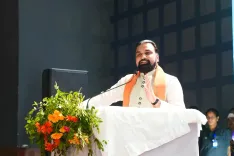
PM Modi Welcomes Japan PM Takaichi, Bilateral Talks Set
Synopsis
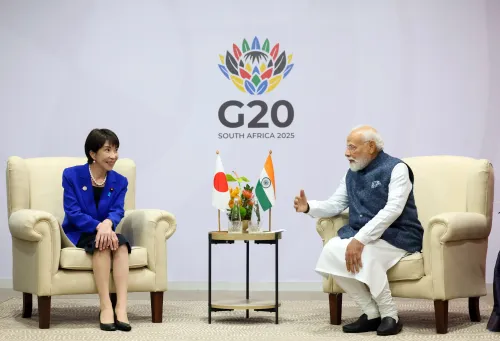
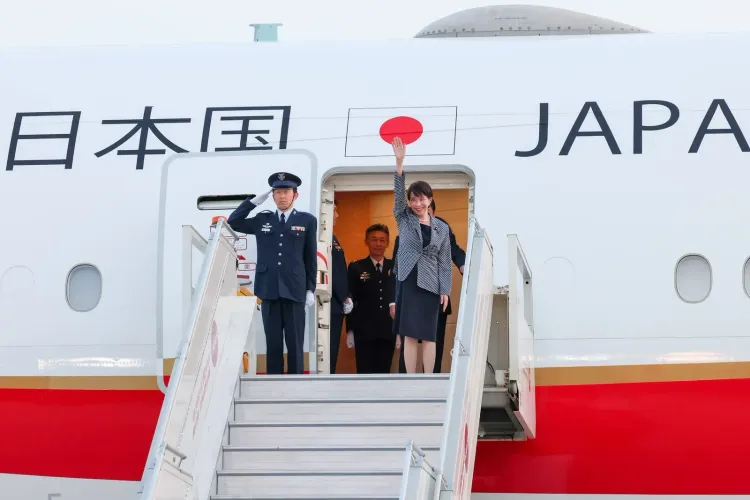
Prime Minister Narendra Modi welcomed Japanese Prime Minister Sanae Takaichi to India on 1 July 2026, her first visit to the country, and announced wide-ranging bilateral talks the following day to strengthen the Japan-India Special Strategic Global Partnership and joint Indo-Pacific commitments.
Key Takeaways
PM Modi welcomed Japanese PM Sanae Takaichi to India on 1 July 2026 — her first visit to the country as Prime Minister.
Bilateral talks are scheduled for 2 July 2026 , covering a wide range of fields under the Japan-India Special Strategic Global Partnership .
The partnership framework was originally established during Modi 's 2014 visit to Tokyo and has since expanded to include defence, civil nuclear, infrastructure and technology cooperation.
Both leaders reaffirmed commitment to joint contributions to peace, stability and prosperity in the Indo-Pacific region and beyond.
Possible outcomes include joint statements, new memoranda of understanding, and commitments to annual summit-level engagement.
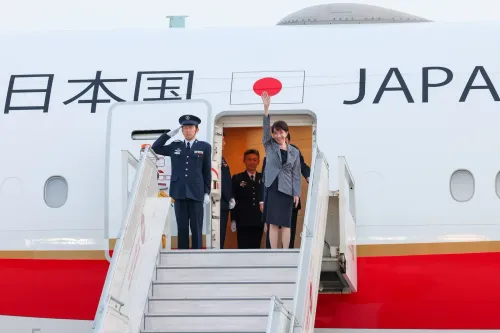
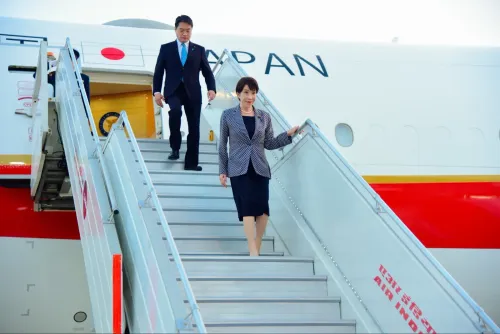
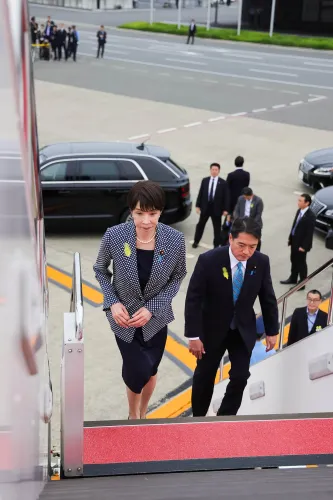
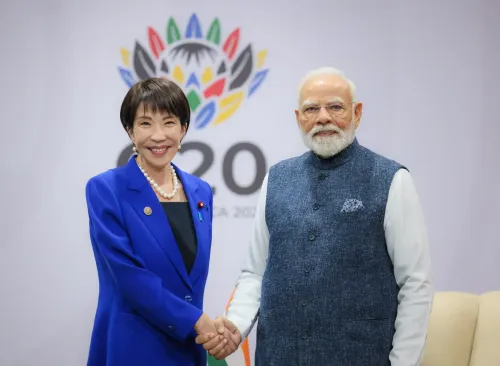
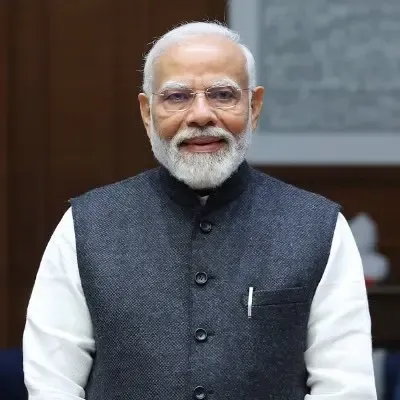
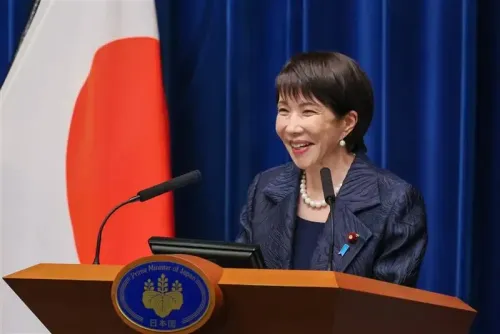
Prime Minister Narendra Modi on Wednesday, 1 July 2026 extended a warm welcome to Japanese Prime Minister Sanae Takaichi on her first-ever visit to India, saying he looks forward to wide-ranging talks aimed at deepening the Japan-India Special Strategic Global Partnership.
Posting in Japanese on X, Modi addressed Takaichi directly: 'Takaichi Sanae Shushō, Indo e yōkoso' ('Prime Minister Sanae Takaichi, welcome to India'). He expressed anticipation for discussions spanning 'a wide range of fields' and reaffirmed that the two nations would continue to contribute jointly to 'peace, stability and prosperity in the Indo-Pacific region and beyond.'
Context
The visit marks Prime Minister Takaichi's maiden trip to India in her capacity as head of government, underscoring the personal diplomatic investment both sides are making in the relationship. Modi's choice to post in Japanese signals a deliberate gesture of cultural courtesy, a practice he has employed with other foreign leaders to signal warmth and respect.
Bilateral meetings at this level typically follow a structured agenda prepared by the two foreign ministries, covering strategic, economic and people-to-people dimensions of the partnership.
Policy Backdrop
The Japan-India Special Strategic and Global Partnership was established during Modi's visit to Tokyo in 2014 and reinforced through reciprocal summits since then. The framework covers defence cooperation, civil nuclear energy, infrastructure investment and technology collaboration, making it one of the most comprehensive bilateral arrangements India maintains in the Indo-Pacific.
Since 2014, the two countries have institutionalised 2+2 ministerial-level talks between their foreign and defence ministers, conducted joint military exercises, and advanced large-scale connectivity projects. These efforts sit alongside parallel engagement in the Quad — the Quadrilateral Security Dialogue grouping India, Japan, the United States and Australia — which focuses on maritime security and supply-chain resilience.
Stakeholders and Impact
The talks are expected to engage the foreign and defence establishments of both countries, with potential outcomes including joint statements or memoranda of understanding on specific cooperation areas. Business communities in both nations, particularly those engaged in infrastructure, semiconductors and clean energy, will watch closely for signals on investment facilitation.
For India, deepening ties with Japan supports its broader objective of diversifying strategic partnerships and reinforcing a rules-based order in the Indo-Pacific. For Japan, engagement with New Delhi provides a key anchor in its own Indo-Pacific strategy.
What's Next
Formal bilateral talks are scheduled for Thursday, 2 July 2026, the day after Modi's welcome post. Observers will look for any joint statements, new agreements, or announcements of follow-up mechanisms such as an annual summit commitment. The outcomes could set the tone for India-Japan cooperation through the remainder of 2026 and beyond.
Point of View
Coming early in her tenure as Prime Minister, suggests Tokyo is equally invested in cementing continuity in a partnership built over a decade of summits and institutional deepening. The emphasis on the 'Special Strategic Global Partnership' framing — rather than narrower economic or security language — indicates both sides want to present a comprehensive, values-aligned front. Outcomes from these talks will be closely watched as a barometer for how the Quad coalition sustains momentum amid shifting geopolitical currents in 2026.
NationPress
2 Jul 2026
Frequently Asked Questions
Why is Japanese PM Takaichi visiting India in July 2026?
Japanese Prime Minister Sanae Takaichi is visiting India on 2 July 2026 for bilateral talks with PM Modi aimed at deepening the Japan-India Special Strategic Global Partnership across defence, technology, infrastructure and Indo-Pacific security.
What is the Japan-India Special Strategic Global Partnership?
The Japan-India Special Strategic Global Partnership is a comprehensive bilateral framework established in 2014 during PM Modi's visit to Tokyo. It covers defence cooperation, civil nuclear energy, infrastructure investment and technology collaboration.
Is this Sanae Takaichi's first visit to India?
Yes, according to PM Modi's post on X, this is Sanae Takaichi's first-ever visit to India, which Modi described as an occasion he 'warmly welcomes.'
What is India and Japan's role in the Indo-Pacific?
India and Japan are key partners in maintaining peace and stability in the Indo-Pacific, cooperating on maritime security, supply-chain resilience and connectivity projects. Both are also members of the Quad alongside the United States and Australia.
What outcomes are expected from the Modi-Takaichi talks?
Observers expect possible joint statements, memoranda of understanding on specific cooperation areas, and commitments to continued annual summit-level engagement between India and Japan.