PM Modi Wishes Kerala CM VD Satheesan on Birthday
Synopsis
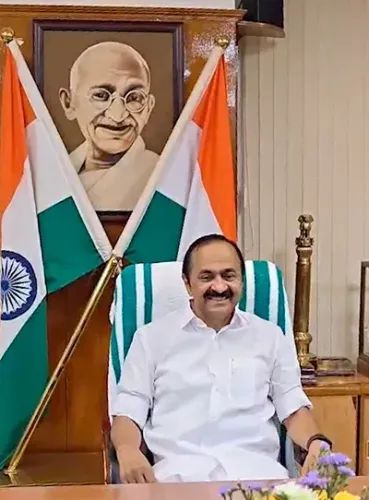
Prime Minister Narendra Modi on 1 June 2026 extended birthday greetings to Kerala Chief Minister VD Satheesan on X, wishing him a long life and good health in a gesture of cross-party courtesy.
Key Takeaways
PM Narendra Modi posted birthday wishes for Kerala CM VD Satheesan on 1 June 2026 .
The Prime Minister wished Satheesan 'a long life and good health.' Modi used the term 'Keralam' — the Malayalam name for the state — in his message.
The greeting is consistent with a national convention of cross-party personal courtesy among senior leaders.
VD Satheesan is a senior Congress leader in Kerala , a state with highly competitive LDF-UDF politics.
Prime Minister Narendra Modi on Sunday, 1 June 2026, extended birthday greetings to Kerala Chief Minister Shri VD Satheesan, wishing him a long life and good health in a post on X.
Context
In his message, PM Modi wrote: 'Birthday wishes to Keralam CM, Shri VD Satheesan Ji. May he be blessed with a long life and good health.' The greeting was addressed directly to Satheesan's official X handle, @vdsatheesan.
VD Satheesan is a senior Congress leader from Kerala and a prominent figure in the state's political landscape. The use of 'Keralam' — the Malayalam-language name for the state — in the Prime Minister's message is a gesture of cultural acknowledgement.
Policy Backdrop
Indian national leaders have a long-standing convention of exchanging personal courtesies — including birthday wishes — with political counterparts across party lines. Such messages from the Prime Minister's office are regularly extended to state-level leaders regardless of their party affiliation or the ruling coalition in their state.
Kerala is a southern Indian state with a highly competitive political environment, historically alternating between the CPI(M)-led Left Democratic Front and the Congress-led United Democratic Front. The BJP has been seeking to strengthen its foothold in the state over successive election cycles.
Stakeholders and Impact
The message carries symbolic weight as an instance of cross-party civility at the national level. For Kerala's political observers, a birthday greeting from the Prime Minister to a Congress leader underscores the separation of personal protocol from partisan rivalry.
Such gestures are closely watched by state-level legislators and party workers as signals of the broader political climate between New Delhi and state capitals governed or led by opposition figures.
What's Next
Kerala remains a key political battleground, and the state's leadership and legislative dynamics will continue to draw national attention. PM Modi's gesture reflects an enduring norm of institutional courtesy that transcends electoral competition — a norm that is likely to persist regardless of shifting political alignments in the state.
Point of View
The message fits a broader pattern of Modi using social media to project statesmanship beyond the BJP's immediate political base.
NationPress
14 Oct 2026
Frequently Asked Questions
Why did PM Modi wish VD Satheesan on his birthday?
PM Modi extended birthday greetings to Kerala CM VD Satheesan as part of a long-standing Indian political convention of personal courtesy across party lines, regardless of partisan differences.
Who is VD Satheesan?
VD Satheesan is a senior Congress leader from Kerala who serves as the state's Chief Minister, a prominent figure in Kerala's competitive UDF-LDF political landscape.
What did PM Modi say to VD Satheesan?
PM Modi wrote: 'Birthday wishes to Keralam CM, Shri VD Satheesan Ji. May he be blessed with a long life and good health.'
Is it common for PM Modi to wish opposition leaders on their birthdays?
Yes, Indian Prime Ministers regularly extend birthday and other personal greetings to state-level leaders from rival parties, a convention observed across governments.
What does 'Keralam' mean in Modi's post?
'Keralam' is the Malayalam-language name for the state of Kerala, and its use by PM Modi is seen as a gesture of cultural acknowledgement towards the state's linguistic identity.