PM Modi's third Australia visit signals decade of deepening India-Australia ties
Synopsis
Modi's third trip to Australia in a decade is more than a diplomatic courtesy call — it is the clearest signal yet that the India-Australia axis is hardening into one of the Indo-Pacific's most consequential bilateral relationships, built on critical minerals, defence alignment, and a 10-lakh-strong diaspora that both governments are actively leveraging.
Key Takeaways
PM Modi will visit Melbourne on 10 July — his third trip to Australia in 10 years .
The visit is the third Annual Leaders' Summit between India and Australia, a format India shares with very few nations.
India and Australia elevated ties to a Comprehensive Strategic Partnership in 2020 , covering defence, clean energy, trade, and education.
Approximately 10 lakh Indians live in Australia, described by High Commissioner Nagesh Singh as a 'living bridge' between the two countries.
Both nations share a vision for a free, open, and rule-based Indo-Pacific as a core geopolitical convergence.
Australia's critical minerals wealth and India's large-scale manufacturing capacity are cited as key economic complementarities.
Prime Minister Narendra Modi's upcoming visit to Australia — his third in 10 years — is a 'very important indicator' of how rapidly bilateral relations have grown, India's High Commissioner to Australia Nagesh Singh said in an interview on 7 July. The envoy described the partnership as a 'very consequential relationship' underpinned by shared democratic values, geopolitical convergences, and deep economic complementarities.
What the Visit Covers
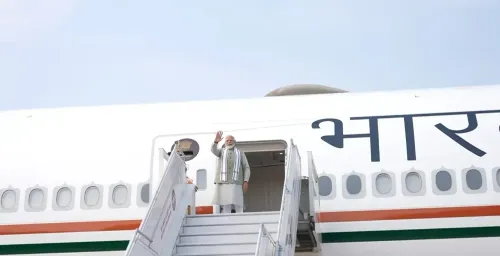
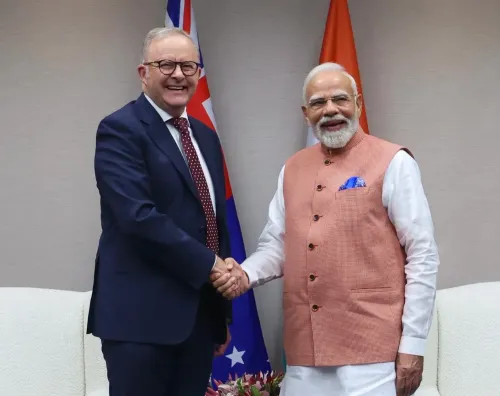
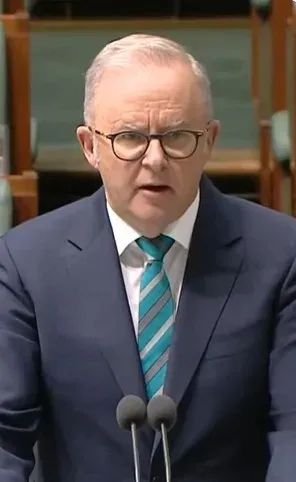
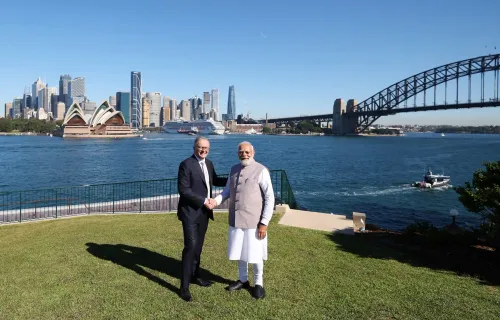
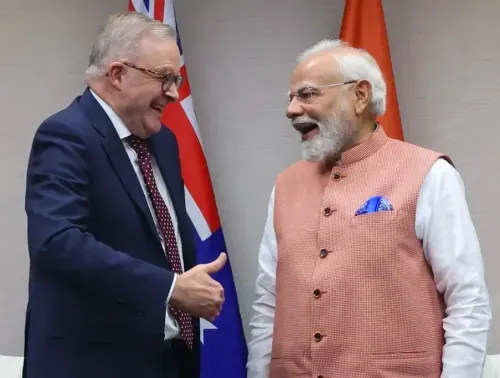
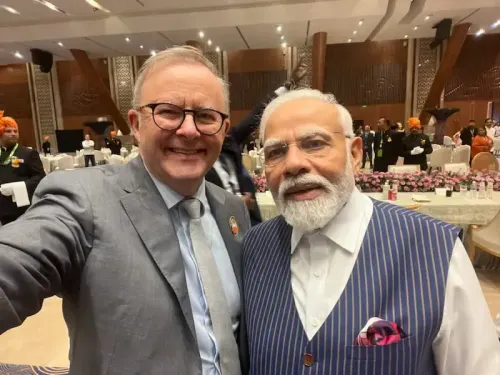
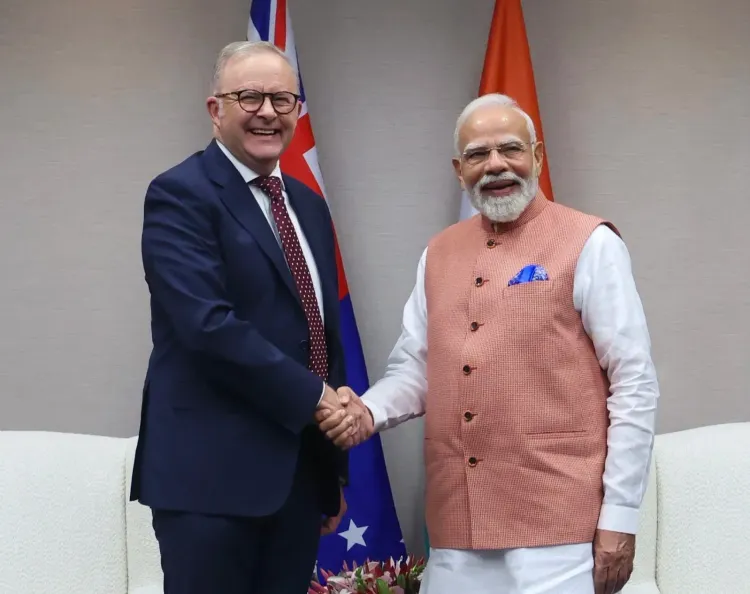
PM Modi is scheduled to travel to Melbourne on 10 July at the invitation of Australian Prime Minister Anthony Albanese. The two leaders will hold an Annual Leaders' Summit — the third such summit — covering defence and security, trade and investment, education and mobility, and people-to-people ties. Modi will also meet members of the Indian diaspora during the visit.
Why the Relationship Has Deepened
India and Australia elevated their ties to a Comprehensive Strategic Partnership in 2020, a designation that spans defence, clean energy, new and emerging technologies, education, and skilling. High Commissioner Singh pointed to structural complementarities as a key driver: Australia's resource wealth — including critical minerals — aligns with India's large market and large-scale manufacturing capacity.
'Australia is a resource-rich country. They have all kinds of minerals that we need. Our market is very big. Australia has technologies. We have the capacity for upscaling. We can do manufacturing on a large scale,' Singh said.
Geopolitical Convergences
Singh cited a shared vision for the Indo-Pacific as a foundational pillar — both nations want a 'free, open, inclusive, rule-based Indo-Pacific, where there is peace, progress, prosperity for everyone.' He noted that global instability, including the ongoing conflict in West Asia, has reinforced rather than disrupted bilateral ties, calling the relationship 'on a very stable platform.'
Both countries are also members of the Quad grouping alongside the United States and Japan, and their alignment on multilateral security frameworks has grown more pronounced in recent years. Notably, India maintains similar annual leaders' summit formats with only a handful of countries, including Japan and Russia.
The Diaspora as a Living Bridge
Singh described the approximately 10 lakh Indians living in Australia as a 'living bridge' between the two nations. 'They are very well-integrated in this society. They are in good positions, in business, in politics,' he said, drawing a parallel with the Indian-American community's role in strengthening US-India ties. The diaspora, he added, provides connectivity on political, financial, and cultural fronts.
What Comes Next
Following Modi's Melbourne visit, Prime Minister Albanese is expected to travel to India for the next Annual Leaders' Summit. Observers will watch whether the talks yield concrete deliverables on the India-Australia Economic Cooperation and Trade Agreement (ECTA) and on critical minerals supply chains — two areas where both sides have signalled ambition but where implementation timelines remain open.
Point of View
Quad security architecture, and supply-chain diversification away from China. The Annual Leaders' Summit format — which India maintains with only a handful of countries — signals strategic depth, not just diplomatic warmth. The real test of this visit will be whether it produces binding commitments on critical minerals supply chains and ECTA implementation, two areas where ambition has consistently outrun delivery.
NationPress
7 Jul 2026
Frequently Asked Questions
Why is PM Modi visiting Australia in July 2025?
PM Modi is travelling to Melbourne on 10 July at the invitation of Australian Prime Minister Anthony Albanese to hold the third Annual Leaders' Summit between the two countries. The visit will cover defence and security, trade and investment, education, mobility, and people-to-people ties.
How many times has PM Modi visited Australia?
This will be PM Modi's third visit to Australia in 10 years, which India's High Commissioner Nagesh Singh described as a 'very important indicator' of how rapidly bilateral ties have grown over the past decade.
What is the India-Australia Comprehensive Strategic Partnership?
India and Australia elevated their bilateral relationship to a Comprehensive Strategic Partnership in 2020. It encompasses defence and security, trade and investment, new and emerging technologies, clean energy, education, skilling, and people-to-people connectivity.
What role does the Indian diaspora play in India-Australia relations?
Approximately 10 lakh Indians live in Australia and are described by High Commissioner Nagesh Singh as a 'living bridge' between the two nations. The community is well-integrated in Australian society, with a presence in business and politics, and provides connectivity on political and financial matters.
What geopolitical interests do India and Australia share?
Both nations share a vision for a free, open, inclusive, and rule-based Indo-Pacific. They are also both members of the Quad grouping alongside the United States and Japan. High Commissioner Singh noted that global instability, including the conflict in West Asia, has reinforced rather than weakened their bilateral ties.