Who is responsible for partition on religious grounds?
Synopsis
The political landscape is heating up as Union Minister Nitin Gadkari's remarks about secularism at a book launch ignite fierce exchanges between the BJP and Congress. Accusations fly regarding historical responsibilities and the current state of communal dynamics in India. This evolving debate raises critical questions about the true nature of secularism in the country.
Key Takeaways
Nitin Gadkari 's remarks have reignited debates on secularism.
The BJP and Congress are at odds over historical accountability for partition.
True secularism emphasizes equal respect for all religions.
Communal divisions are linked to political developments post-independence.
Indian culture prioritizes collective welfare over individual interests.
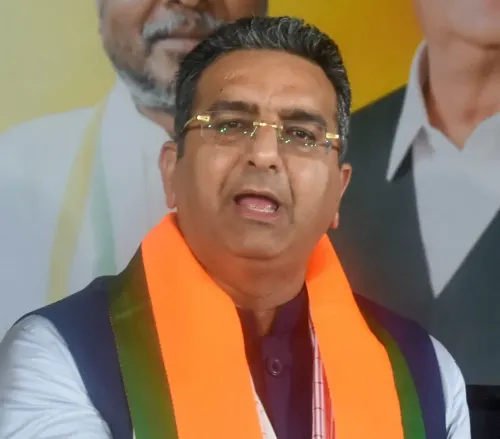
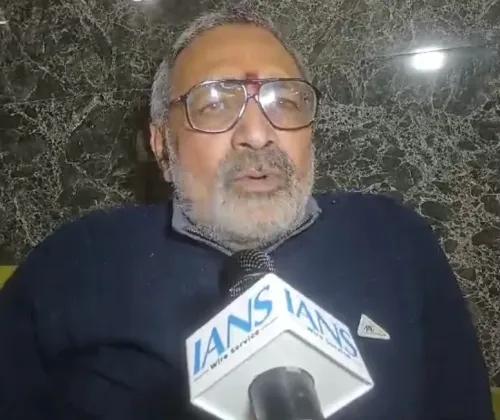
New Delhi, Dec 24 (NationPress) Political tensions escalated on Wednesday following Union Minister Nitin Gadkari’s comments regarding secularism at a book launch event in the capital, igniting fierce debates between the BJP and the Congress.
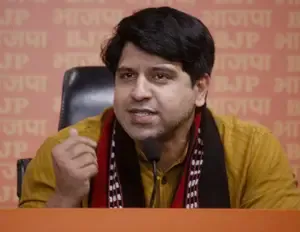
In defense of Gadkari’s remarks, BJP spokesperson Shehzad Poonawalla asserted that the Union Minister had accurately addressed the subject of secularism and communal politics.
“Who agreed to the partition of the nation based on religious lines? It was the Congress party that acquiesced to it, while Jinnah was the one who demanded it. Who instigated the most Hindu-Muslim riots in our nation?” Poonawalla pressed.
Continuing his critique, he said, “Even now, who pushes for a Muslim reservation? Who calls for quotas for Muslims in government contracts?” The BJP leader accused the Congress of practicing appeasement politics while challenging its dedication to true secular principles.
In response, Congress MP Imran Masood dismissed the BJP’s claims as divisive politics and reminded them of India’s freedom struggle.
“Work together to govern if you can. Who established the foundation for Hindu-Muslim unity before the independence movement?” Masood asked.
Highlighting historical unity, he said, “During the fight for freedom, Hindus and Muslims stood shoulder to shoulder. In the revolt of 1857, on one side was Mangal Pandey and on the other, numerous ulema faced execution.”
Masood contended that communal rifts only intensified with the rise of the Muslim League and other political factions, stating, “This divisive agenda commenced only after your party and the Muslim League gained prominence.”
The exchanges were sparked by Gadkari’s speech during the launch of the book ‘Sanatan Sanskriti Ki Atal Drishti’, written by Rajasthan Assembly Speaker Professor Vasudev Devnani. The event was also attended by Vice President C.P. Radhakrishnan.
During his address, Gadkari emphasized that secularism should not be misinterpreted as favoritism towards any single community. He elaborated that authentic secularism is founded on the principle of ‘Sarva Dharma Sambhav’, which signifies equal respect for all faiths, justice for everyone, and fair treatment of every citizen.
Echoing the sentiments of former Prime Minister Atal Bihari Vajpayee, Gadkari stated, “India is a secular nation. It has always been secular, and it will continue to be.”
He stressed that this ethos emanates from India’s civilization, rather than from any political ideology. “This is not due to the BJP or RSS. It is because of Bharatiya Sanskriti, Hindu Sanskriti, and Sanatan Sanskriti, which teach us to aspire for the welfare of the entire world,” he explained.
In a subtle jab at the Nehru-Gandhi family, Gadkari commented that Indian culture prioritizes collective welfare over individual or family interests.
Point of View
It is essential to recognize the ongoing discourse in our nation regarding secularism and communal harmony. Both the BJP and Congress present valid arguments reflecting their historical perspectives. It is vital to foster a constructive dialogue that prioritizes national unity over divisive politics. Our focus should remain on upholding the principles of equality and respect for all communities.
NationPress
6 Oct 2026
Frequently Asked Questions
What sparked the recent political debate?
The debate was sparked by Union Minister Nitin Gadkari's remarks regarding secularism during a book launch in New Delhi.
What accusations did the BJP make against Congress?
The BJP accused Congress of accepting the partition on religious grounds and engaging in appeasement politics.
How did Congress respond to these accusations?
Congress MP Imran Masood rejected the accusations as divisive politics and emphasized historical unity between Hindus and Muslims during India's freedom struggle.