Political Leaders Critique NCERT's Revision of Class 8 History Textbook
Synopsis
Political leaders are voicing strong objections to the NCERT's revised Class 8 Social Science textbook, which claims the Congress party accepted the 1947 Partition as the only feasible solution. This has reignited discussions about how India's history is conveyed to students.
Key Takeaways
Strong reactions from political leaders regarding NCERT textbook changes.
The textbook claims Congress accepted the 1947 Partition as "the only way forward" .
Calls for a contextual understanding of historical events surrounding Partition.
Revisions align with the National Education Policy 2020.
Debate highlights the importance of historical representation in education.
New Delhi, Feb 24 (NationPress) Leaders from various political parties have expressed strong discontent regarding the National Council of Educational Research and Training’s (NCERT) updated Class 8 Social Science textbook. The textbook mentions that the Congress party accepted the 1947 Partition as "the only way forward", igniting a renewed discussion on the teaching of India's history.
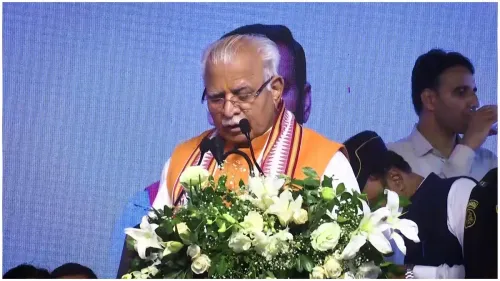
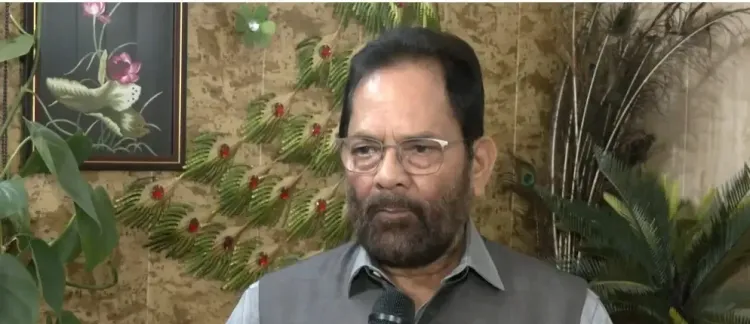
In an interview with IANS, senior BJP leader Mukhtar Abbas Naqvi criticized the Congress for misrepresenting historical facts for years. He stated, "The history of the Congress party is significantly blemished; that is why, even after many years, history itself has become contentious. The Congress attempted to obscure the nation’s truths, its historical context, and the legacies of prominent national figures. Now, all of this is coming to light for the country and the younger generation."
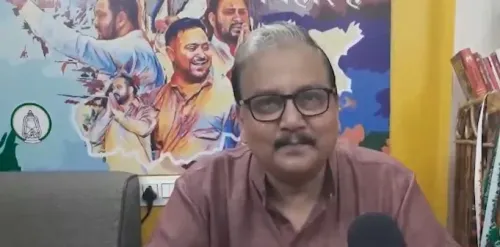
Meanwhile, RJD MP Manoj Kumar Jha emphasized the need to understand the context of Partition. He referenced Mahatma Gandhi’s perspective and noted that the leaders of that era were faced with unprecedented challenges. "Rivers of blood were flowing at that time. It is easy to deliver speeches today, but those making statements now may not fully grasp the severity of the situation back then," he remarked, adding that the Congress played a pivotal role in the freedom movement.
Bihar minister Ashok Choudhary from the Janata Dal-United described Partition as a profoundly painful episode in history. "Every instance of partition results in immense anguish. It was a very sorrowful narrative—trains were crowded with individuals traveling in both directions. It was truly unfortunate," he stated, while also suggesting that NCERT presents history from its own viewpoint.
The revised textbook, launched on February 23 in alignment with the National Education Policy (NEP) 2020, revisits significant historical events, including the 1919 Jallianwala Bagh massacre and the 1946 Direct Action Day, with an emphasis on Partition.
The changes have sparked a broader political discourse regarding historical representation, academic independence, and how India’s freedom struggle is depicted for future generations.
Point of View
Reflecting the ongoing struggle over historical narratives in India. This highlights the importance of academic autonomy and the need for a balanced portrayal of history that considers multiple perspectives.
NationPress
30 Sept 2026
Frequently Asked Questions
What changes were made to the Class 8 textbook?
The NCERT's revised Class 8 Social Science textbook includes the assertion that the Congress party accepted the 1947 Partition as the only feasible solution, alongside discussions of significant historical events like the Jallianwala Bagh massacre.
Why are political leaders reacting to the textbook revisions?
Political leaders are concerned that the revisions may distort historical truths and influence how future generations understand India's history, particularly regarding the Partition and the freedom struggle.
What is the significance of the NCERT revisions?
The revisions align with the National Education Policy (NEP) 2020 and aim to revisit key historical events, but they have also sparked broader debates about historical interpretation and academic freedom.
How does the Congress party respond to these claims?
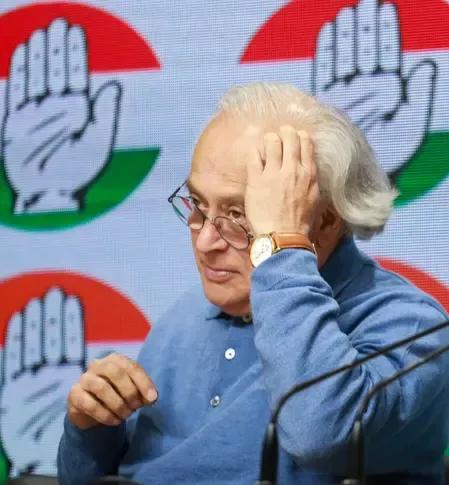
The Congress party has been accused of distorting history, but it argues that understanding the context of decisions made during the Partition is essential for a complete historical narrative.
What are the implications of this debate?
The ongoing debate underscores the importance of how history is taught in schools and reflects larger political divides regarding national identity and memory.