Supreme Court Takes Action on NCERT's Class 8 Textbook Over Judicial Corruption Reference
Synopsis
The Supreme Court has taken the significant step of registering a suo motu case regarding mentions of corruption in the judiciary in a Class 8 NCERT Social Science textbook, prompting discussions on the integrity of educational materials.
Key Takeaways
The Supreme Court has taken suo motu action regarding judicial corruption references.
Concerns were raised by legal experts about the content in NCERT's Class 8 textbook.
NCERT has temporarily suspended the textbook's distribution for review.
Revisions will be made in consultation with academic experts.
This issue highlights the importance of integrity in educational resources.
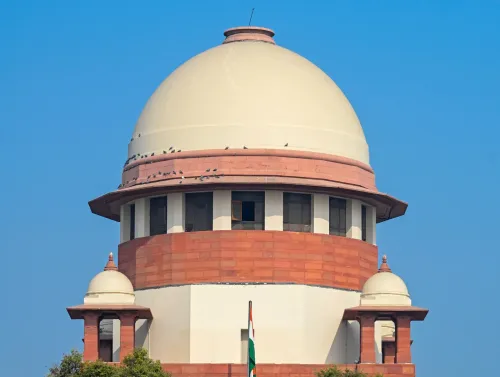
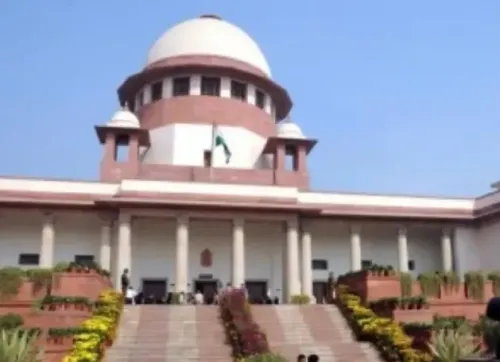
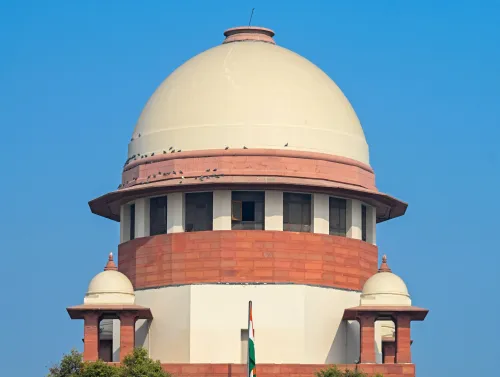
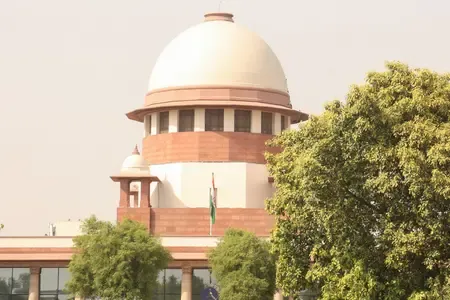
New Delhi, Feb 26 (NationPress) The Supreme Court has initiated a suo motu (on its own initiative) case regarding mentions of “corruption in the judiciary” in a recently released Class 8 Social Science textbook by the National Council of Educational Research and Training (NCERT).
According to the causelist available on the Supreme Court's official site, a Bench led by Chief Justice of India (CJI) Surya Kant, along with Justices Joymalya Bagchi and Vipul M. Pancholi, is set to examine the issue on February 26 under the title “In Re: Social Science Textbook for Grade–8 (Part-2) published by NCERT and ancillary issues”.
The Supreme Court has taken this step following concerns raised about specific content in the updated textbook that discusses the judiciary's operations.
This development follows a statement from CJI Surya Kant, where he expressed significant dissatisfaction with the inclusion of references to corruption within the judiciary in the revised textbook.
Prominent lawyers Kapil Sibal and Abhishek Manu Singhvi raised alarms about mentioning “corruption in the judiciary” in a chapter titled ‘The Role of the Judiciary in Our Society’.
Sibal pointed out that members of the legal community were “deeply disturbed” by the fact that students were being taught about corruption in the judiciary, labeling its inclusion as “entirely scandalous”.
In response, the CJI confirmed he was aware of the ongoing debate and had received communications from judicial members voicing similar concerns.
“This issue impacts the whole institution. Both the Bar and the Bench are alarmed. Every participant in the system is indeed troubled,” CJI Kant noted, emphasizing that he would not allow anyone to “taint the integrity of the institution or defame it”.
He also suggested that necessary actions would be taken soon and requested the legal representatives to “wait for a day”, hinting that the Supreme Court would officially recognize the issue.
This controversy stemmed from the updated Class 8 Social Science textbook released by NCERT in alignment with the National Education Policy (NEP) 2020 and the National Curriculum Framework (NCF) for School Education.
The revised chapter discusses the structure and functions of the judiciary while addressing issues such as corruption, case backlogs, insufficient judges, complex procedures, and resource limitations that hinder the justice delivery system.
The textbook also presents estimated figures related to case backlogs in the Supreme Court, High Courts, and district courts, as well as mentions of accountability measures including complaint resolution systems.
In light of the objections, NCERT has temporarily suspended the distribution of the textbook following the Union Ministry of Education's directive to halt circulation until a review is conducted.
NCERT issued an official statement acknowledging that certain inappropriate content had inadvertently been included and expressed regret for the editorial oversight.
It assured that there was no intention to undermine the judiciary's dignity or authority and that the relevant chapter would be revised with input from academic experts and institutional stakeholders.
Point of View
The Supreme Court's proactive measures address significant concerns regarding educational content. This reflects a commitment to uphold the integrity of the judiciary while ensuring that students receive accurate and responsible education on such critical topics.
NationPress
3 Oct 2026
Frequently Asked Questions
What is the Supreme Court's stance on the NCERT textbook?
The Supreme Court has initiated a suo motu case due to concerns about references to corruption in the judiciary within the NCERT Class 8 textbook.
Why was the textbook temporarily halted?
The distribution of the textbook was paused following objections raised about its content, as directed by the Union Ministry of Education.
Who raised concerns about the textbook?
Prominent lawyers, including Kapil Sibal and Abhishek Manu Singhvi, expressed their worries about the inclusion of judicial corruption references.
What measures will be taken regarding the textbook?
NCERT has acknowledged the issue and plans to revise the chapter in consultation with academic experts and stakeholders.
How does this impact students?
This situation raises questions about the appropriateness of teaching materials and the portrayal of the judiciary in education.