NCERT Issues Apology Over Controversial Judiciary Chapter Ahead of SC Hearing
Synopsis
In a significant turn of events, NCERT has publicly apologized for a controversial chapter on judiciary corruption in its Class 8 textbook, just before a Supreme Court hearing. This move underscores the importance of accurate educational content.
Key Takeaways
NCERT issued an unconditional apology for a controversial chapter on judiciary corruption.
The Supreme Court mandated the nationwide withdrawal of the textbook.
The incident highlights the importance of accuracy in educational content .
Stronger review mechanisms will be established to prevent future issues.
The government remains committed to safeguarding the dignity of the judiciary.
New Delhi, March 10 (NationPress) The National Council of Educational Research and Training (NCERT) has issued an unconditional and unequivocal public apology regarding a contentious chapter that addressed allegations of corruption within the judiciary, found in its recently retracted Class 8 Social Science textbook.
With a Supreme Court hearing set for Wednesday, NCERT released a statement on the social media platform X, clarifying that the textbook, titled 'Exploring Society: India and Beyond,' Grade 8 (Part II), included Chapter IV, 'The Role of Judiciary in Our Society.'
“The Director and Members of NCERT hereby extend an unconditional and unqualified apology for the aforementioned Chapter IV. The entire book has been withdrawn and is no longer in circulation,” the statement added.
“We genuinely regret the disruption caused and value the understanding shown by all parties involved. NCERT is dedicated to upholding the highest standards of accuracy, sensitivity, and responsibility in educational materials,” it further stated.
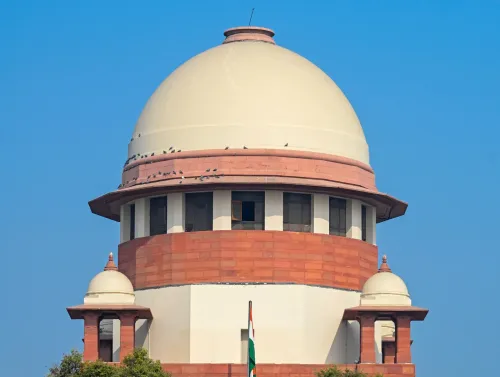
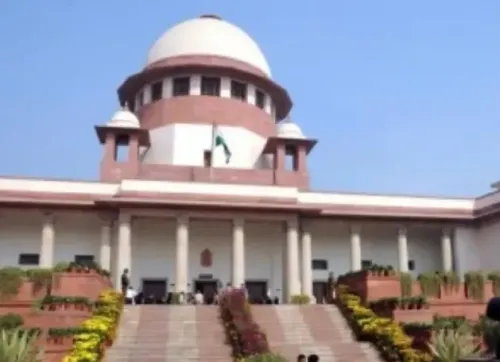
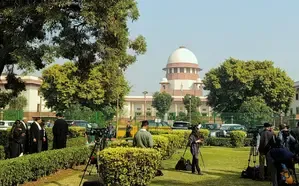
This announcement follows strong remarks made by the Supreme Court last month when it took suo motu cognizance of the textbook's content.
In an order dated February 26, a Bench led by Chief Justice of India (CJI) Surya Kant mandated the immediate nationwide withdrawal of the book and imposed a total ban on its publication, reprinting, and digital dissemination.
The Bench, which included Justices Joymalya Bagchi and Vipul M. Pancholi, noted that references to “corruption in the judiciary” in the chapter appeared to suggest a “discernible underlying agenda to undermine institutional authority and belittle the dignity of the judiciary.”
The apex court pointed out that while the chapter claimed to discuss the judiciary's role, it seemingly overlooked the “illustrious history linked to the Supreme Court, High Courts, and District Courts” and “conspicuously omitted significant contributions made by these institutions in preserving our democratic framework.”
Simultaneously, the Supreme Court emphasized that these proceedings were not meant to suppress legitimate criticism of institutions.
“We do not intend to initiate suo motu proceedings to silence any valid critique or to penalize any individual or organization exercising their right to scrutinize public institutions, including the Judiciary,” said the order, underlining that dissent, discussion, and vigorous debate are vital to a robust democracy.
However, the CJI Kant-led Bench warned against exposing young learners to a “biased narrative” during their formative years, as it could potentially tarnish the public perception of the judicial institution.
Stating that the chapter's language “may not simply be an inadvertent or bona fide error,” the Supreme Court warned that if the publication was found to be intentional, it could be deemed criminal contempt under the Contempt of Courts Act, 1971.
While acknowledging that NCERT had halted the distribution of the book and conveyed regret, the Supreme Court indicated that it would assess the authenticity of the apology at a later stage.
“The question of whether the apology has been genuinely offered to rectify the prima facie contempt, or whether it is merely a tactic to evade repercussions, particularly given that substantial irreversible harm has already occurred, is a matter we will evaluate at an appropriate juncture,” the CJI Kant-led Bench stated.
It also issued show-cause notices to the Secretary of the Department of School Education and Literacy in the Ministry of Education and the NCERT Director, Professor (Dr.) Dinesh Prasad Saklani, requesting explanations on why actions under the Contempt of Courts Act or other penal provisions should not be taken against them or those accountable for including the “offending chapter.”
The apex court additionally instructed the NCERT Director to provide a detailed list of members from the National Syllabus and Teaching Learning Material Committee who approved the chapter, along with the names and qualifications of the Textbook Development Team responsible for its creation, and the minutes from meetings where the chapter was discussed and finalized.
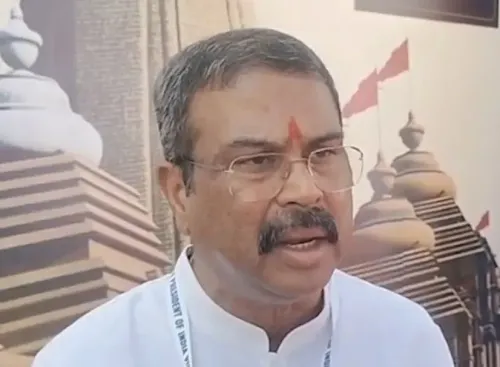
Meanwhile, Union Education Minister Dharmendra Pradhan had previously expressed profound regret over the situation and announced the immediate recall of all printed copies of the textbook.
Pradhan emphasized that the government is taking this issue seriously and has directed the Central Board of Secondary Education to expedite the recall.
“The judiciary is a crucial pillar of Indian democracy, and preserving its dignity is the government’s primary responsibility. The public has unwavering trust in the judiciary. We will not permit the reputation of any constitutional institution to be compromised,” the Minister asserted.
He also stated that a comprehensive inquiry has been initiated into the matter and assured that more robust pre-publication review and editorial processes would be implemented to prevent similar oversights in the future.
Point of View
This incident underscores the vital importance of accuracy and responsibility in educational materials. The NCERT's apology reveals a commitment to uphold the integrity of educational content and the judiciary, essential pillars of democracy. As we navigate the complexities of educational policies, maintaining trust in our institutions remains paramount.
NationPress
27 Sept 2026
Frequently Asked Questions
Why did NCERT apologize?
NCERT apologized for a controversial chapter in its Class 8 Social Science textbook that referred to corruption in the judiciary, which raised concerns about the portrayal of judicial institutions.
What action did the Supreme Court take?
The Supreme Court ordered the immediate withdrawal of the textbook and banned its publication, citing concerns over the chapter's content undermining the judiciary's authority.
What are the implications of this controversy?
This controversy highlights the importance of accurate educational content and the potential consequences of biased narratives on young students' perceptions of vital institutions.
What measures will be taken to prevent future issues?
The government has announced that stronger pre-publication review and editorial mechanisms will be implemented to avoid similar lapses in the future.
What was the response from the Education Minister?
Union Education Minister Dharmendra Pradhan expressed deep regret over the issue and stated the government's commitment to preserving the dignity of the judiciary.