Supreme Court Orders Nationwide Ban on NCERT Textbook Amid Judicial Corruption Controversy
Synopsis
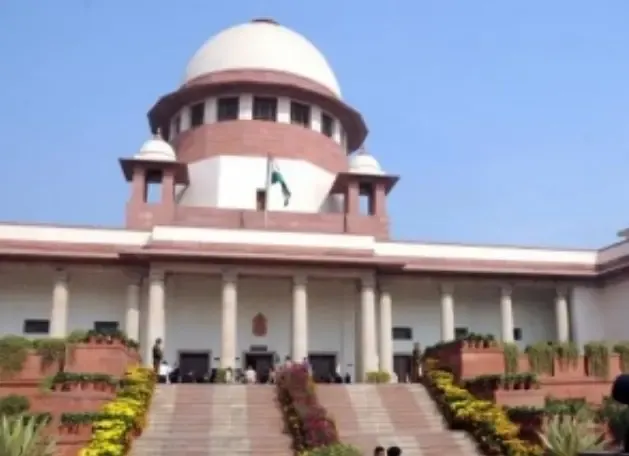
In a landmark ruling, the Supreme Court has mandated the immediate withdrawal of a controversial NCERT textbook for Class 8 due to its references to judicial corruption, citing concerns over undermining judicial authority. This decision has significant implications for educational content and institutional integrity.
Key Takeaways
Supreme Court orders withdrawal: A Class 8 NCERT textbook is banned over concerns of bias against the judiciary.
Educational integrity at stake: The ruling emphasizes the necessity of unbiased educational content for students.
Future reviews required: NCERT must reevaluate the chapter's content and provide a list of responsible individuals.
Impact on students: The intervention aims to protect the impressionable youth from biased narratives.
Scheduled hearing: Further proceedings are set for March 11, 2026.
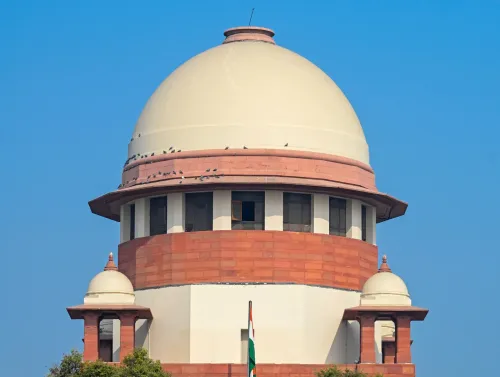
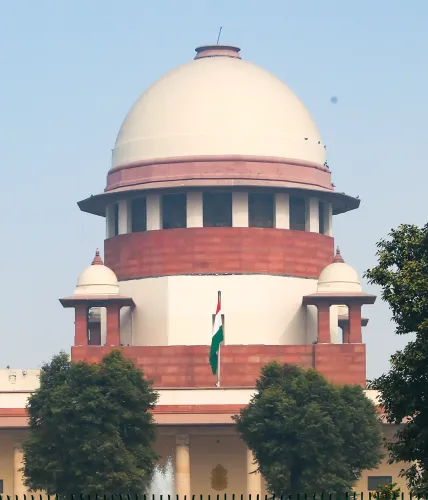
New Delhi, Feb 26 (NationPress) The Supreme Court has mandated an immediate, comprehensive withdrawal of a Class 8 Social Science textbook published by the National Council of Educational Research and Training (NCERT). The Court expressed concern that references to “corruption in the judiciary” within the chapter seemingly exhibit a “discernible underlying agenda” aimed at undermining the authority and dignity of the judiciary.
A Bench led by Chief Justice of India, Justice Surya Kant, while addressing the suo motu case titled “In Re: Social Science Textbook for Grade–8 (Part-2)”, noted that although the chapter claims to examine the judiciary's role, it “erases with one stroke the illustrious history associated with the Supreme Court, High Courts, and District Courts”, and “conspicuously omits” the significant contributions of these institutions to our democratic structure.
Furthermore, the Bench, including Justices Joymalya Bagchi and Vipul M. Pancholi, remarked that the text neglects to recognize the judiciary’s role in maintaining constitutional morality and the Basic Structure doctrine, principles regarded as “the very lifeblood of the Indian citizens in public existence”.
The controversy centers on Chapter 4 of the Grade 8 textbook, titled “Exploring Society: India and Beyond”, which features a section on “Corruption in the Judiciary”.
Referring to a newspaper article dated February 24, 2026, the Supreme Court highlighted that the chapter makes “notable reference to numerous complaints received against the judiciary, suggesting no actions were taken” and asserts that “people do experience various levels of corruption within the judiciary”.
“We were almost taken aback” upon discovering the publication of the textbook, the Supreme Court stated, adding that the inclusion of such content in an essential school curriculum necessitates “a thorough review of its pedagogical soundness and its potential implications on the judiciary's institutional reputation as a whole”.
Upon a preliminary examination of the textbook and the written defense submitted by the NCERT Director, the CJI Kant-led Bench concluded that the material exposes “a discernible underlying agenda to undermine the institutional authority and demean the dignity of the judiciary”.
“If permitted to go unchallenged, this could diminish the sanctity of the judicial office in the eyes of the public and, more critically, within the impressionable minds of the youth,” the apex court warned.
Simultaneously, the CJI Kant-led Bench emphasized that the proceedings are not aimed at suppressing legitimate critique.
“We do not intend to initiate these suo motu proceedings to suppress any legitimate criticism or to hold accountable any individual or organization exercising their right to scrutinize public institutions, including the Judiciary. On the contrary, we firmly believe that dissent, discussion, and rigorous discourse are essential to a vibrant democracy and serve as crucial instruments of institutional accountability,” the order articulated.
The intervention was deemed necessary to “protect the pedagogical integrity of the national curriculum,” remarking that it is “fundamentally improper to expose” young students to a “biased narrative” during critical formative years.
Pointing out that the choice of language “may not be a mere inadvertent or genuine mistake,” the Supreme Court cautioned that if the publication was found to be intentional, it could be considered criminal contempt under Section 2(c) of the Contempt of Courts Act, 1971, as it could amount to scandalizing the institution and interfering with the justice administration.
Noticing an NCERT press release indicating the cessation of distribution of the book, that the chapter would be rewritten, and that an apology was issued, the CJI Kant-led Bench stated that the authenticity of the apology will be evaluated later.
“The issue of whether the apology has been genuinely offered with the intention of rectifying the prima facie contempt, or whether it is merely a tactic to avoid repercussions, especially when significant irreversible damage has already occurred, is a matter we will examine at an appropriate time,” the apex court commented.
Issuing show-cause notices, the Supreme Court instructed the Secretary of the Department of School Education and Literacy, Ministry of Education, Government of India, and Professor (Dr.) Dinesh Prasad Saklani, Director of NCERT, to clarify why action under the Contempt of Courts Act or other legal provisions should not be initiated against them or those responsible for introducing the “offending chapter”.
Pending further consideration, the apex court directed NCERT, in collaboration with the Union government and state education authorities, to promptly retrieve and remove all physical and digital copies of the textbook from schools, retail outlets, storage locations, and online platforms.
Additionally, it enforced “a complete ban” on any further publication, reprinting, or digital dissemination of “Exploring Society: India and Beyond”, warning that any attempt to circulate the same content would be regarded as a willful breach of its directives.
Holding individuals accountable, the CJI Kant-led Bench made it the responsibility of the NCERT Director and principals of all schools where the book was distributed to ensure immediate retrieval and sealing of copies and to cease any teaching based on its contents. Principal Secretaries of Education across all states and union territories have been instructed to submit compliance affidavits within two weeks.
The NCERT Director has also been tasked with providing a comprehensive list of members from the National Syllabus and Teaching Learning Material Committee who approved the chapter, along with the names and qualifications of the Textbook Development Team responsible for its drafting, and the original minutes from meetings where the chapter was discussed and finalized.
In its ruling, the apex court noted that the Constitution's framers had meticulously ensured institutional autonomy among the legislature, executive, and judiciary, while mandating them to operate in harmony to uphold democratic values.
“The framers of our Constitution were acutely aware and took extensive precautions to ensure that constitutional responsibilities were articulated with such clarity that the three pillars—Legislature, Executive, and Judiciary—retain the capacity to function with institutional autonomy while cooperating to maintain the democratic fabric of our nation,” it stated.
The matter is scheduled for further hearing on March 11, 2026.
Point of View
The Court underscores the importance of fostering a balanced understanding of the judiciary among young students. This intervention is a crucial step in protecting institutional dignity while encouraging healthy discourse.
NationPress
30 Sept 2026
Frequently Asked Questions
What prompted the Supreme Court to ban the NCERT textbook?
The Supreme Court banned the textbook due to concerns that its references to 'corruption in the judiciary' suggested a biased agenda to undermine the judicial authority.
What actions did the Supreme Court direct regarding the textbook?
The Court ordered the immediate withdrawal of the textbook from all schools and a complete ban on its further publication or distribution.
What are the implications of this ruling for educational content?
This ruling emphasizes the need for unbiased and accurate educational materials, protecting the integrity of the judiciary and promoting a balanced understanding among students.
When is the next hearing scheduled for this case?
The next hearing for this case is scheduled for March 11, 2026.
What does the Supreme Court's ruling mean for the NCERT?
The ruling holds the NCERT accountable for the content in its textbooks and mandates a review of the chapter's material.