Congress Condemns NCERT's Textbook Changes as 'Driven by RSS'
Synopsis
In a strong critique, Congress leader Jairam Ramesh has condemned NCERT's revisions to textbooks, highlighting concerns over critical references to the judiciary. The Supreme Court's involvement amplifies the urgency of this issue, raising questions about educational integrity.
Key Takeaways
Congress criticizes NCERT for controversial textbook revisions.
Supreme Court intervenes to address concerns over judicial references.
Immediate actions ordered for textbook removal nationwide.
Calls for accountability directed at NCERT officials.
Educational integrity is at the forefront of the debate.
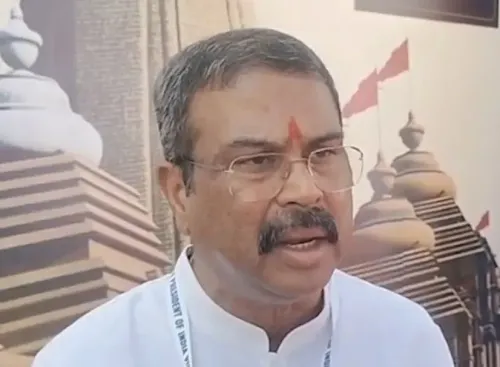
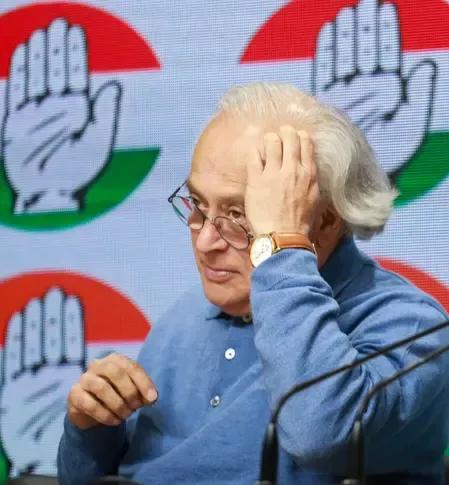
New Delhi, Feb 26 (NationPress) Senior leader of the Congress party and Rajya Sabha representative, Jairam Ramesh, has sharply criticized the National Council of Educational Research and Training (NCERT) for including controversial references to the judiciary in its educational materials.
In response to observations made by the Supreme Court, Ramesh labeled the ongoing decade-long revision of textbooks as "shameful" and "hazardous."
In a message posted on X, the Rajya Sabha member accused the revisions of being an "RSS-driven agenda filled with deceit and malice."
“The Supreme Court is rightly disturbed by the inclusion of critical references to the judiciary in the NCERT textbooks. The manner in which these textbooks have been altered over the last ten years is shameful and also perilous. This has been an RSS-driven initiative laden with deceit and malice. It is this operation that warrants scrutiny,” he expressed in his post on X.
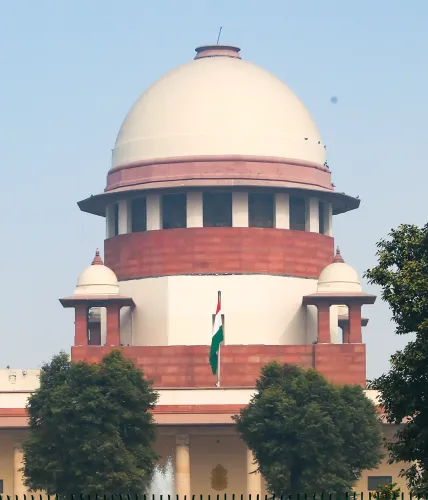
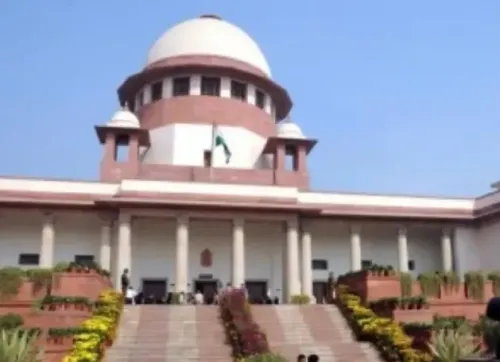
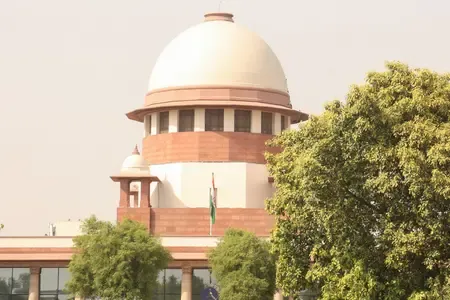
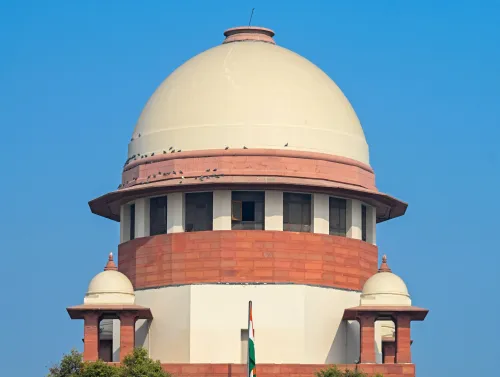
The Supreme Court, on Thursday, strongly criticized the NCERT regarding the mention of "corruption in the judiciary" within a Class 8 Social Science textbook. The court noted that this controversy seemed to stem from a "deliberate strategy" that has left the judiciary "wounded."
A Bench led by Chief Justice of India (CJI) Surya Kant, who was addressing a suo motu case titled "In Re: Social Science Textbook for Grade–8 (Part-2) published by NCERT and related issues," issued a series of comprehensive interim directions. These included an immediate nationwide confiscation of the textbook, removal of digital versions, and a complete prohibition on its publication or distribution.
Expressing its initial view that the publication represented "a calculated attempt to undermine institutional authority and tarnish the dignity of the judiciary," the Bench, which also included Justices Joymalya Bagchi and Vipul M. Pancholi, cautioned that permitting such narratives to persist unchecked would weaken public trust.
The apex court remarked that while the chapter aimed to discuss the judiciary's role, it neglected to recognize the institution's significant contributions—such as upholding constitutional values, preserving the basic structure doctrine, and enhancing access to justice through legal aid reforms.
Issuing show-cause notices, the CJI Surya Kant-led Bench instructed the Secretary of the Department of School Education within the Ministry of Education and NCERT Director Dr. Dinesh Prasad Saklani to clarify why actions under the Contempt of Courts Act or other relevant laws should not be taken against them or those responsible for drafting the controversial chapter.
The apex court mandated NCERT, in coordination with Union and State education authorities, to urgently seize and eliminate all physical and digital versions of the book from schools, retail spaces, storage locations, and online platforms.
It placed personal accountability on the NCERT Director and educational authorities to ensure the sealing and withdrawal of all copies, directing Principal Secretaries of Education across states to provide compliance reports within two weeks.
Point of View
It highlights the necessity for impartiality in education, ensuring that students receive a balanced perspective on judiciary matters.
NationPress
27 Sept 2026
Frequently Asked Questions
What are the main criticisms of the NCERT revisions?
The main criticisms focus on the inclusion of critical references to the judiciary, which Congress leader Jairam Ramesh describes as a politically motivated initiative influenced by the RSS.
What actions has the Supreme Court taken regarding the NCERT textbooks?
The Supreme Court has ordered a nationwide confiscation of the controversial textbooks and directed the NCERT to remove all copies from circulation.
Who is responsible for the NCERT textbook revisions?
The revisions are attributed to NCERT and its associated authorities, with scrutiny now placed on the individuals involved in the drafting process.
What implications do these revisions have for education in India?
These revisions raise concerns about the integrity and objectivity of educational content, potentially undermining trust in the educational system.
How is the Congress party involved in this issue?
The Congress party, through leaders like Jairam Ramesh, has been vocal in opposing the revisions, framing them as politically motivated attacks on the judiciary.