Is Forest Destruction for Illegal Poppy Farming Responsible for Manipur's Recurrent Floods?
Synopsis
The alarming connection between illegal poppy farming and recurrent floods in Manipur has come to light, as former CM N. Biren Singh raises concerns about deforestation and its implications. With militants allegedly involved, the region faces an existential crisis. Discover the ongoing battle against this illicit trade and its environmental consequences.
Key Takeaways
Deforestation due to illegal poppy farming is a key factor in Manipur's recurrent floods.
Armed militants are suspected to be involved in these unlawful activities.
Recent operations have destroyed over 800 acres of illegal poppy cultivation.
Aerial surveys reveal additional unregulated poppy farms in the state.
Ongoing anti-narcotics efforts are crucial for regional stability.
Imphal, Dec 4 (NationPress) Former Chief Minister N. Biren Singh has pointed out that the ongoing floods in Manipur are a direct result of extensive deforestation due to unlawful poppy farming activities.
The ex-CM has accused armed militants of participating in these illegal operations, which involve clearing vast areas of forest to cultivate poppy plants, and he questioned the lack of action from forest officials against these unlawful practices.
Singh, who resigned from his Chief Ministerial role on February 9, just days prior to the imposition of President's Rule in the state amidst prolonged ethnic strife.
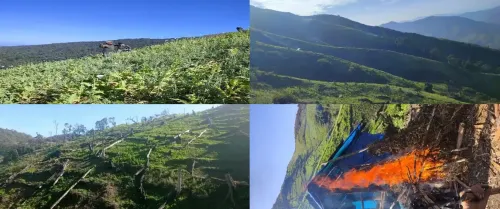
In a post on his X handle, along with a video, he stated: "This video, captured today, illustrates the reasons behind the recurring floods in the state. The footage highlights poppy farms located in the Kolten and Selsi Hill Ranges of IT-Road within T. Waichong Sub-division, Kangpokpi District."
"Our forests have been devastated while we focus on undermining one another. No leaders from our community have denounced such widespread destruction. Why haven’t the forest officials intervened against these offenders? There are suspicions that these illicit activities involve armed militants. If we don't implement decisive actions, our state will encounter a severe crisis," Singh expressed.
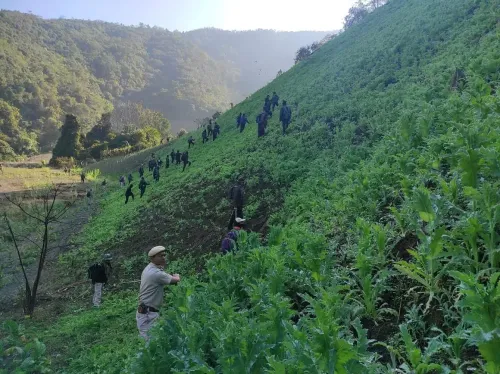
In related news, officials reported that as part of their ongoing anti-narcotics operations, security forces have eradicated over 800 acres of illegal poppy farms in Manipur's mountainous regions recently, thwarting a significant attempt to produce opium valued at several crores.
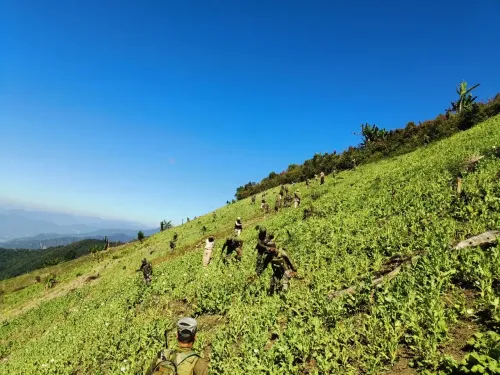
However, an aerial survey conducted on November 24 revealed an additional batch of over 700 acres of poppy fields solely in the Kangpokpi district, they noted.
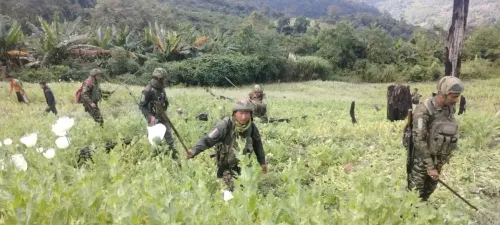
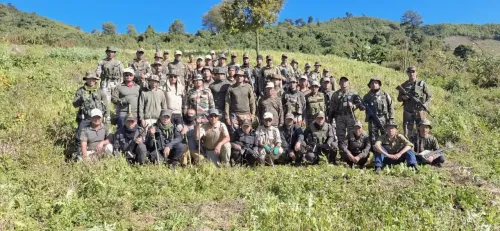
A senior police official stated that various joint operations involving the Army, Assam Rifles, Central Reserve Police Force (CRPF), Border Security Force (BSF), Narcotics Control Bureau (NCB), and Manipur Police have managed to destroy more than 800 acres of illegal poppy cultivation across Manipur's mountainous districts between November 11 and December 1, successfully thwarting an attempt to produce opium worth several crores.
The eradication occurred across six mountainous districts in Manipur: Kangpokpi, Ukhrul, Tamenglong, Chandel, Tengnoupal, and Senapati.
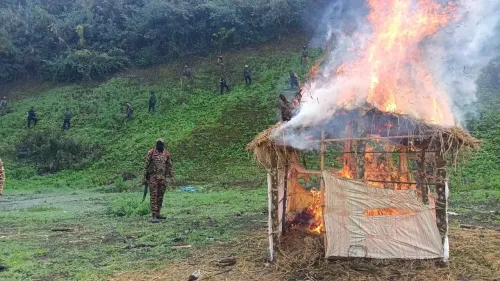
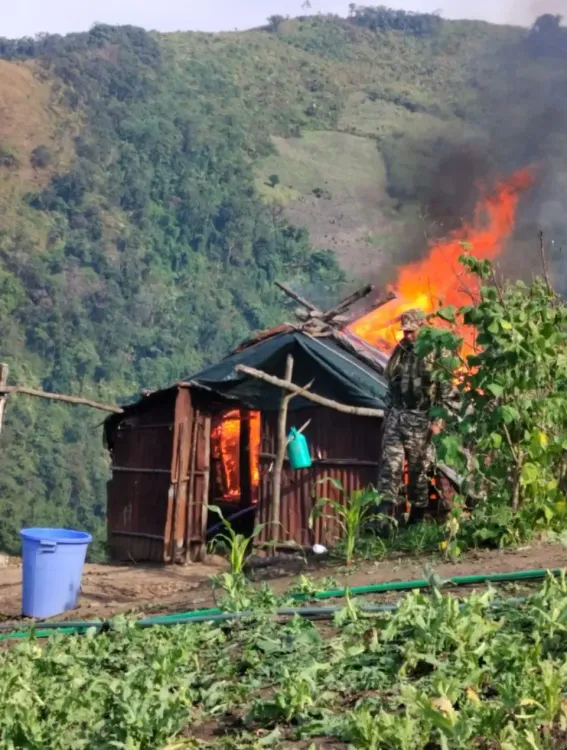
A senior police official indicated that the destroyed 800 acres of illegal poppy fields had the potential to yield approximately 7,572 kg of opium, amounting to hundreds of crores of rupees. During these operations, security forces dismantled around 160 huts found at the illegal poppy cultivation sites in six districts.
A significant number of salt sacks, extensive amounts of fertilizers, numerous Roundup herbicides, and several spray pumps and pipes used for poppy farming were also destroyed and incinerated. The official stated that such actions against illegal poppy farming in Manipur will persist.
A Defence Spokesman noted that the comprehensive operation against unlawful poppy cultivation was carried out under challenging terrains and adverse weather, demonstrating the unwavering commitment of the Assam Rifles and other forces in combating illicit drug cultivation and dismantling the financial networks that support insurgency and other anti-national actions.
This successful initiative reinforces the Assam Rifles' dedication to fostering a drug-free Northeast, contributing to long-term peace, stability, and socio-economic growth in the area, as stated by Assam Rifles.
In 2020, security forces and government agencies pinpointed a staggering 8,057 acres of poppy fields, of which 1,695 acres were eradicated.
By 2024 and 2025, the detected area of poppy fields saw a significant reduction, showcasing the effectiveness of the state and central governments’ multi-faceted strategies alongside security forces.
State politicians and officials have remarked that the ongoing ethnic turmoil in Manipur, alongside the escalating drug crisis, constitutes one of the primary reasons for the current scenario. According to the defence official, the fight against poppy farming has consistently remained a priority for the paramilitary forces, reflecting their continuous efforts over the years.
Point of View
It’s crucial to recognize the complex interplay between environmental degradation and illegal activities in Manipur. The alarming deforestation for poppy cultivation not only exacerbates flooding but also poses significant challenges to governance and security. Addressing these issues requires a concerted effort from all stakeholders.
NationPress
5 Oct 2026
Frequently Asked Questions
What impact does illegal poppy farming have on Manipur's environment?
Illegal poppy farming leads to extensive deforestation, which increases the risk of flooding and disrupts local ecosystems.
Who is involved in illegal poppy cultivation in Manipur?
Reports suggest that armed militants are actively engaged in illegal poppy cultivation, contributing to deforestation and environmental harm.
What actions are being taken to combat illegal poppy farming?
Security forces have recently destroyed over 800 acres of illegal poppy farms in various districts as part of ongoing anti-narcotics operations.
Why is the state experiencing recurrent floods?
Recurrent floods in Manipur are attributed to large-scale deforestation caused by illegal poppy cultivation, which disrupts the natural water absorption in the land.
What are the long-term implications of illegal poppy farming in Manipur?
The long-term implications include environmental degradation, increased flooding, and the potential for greater instability due to the involvement of militant groups.