Pradhan Celebrates Newborn Girls at Dhenkanal Navaratri Event
Synopsis
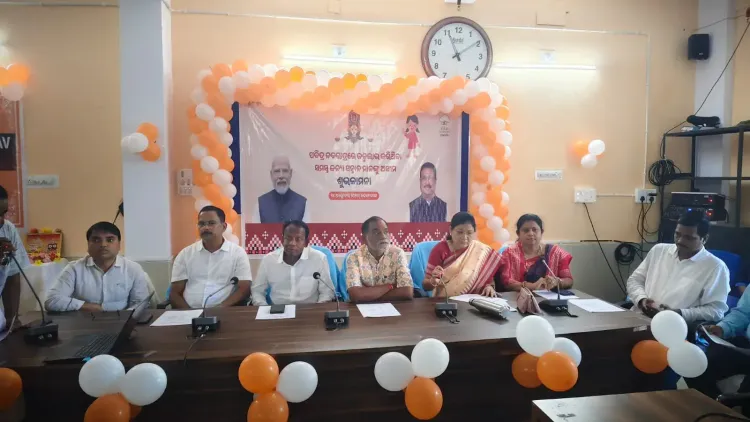
Union Education Minister Dharmendra Pradhan marked Navaratri by celebrating Dhenkanal's Kanyaratna Sambardhana Utsav, a district programme honouring newborn girls and pledging focus on their health, nutrition, education, and safety.
Key Takeaways
Dharmendra Pradhan posted on 24 October 2026 wishing newborn girls in Dhenkanal district, Odisha on Navaratri.
The Kanyaratna Sambardhana Utsav is a local ceremony that felicitates newborn daughters and prioritises their health, nutrition, education, and protection.
The event was deliberately timed with Navaratri to link cultural celebration with girl-child welfare messaging.
The initiative aligns with the national Beti Bachao Beti Padhao scheme launched in 2015 to address gender imbalances.
Pradhan, as both Union Education Minister and an Odia leader, used the occasion to call for building a 'healthy, empowered, and prosperous society.'
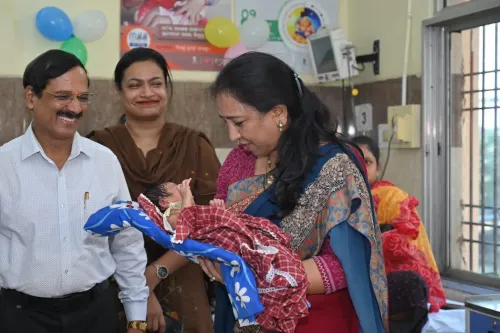
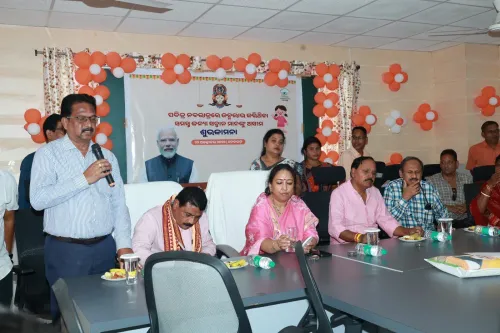
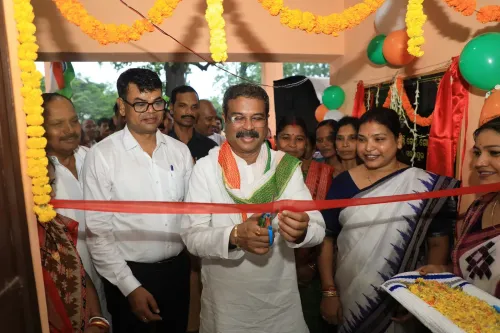
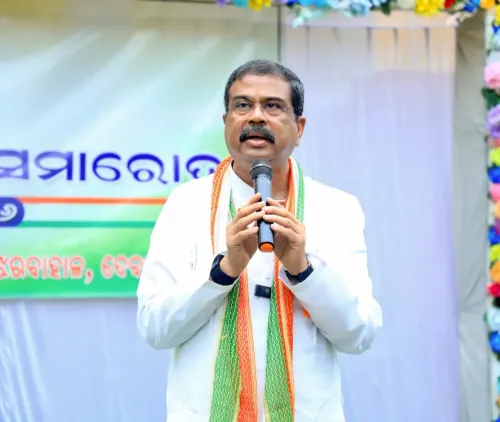
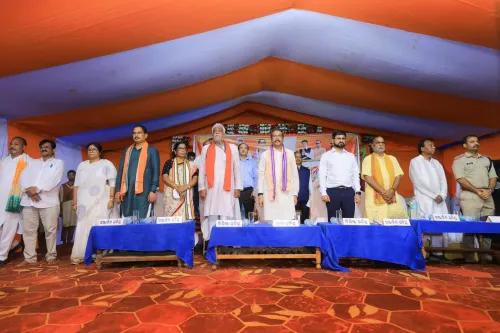
On the auspicious occasion of Navaratri, Union Education Minister Dharmendra Pradhan extended heartfelt wishes to every newborn girl in Dhenkanal district, Odisha, spotlighting a local felicitation ceremony designed to put girl children — their health, nutrition, education, and safety — at the centre of community life.
Posting on Saturday, 24 October 2026, Pradhan wrote in Odia: 'ପବିତ୍ର ନବରାତ୍ରୀ ଅବସରରେ ଢେଙ୍କାନାଳ ଜିଲ୍ଲାରେ ଜନ୍ମଲାଭ କରିଥିବା ସମସ୍ତ ନବଜାତ କନ୍ୟାରତ୍ନଙ୍କୁ ହାର୍ଦ୍ଦିକ ଶୁଭକାମନା' — 'Heartfelt wishes to all newborn daughters born in Dhenkanal district on the sacred occasion of Navaratri.' The message positioned the Kanyaratna Sambardhana Utsav ('Felicitation Ceremony for Daughter-Gems') as a vehicle for building what he called 'a healthy, empowered, and prosperous society.'
Dhenkanal's 'Kanyaratna' Ceremony and What It Stands For
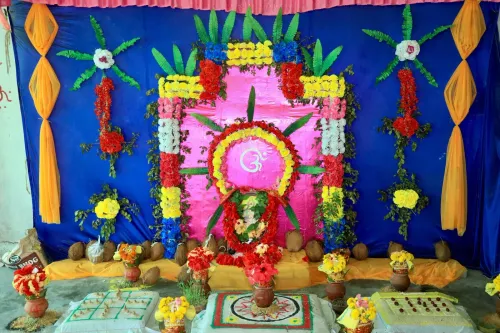
The Kanyaratna Sambardhana Utsav is a community-level programme in Dhenkanal that formally welcomes newborn girls and pledges attention to four pillars: health, nutrition, education, and protection. Timing it with Navaratri — the nine-night Hindu festival that venerates the goddess Durga in her many forms — is deliberate: the cultural moment amplifies the message that daughters are to be celebrated, not merely tolerated.
Pradhan, who hails from Odisha and has long used his platform to champion constituency-level welfare efforts, cast the ceremony not as a standalone event but as a foundation stone for a broader societal shift. The framing is classic of the genre: a local gesture made to carry national moral weight.
Where It Fits: From Beti Bachao to District-Level Action
The ceremony sits squarely within the architecture built by India's national Beti Bachao Beti Padhao scheme, launched in 2015, which set out to improve the child sex ratio and guarantee survival, protection, and schooling for girls across the country. More than a decade on, the scheme's spirit has dispersed into district-level programmes — ceremonies like Dhenkanal's being the most visible expression of that trickle-down.
For Odisha specifically, ministers and local leaders have developed a pattern of pairing festival calendars with welfare announcements, keeping girl-child issues visible in the public conversation through cultural hooks. Navaratri is the most powerful such hook available.
Pradhan himself wears two hats here — the national Education Minister carrying a portfolio that directly covers girl-child literacy targets, and the Odia politician keeping a watchful eye on his home state's social indicators. Both roles converge neatly in a post like this one.
Whether Dhenkanal's model expands district by district across Odisha — and whether it attracts formal state budget support — is the next question worth watching as the assembly session approaches.
Point of View
He has a direct institutional stake in girl-child literacy outcomes, making the message more than ceremonial. The Dhenkanal model also signals a broader pattern: national schemes like Beti Bachao Beti Padhao, now over a decade old, are being refreshed at the district level through community ceremonies that generate local ownership. The durability of this strategy depends on whether these events translate into measurable improvements in Odisha's child sex ratio and school enrolment numbers.
NationPress
24 Oct 2026
Frequently Asked Questions
What is the Kanyaratna Sambardhana Utsav in Dhenkanal?
The Kanyaratna Sambardhana Utsav is a community felicitation programme in Dhenkanal district, Odisha, that formally welcomes and celebrates newborn girls while pledging to prioritise their health, nutrition, education, and safety.
Why was the Kanyaratna ceremony held during Navaratri?
Navaratri, which venerates the goddess Durga, provides a powerful cultural context for celebrating daughters. Timing the ceremony with the festival is a deliberate strategy to link religious tradition with girl-child welfare messaging.
What is Dharmendra Pradhan's connection to Odisha?
Dharmendra Pradhan is a senior BJP leader who hails from Odisha. He has served as Union Education Minister and previously as Union Petroleum Minister, and regularly uses his platform to highlight welfare and development initiatives in his home state.
How does the Dhenkanal event relate to Beti Bachao Beti Padhao?
The Kanyaratna Sambardhana Utsav aligns with the goals of the national Beti Bachao Beti Padhao scheme, launched in 2015, which aims to improve the child sex ratio and ensure survival, protection, and education for girls across India.
What did Dharmendra Pradhan say about the girl-child ceremony?
Pradhan extended heartfelt wishes to all newborn girls in Dhenkanal on Navaratri and stated that the ceremony aimed to prioritise the health, nutrition, education, and protection of girl children to build a healthy, empowered, and prosperous society.