Pradhan invokes service and sacrifice to inspire Viksit Bharat
Synopsis
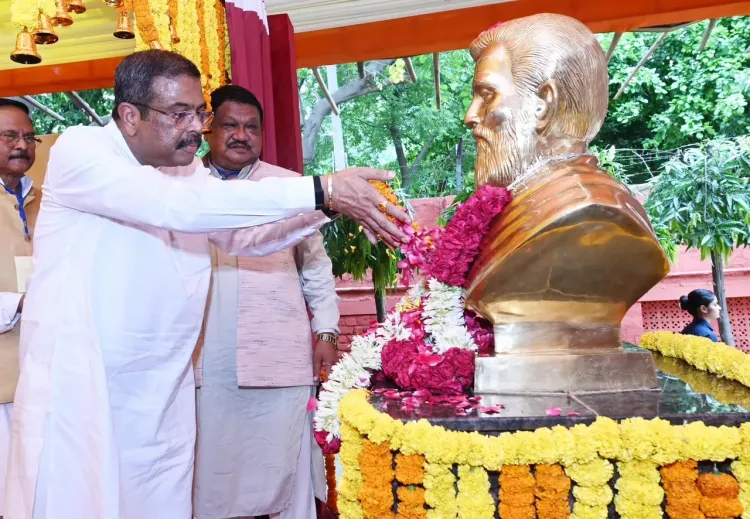
Union Education Minister Dharmendra Pradhan paid tribute to eminent national figures on August 3, 2026, calling their ideals of service, sacrifice, education, and patriotism the eternal guiding lights of India's nation-building journey and a continuing source of inspiration for the Viksit Bharat vision.
Key Takeaways
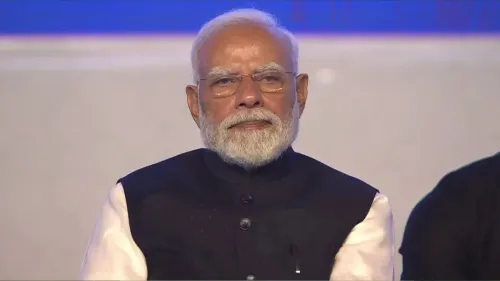
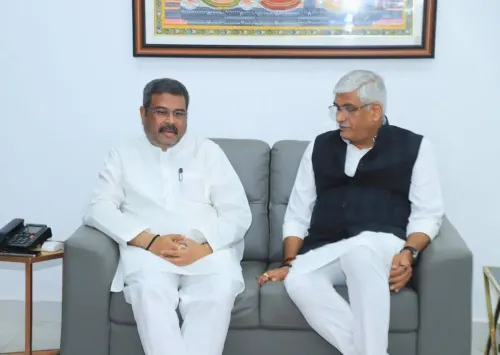
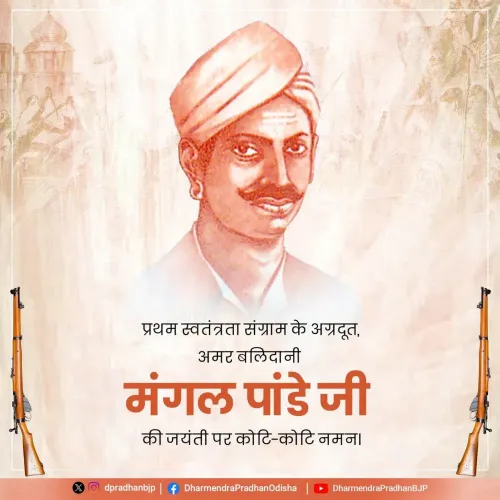
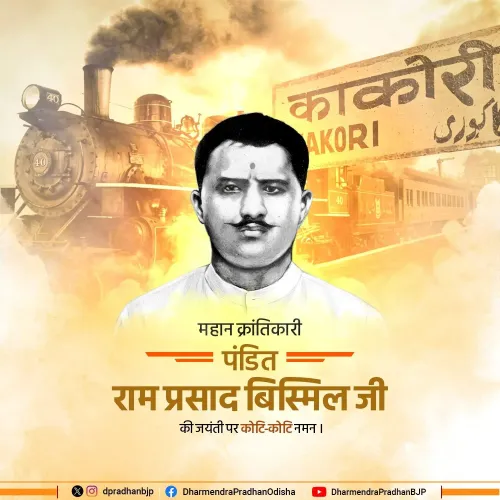
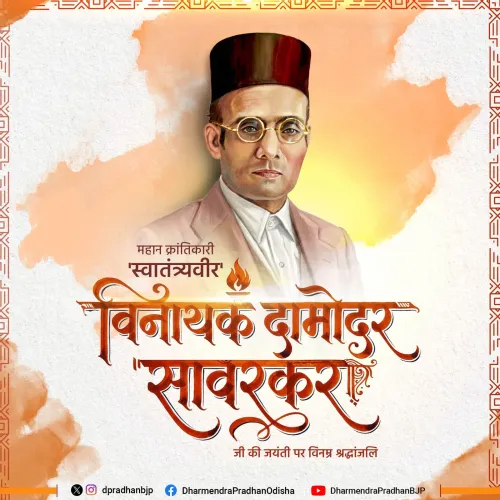
Union Education Minister Dharmendra Pradhan posted a tribute on August 3, 2026 , honouring unnamed 'great personalities' through four images.
He cited four core values — service, sacrifice, education, and devotion to the nation — as the enduring pillars of India's nation-building journey.
The tribute explicitly connected these historical ideals to the Viksit Bharat vision of achieving developed-nation status by 2047 .
The post continues a pattern of the Education Ministry anchoring contemporary policy goals — particularly NEP 2020 — in the moral legacy of national figures.
Value-based education and patriotism remain central to the Ministry's public narrative ahead of possible curriculum implementation announcements.
The ideals of great figures who shaped India's conscience are not museum pieces — they are active fuel for the nation's future. Union Education Minister Dharmendra Pradhan on Monday, August 3, 2026, paid tribute to eminent national personalities, drawing a direct line between their lives of service, sacrifice, and patriotism and the ongoing mission to build a developed India.
Posting in Hindi, the Minister wrote: 'सेवा, त्याग, शिक्षा और राष्ट्रनिष्ठा के जिन उच्च आदर्शों को इन महान विभूतियों ने अपने जीवन से प्रतिष्ठित किया, वे आज भी राष्ट्रनिर्माण की हमारी यात्रा के शाश्वत पथप्रदर्शक हैं।' — 'The high ideals of service, sacrifice, education, and devotion to the nation that these great personalities embodied through their lives remain the eternal guiding lights of our journey of nation-building.' He added that their thoughts and values 'will continue to provide new inspiration and strength to the resolve of Viksit Bharat.'
Why the Education Ministry keeps returning to this well
This is not a one-off flourish. Since the rollout of the National Education Policy 2020, the Ministry of Education has consistently woven value-based education — service, patriotism, holistic development — into its public communications and policy framing. The logic is deliberate: if Viksit Bharat, the government's flagship vision to achieve developed-nation status by 2047, is to be more than an economic target, it needs a moral architecture. Senior BJP leaders, and Pradhan in particular, have repeatedly cast historical ideals as that architecture.
The post was accompanied by four images, though the specific personalities being honoured were not named in the text — a common format for broad commemorative tributes that span multiple figures at once.
Values as policy, not just rhetoric
The framing matters because it signals where the Ministry intends to take curriculum conversations next. Value-based education is already embedded in NEP 2020's vision documents; what Pradhan's post does is keep that thread alive in the public narrative, priming the ground for possible announcements around national commemorations or curriculum implementation milestones. The Viksit Bharat deadline of 2047 — India's centenary of independence — gives every such tribute a built-in urgency: the clock is running, and the nation's character, the argument goes, is as important as its GDP.
For students and educators, the signal is clear: the Ministry sees moral formation and national consciousness not as add-ons to the curriculum, but as its spine.
Point of View
' the tribute is deliberately broad, allowing it to resonate across regional and ideological constituencies without triggering the controversies that named tributes sometimes invite. The consistent repetition of this framing since 2020 suggests it is less a spontaneous gesture and more a calibrated communication strategy — keeping the values-curriculum conversation warm ahead of implementation milestones. Analysts watching the Education Ministry will note that such posts often precede formal policy announcements or curriculum circulars tied to national commemorations.
NationPress
3 Aug 2026
Frequently Asked Questions
Who did Dharmendra Pradhan pay tribute to on August 3, 2026?
Pradhan paid tribute to eminent national personalities whose ideals of service, sacrifice, education, and patriotism he cited as guiding lights for India's nation-building journey, though he did not name the specific individuals in his post.
What is Viksit Bharat and why does Pradhan keep referencing it?
Viksit Bharat is the Government of India's vision to achieve developed-nation status by 2047, India's centenary of independence. As Education Minister, Pradhan frequently connects it to value-based education, arguing that national character is as important as economic growth in reaching that goal.
How does NEP 2020 relate to Pradhan's tribute post?
The National Education Policy 2020 explicitly emphasises value education, patriotism, and holistic development. Pradhan's post reflects the Ministry's ongoing effort to keep those principles central to public and policy discourse.
Is value-based education a formal part of India's school curriculum?
Yes. NEP 2020 mandates the integration of values such as service, civic responsibility, and national consciousness into the curriculum framework, and the Education Ministry has been working on implementation guidelines since the policy's adoption.
What does 'Viksit Bharat' mean in English?
'Viksit Bharat' translates to 'Developed India' — a national mission to transform India into a fully developed economy and society by the year 2047.