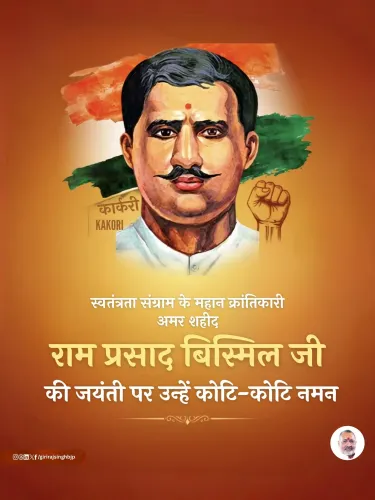
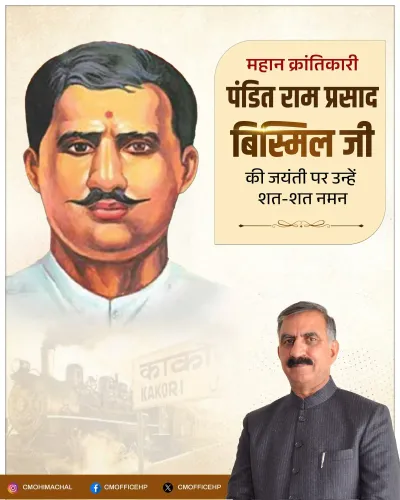
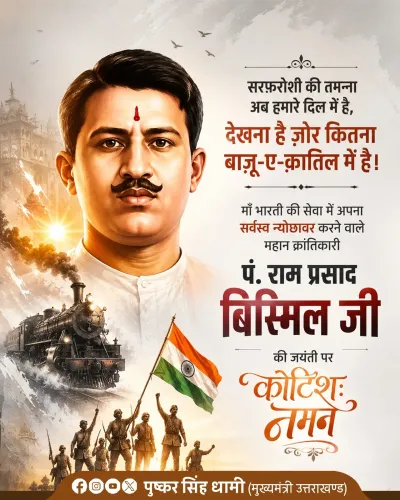
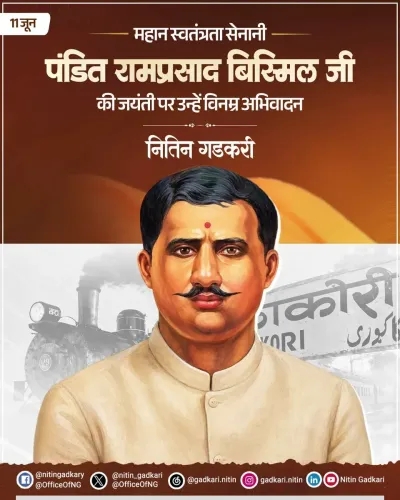
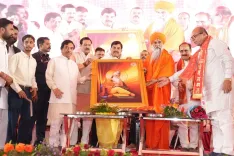
Pradhan pays tribute to Ram Prasad Bismil on birth anniversary
Synopsis
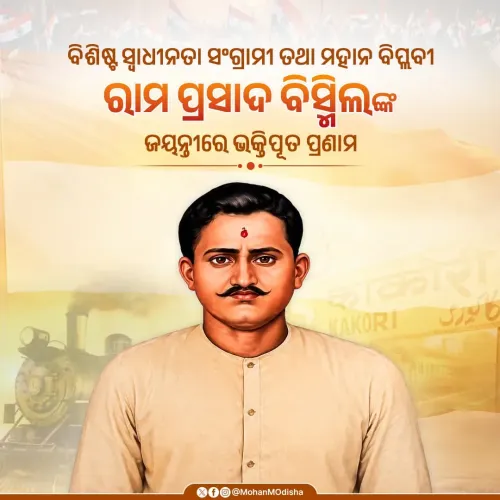
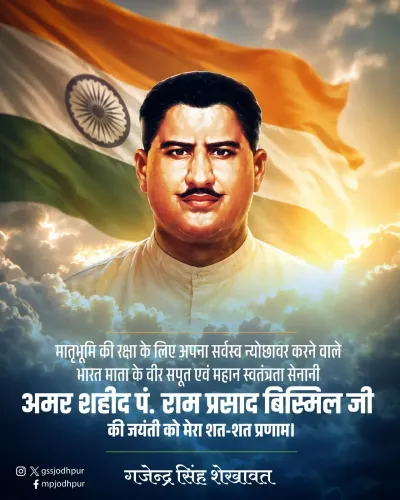
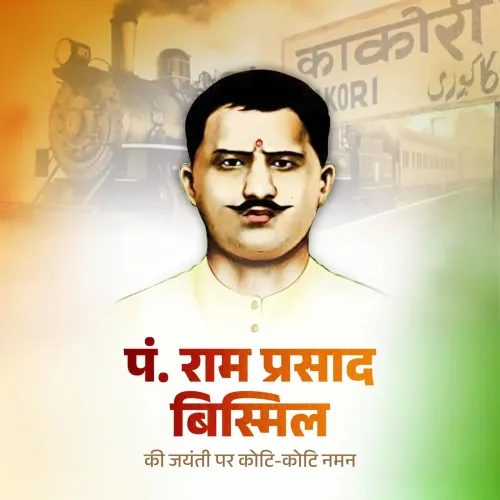
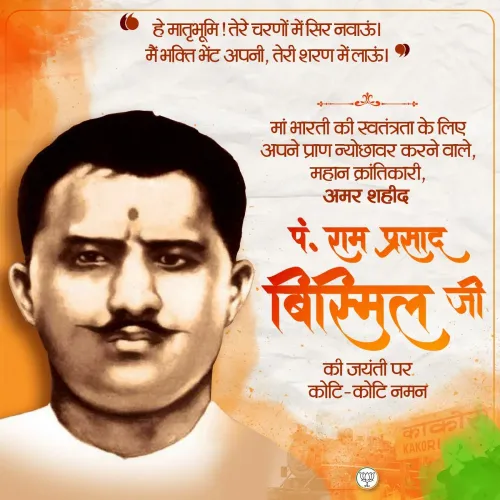
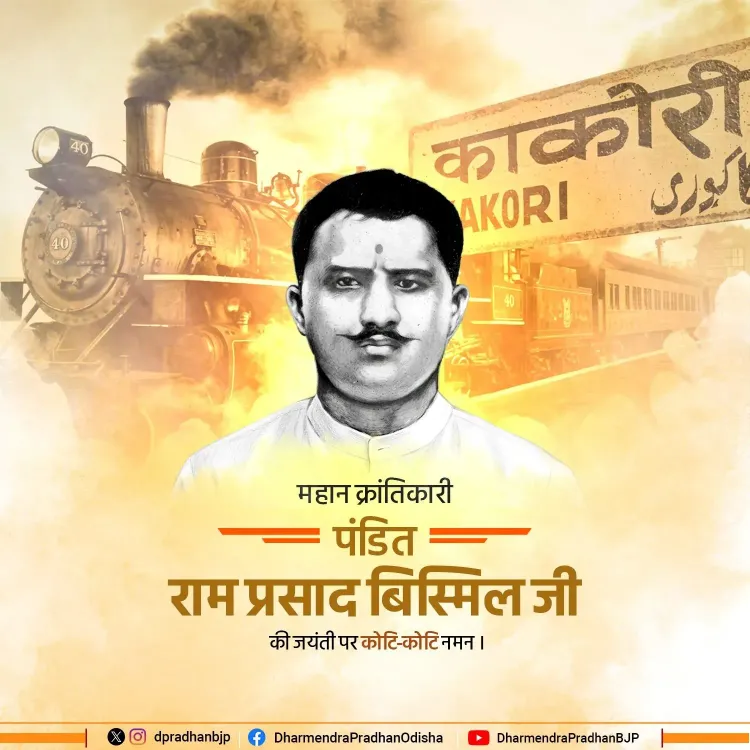
Union Education Minister Dharmendra Pradhan paid tribute to revolutionary freedom fighter Ram Prasad Bismil on his birth anniversary on 11 June 2026, honouring the Kakori train robbery organiser as an immortal symbol of courage, patriotism, and sacrifice whose legacy continues to inspire Indian youth.
Key Takeaways
Dharmendra Pradhan posted a tribute in Hindi on 11 June 2026 marking Ram Prasad Bismil 's birth anniversary.
Bismil (1897–1927) was the principal organiser of the Kakori train robbery of 1925 and was hanged by British authorities at age 30 .
The tribute aligns with the National Education Policy 2020 directive to include revolutionary figures in school curricula.
The Azadi Ka Amrit Mahotsav programme, running since 2021 , has systematically highlighted armed revolutionaries alongside mainstream independence leaders.
The BJP government has consistently used ministerial social media posts to broaden India's independence narrative beyond the non-violent stream.
Possible NCERT textbook revisions and state-level commemorative events in Uttar Pradesh and Madhya Pradesh may follow.
Union Education Minister Dharmendra Pradhan on Thursday, 11 June 2026 paid tribute to revolutionary freedom fighter Ram Prasad Bismil on his birth anniversary, honouring him as an immortal symbol of indomitable courage, patriotism, and sacrifice.
Context
Posting in Hindi on X, Pradhan wrote: 'अदम्य साहस, राष्ट्रभक्ति और बलिदान के अमर प्रतीक पंडित राम प्रसाद बिस्मिल जी की जयंती पर उन्हें शत्-शत् नमन करता हूँ' ('On the birth anniversary of Pandit Ram Prasad Bismil, an immortal symbol of indomitable courage, patriotism and sacrifice, I bow to him a hundred times'). He described Bismil as a figure who carried the flame of revolutionary consciousness to every citizen and kindled the resolve for independence in the hearts of youth.
The minister added that Bismil's life stands as an unparalleled example of dedication to the nation, self-sacrifice, and unwavering courage, and that his supreme sacrifice for India's freedom will forever inspire fellow countrymen to place national interest above all else.
Policy Backdrop
The tribute fits within a sustained institutional effort to broaden India's independence narrative. The National Education Policy 2020 explicitly directed the inclusion of indigenous heroes and revolutionary figures in school curricula to foster a deeper rootedness in Indian ethos. Since 2021, the Ministry of Culture and Education has run Azadi Ka Amrit Mahotsav programmes that spotlight revolutionary leaders alongside mainstream independence figures.
As Education Minister, Pradhan sits at the intersection of both initiatives — curriculum reform and public commemoration — giving such tributes a policy dimension beyond ceremonial gesture. The government has consistently used social media to amplify the legacies of armed revolutionaries such as Chandrashekhar Azad and Bhagat Singh, positioning them as central — not peripheral — to the freedom struggle.
Who Was Ram Prasad Bismil
Ram Prasad Bismil (1897–1927) was a revolutionary poet and freedom fighter from Uttar Pradesh who co-founded the Hindustan Republican Association. He is best remembered as the principal organiser of the Kakori train robbery of 1925, in which revolutionaries looted a British government treasury train in present-day Uttar Pradesh to fund the independence movement.
British authorities arrested and tried him, and Bismil was hanged on 19 December 1927 at Gorakhpur Jail at the age of 30. He is also celebrated as the author of the patriotic verse 'Sarfaroshi ki tamanna', which became an anthem of the revolutionary movement and remains widely quoted in Indian public life.
Stakeholders and Impact
Students and youth are the primary audience for such commemorations, in line with the NEP 2020 mandate to connect young Indians with revolutionary heritage. Tributes issued by senior ministers on social media routinely reach millions of followers, functioning as soft-power curriculum supplements outside the classroom.
Observers note that the BJP government's pattern of honouring armed revolutionaries serves to contest a historical narrative in which the non-violent, Congress-led stream of the independence movement held centre stage. By elevating figures like Bismil, the government signals an alternative reading of India's freedom struggle that resonates with a broad cross-section of the electorate.
What's Next
Bismil's birth and martyrdom anniversaries have previously prompted commemorative events in Uttar Pradesh and Madhya Pradesh, states with strong links to his legacy. Upcoming NCERT textbook revisions — a process already under way — may see expanded coverage of revolutionary figures consistent with the policy direction Pradhan's ministry has championed. The minister's public tribute on a high-visibility platform signals continued political and institutional momentum behind that agenda.
Point of View
He is the custodian of a curriculum reform process that the NEP 2020 explicitly tasked with amplifying revolutionary heroes. Issuing such tributes on high-reach platforms is a deliberate act of narrative-setting, reinforcing the BJP's long-standing project of centering armed revolutionaries in India's official memory. The pattern — Bismil, Bhagat Singh, Chandrashekhar Azad — constructs a counter-canon to the Congress-dominated non-violence narrative that shaped post-independence historiography. How far this translates from social media into revised textbooks will be the real test of institutional follow-through.
NationPress
26 Oct 2026
Frequently Asked Questions
Who was Ram Prasad Bismil and why is he remembered?
Ram Prasad Bismil (1897–1927) was a revolutionary freedom fighter and poet from Uttar Pradesh who organised the Kakori train robbery of 1925 to fund the independence movement. He was hanged by British authorities in 1927 and is also celebrated as the author of the patriotic verse 'Sarfaroshi ki tamanna'.
When is Ram Prasad Bismil's birth anniversary?
Ram Prasad Bismil was born on 11 June 1897, and his birth anniversary is observed on 11 June each year.
What did Dharmendra Pradhan say about Ram Prasad Bismil?
Pradhan described Bismil as an immortal symbol of indomitable courage, patriotism, and sacrifice, saying his life was an unparalleled example of dedication to the nation and that his supreme sacrifice would forever inspire Indians to place national interest above all else.
What is the Kakori train robbery?
The Kakori train robbery took place on 9 August 1925 in present-day Uttar Pradesh, when members of the Hindustan Republican Association, led by Ram Prasad Bismil, looted a British government treasury train to fund the independence movement. It led to the arrest and execution of several revolutionaries, including Bismil.
How does NEP 2020 relate to revolutionary freedom fighters like Bismil?
The National Education Policy 2020 directed that school curricula include indigenous heroes and revolutionary figures to foster rootedness in Indian ethos. This has provided policy backing for the government's public commemorations of armed revolutionaries such as Bismil, Bhagat Singh, and Chandrashekhar Azad.