Shekhawat Hails Dharmendra Pradhan's Ethical Exit from Ministry
Synopsis
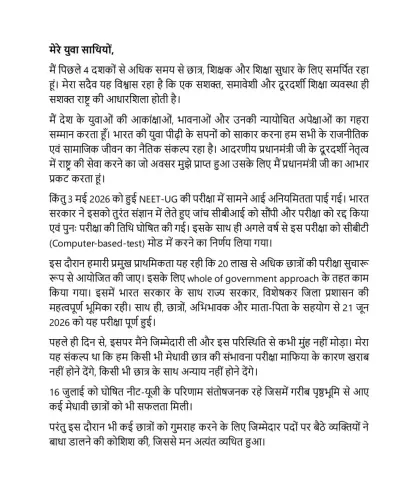
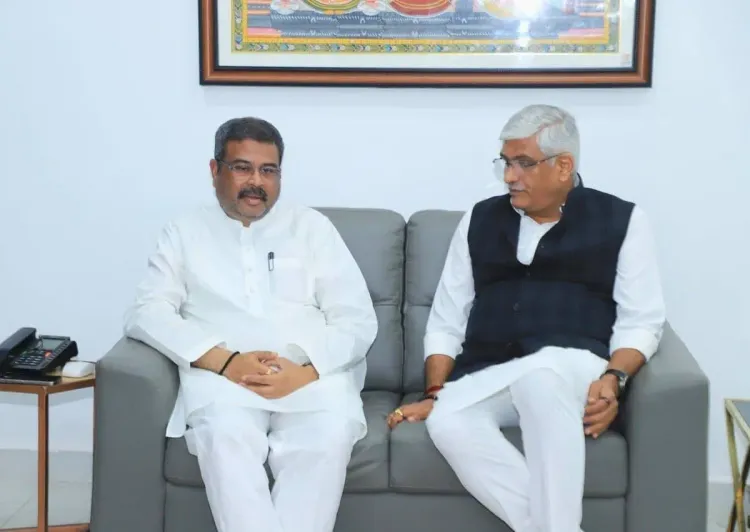
Union Culture and Tourism Minister Gajendra Singh Shekhawat paid a heartfelt tribute to Dharmendra Pradhan on 25 July 2026, calling his exit from the Education Ministry a model of moral accountability and praising his NEP-era reforms as a foundation for Viksit Bharat.
Key Takeaways
Gajendra Singh Shekhawat posted a public tribute to Dharmendra Pradhan on 25 July 2026 , marking Pradhan's departure from the Education Ministry.
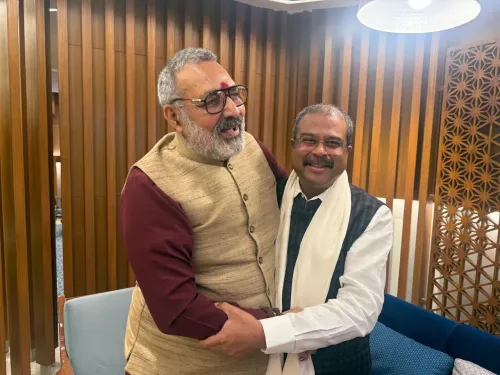
Shekhawat described Pradhan's decision to step down as an act of 'moral accountability and responsibility in public life.' Both leaders share roots in student politics, a bond Shekhawat cited as the basis of personal friendship and mutual inspiration.
Pradhan oversaw rollout of the National Education Policy 2020 and schemes such as PM eVIDYA during his tenure as Education Minister from July 2021 .
Shekhawat framed quality education as the 'strong foundation of Viksit Bharat ,' signalling continuity of the reform narrative despite the ministerial change.
Pradhan is expected to remain active in public life; his next role within the party or government will be closely watched.
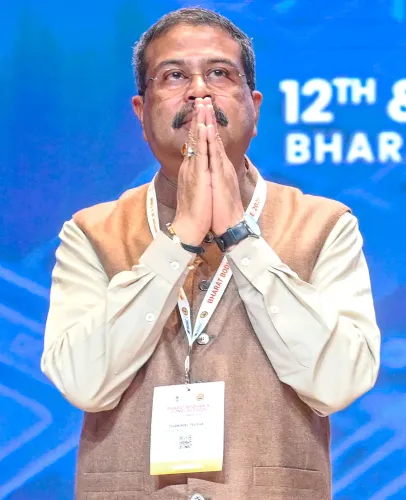
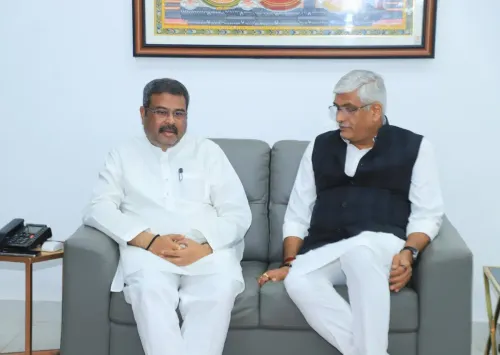
Union Culture and Tourism Minister Gajendra Singh Shekhawat on Saturday, 25 July 2026, paid a warm tribute to Dharmendra Pradhan, praising the former Education Minister's decades of public service and calling his decision to step down from office a demonstration of 'moral accountability in public life.'
Context
Posting on X in Hindi, Shekhawat wrote that to understand Pradhan, one must know his entire public life — 'छात्र आंदोलनों से निकले इस नेता ने युवावस्था से ही छात्र हितों, शिक्षा और राष्ट्र निर्माण को अपनी प्राथमिकता बनाया' ('this leader who emerged from student movements made the interests of students, education, and nation-building his priority from a young age'). Shekhawat noted that both he and Pradhan share roots in student politics, and that he has known Pradhan since those early days.
The tribute was addressed directly to @dpradhanbjp and closed with the invocation 'Jai Jagannath!' — a reference to Pradhan's deep cultural and spiritual ties to Odisha. Shekhawat described his colleague as a lamp 'जो संघर्षों से उद्दीप्त हुआ है' ('ignited by struggles'), whose 'aura remains undimmed.'
Policy Backdrop
Dharmendra Pradhan served as Union Education Minister from July 2021, overseeing the rollout of the National Education Policy (NEP) 2020 — a sweeping overhaul of school and higher education structures approved by the Union Cabinet in July 2020, replacing a policy framework that dated to 1986. Under his tenure, flagship initiatives such as PM eVIDYA and the National Education Technology Forum were advanced, with the stated goal of expanding equitable access to quality education.
Shekhawat credited Pradhan with 'far-reaching reforms that strengthened trust in the education system and kindled new hope in hardworking students,' adding that Pradhan's goal was not merely to frame policies but to ensure quality education reached 'the child standing on the last rung of society.'
Stakeholders and Impact
Both Shekhawat and Pradhan have organisational backgrounds in student politics, a shared experience that Shekhawat cited as a bond of personal friendship and mutual inspiration. Senior BJP leaders with roots in student movements have consistently positioned education reform as central to the Viksit Bharat 2047 vision — the government's long-term development framework — and Shekhawat's tribute reinforces that narrative even as a ministerial transition occurs.
For students, higher education institutions, and youth organisations, Pradhan's departure from the Education Ministry marks the end of a phase defined by NEP implementation. Shekhawat's public message signals that the reform agenda is expected to continue, describing Pradhan as someone who will remain 'dedicated to the service of Mother India as always.'
What's Next
Attention now turns to who will take charge of the Education Ministry and how the successor will carry forward pending NEP implementation targets, including benchmarks expected to be reviewed in upcoming sessions of Parliament. Shekhawat's tribute, framed around ethical accountability and continuity of purpose, suggests the BJP leadership is keen to present the transition as orderly and values-driven rather than disruptive. Pradhan's next public role — whether within the party organisation or in another capacity — will be closely watched by education sector stakeholders across the country.
Point of View
It frames a ministerial exit not as a setback but as a principled act consistent with BJP's broader Viksit Bharat narrative. The invocation of 'moral accountability' is notable — it pre-empts any perception of political turbulence around the Education Ministry transition. Both leaders' ABVP-linked backgrounds make this a message to the party's youth base as much as to the general public. The tribute also quietly signals that the NEP reform agenda will outlast any single minister's tenure.
NationPress
25 Oct 2026
Frequently Asked Questions
Why did Dharmendra Pradhan leave the Education Ministry?
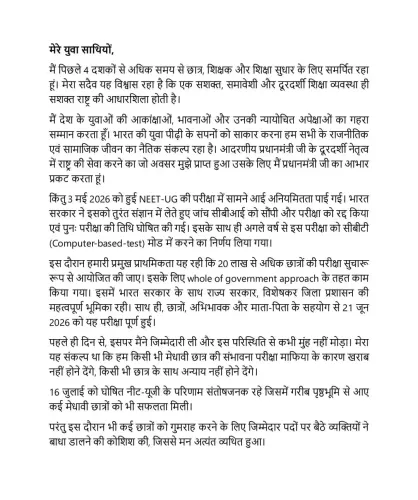
The specific circumstances of Pradhan's departure have not been officially detailed in public statements; Shekhawat's tribute describes the move as a voluntary act of 'moral accountability and responsibility,' suggesting Pradhan stepped down on principle.
What did Gajendra Singh Shekhawat say about Dharmendra Pradhan?
Shekhawat praised Pradhan as a leader who emerged from student movements and dedicated himself to education and nation-building, calling him a lamp 'ignited by struggles' whose aura remains undimmed.
What reforms did Dharmendra Pradhan carry out as Education Minister?
Pradhan oversaw the implementation of the National Education Policy 2020 , advanced the PM eVIDYA digital learning initiative, and worked to expand equitable access to quality education across India during his tenure from July 2021 .
What is the connection between Shekhawat and Pradhan?
Both leaders have backgrounds in student politics; Shekhawat says he has known Pradhan since those early days and describes him as a personal friend and a source of inspiration on many issues.
Who will be the next Education Minister of India?
No official announcement on Pradhan's successor at the Education Ministry has been made public as of the time of Shekhawat's post on 25 July 2026 .