Pradhan Reviews Samagra Shiksha Funds, Eyes Unified 3.0 Framework
Synopsis
Union Education Minister Dharmendra Pradhan chaired a review of Samagra Shiksha Abhiyan fund flows on 29 May 2026, announcing convergence of PM-POSHAN, ULLAS, PM-SHRI and other schemes from this year to create a unified, outcome-oriented school education framework aligned with NEP 2020 and the Viksit Bharat 2047 vision.
Key Takeaways
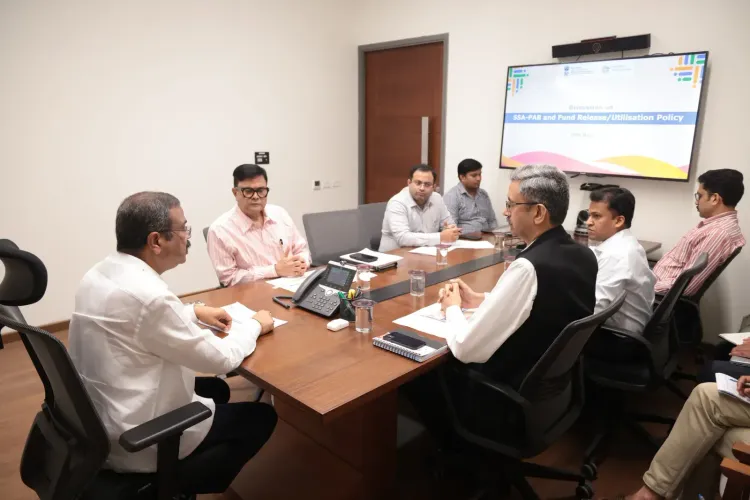
Union Education Minister Dharmendra Pradhan held a detailed review meeting on 29 May 2026 on fund release and utilisation under Samagra Shiksha Abhiyan .
Convergence of SSA, PM-POSHAN, ULLAS and PM-SHRI will be undertaken from this year to reduce fragmentation across school education schemes.
Samagra Shiksha Abhiyan was launched in 2018-19 , merging three earlier centrally sponsored schemes into a single framework covering pre-primary to Class XII.
The PM-SHRI scheme, approved in September 2022 with an outlay of Rs 27,360 crore , covers 14,500 model schools aligned with NEP 2020 .
Renewed focus on NEP 2020 implementation will emphasise innovation, nutrition, skill development, sports and arts for students.
The ministry reaffirmed cooperative federalism as a guiding principle for Centre-State engagement in school education delivery.
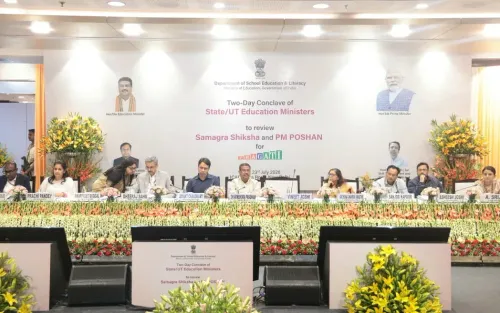
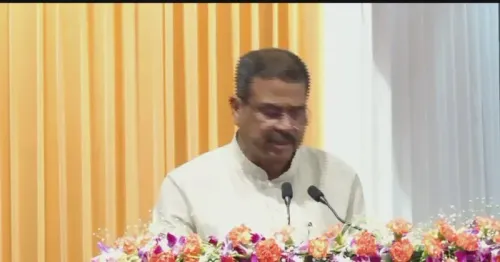
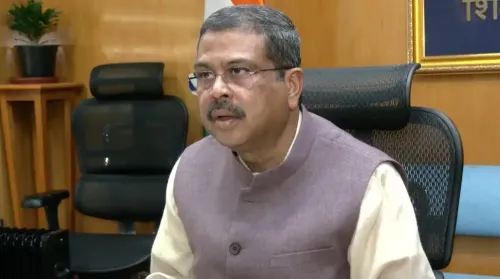
Union Education Minister Dharmendra Pradhan on Friday, 29 May 2026 chaired a detailed review meeting on fund release and utilisation under Samagra Shiksha Abhiyan, signalling a push to make the next iteration of the flagship school education scheme more efficient, transparent and outcome-oriented.
Context
The minister announced that an integrated approach through the convergence of Samagra Shiksha Abhiyan (SSA), PM-POSHAN, ULLAS, PM-SHRI and other flagship schemes will be undertaken from this year itself. The stated aim is to ensure greater coordination and measurable impact across the school education ecosystem, reducing the fragmentation that has historically limited the reach of individually administered programmes.
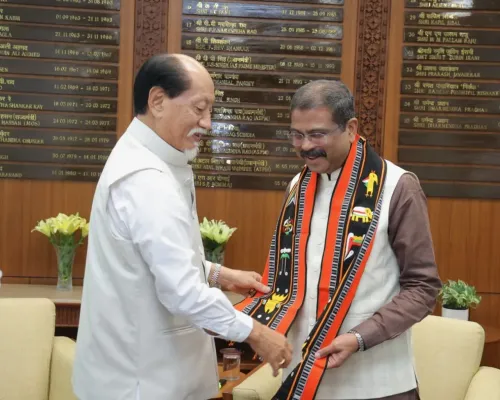
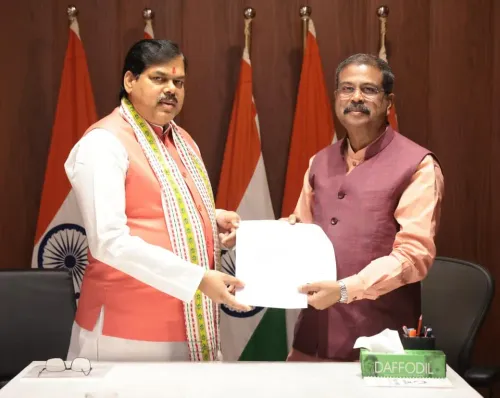
Pradhan also said the meeting discussed strengthening future Centre-State engagement 'while upholding the spirit of cooperative federalism' — an acknowledgement that school education, listed in the Concurrent List of the Constitution, requires active partnership between New Delhi and state governments for effective delivery.
Policy Backdrop
Samagra Shiksha Abhiyan was launched in 2018-19 as a single integrated scheme, replacing the earlier Sarva Shiksha Abhiyan and Rashtriya Madhyamik Shiksha Abhiyan. The merger was designed to provide a continuum of quality education from pre-primary to Class XII under one administrative umbrella.
The National Education Policy (NEP) 2020, approved by the Union Cabinet in July 2020, was the first overhaul of national education policy in 34 years. It mandated structural reforms spanning early childhood care, foundational literacy, multidisciplinary learning and vocational education. The PM-SHRI scheme, approved in September 2022 with an outlay of Rs 27,360 crore, was specifically designed to upgrade 14,500 model schools as exemplars of NEP 2020 implementation. PM-POSHAN, the revamped mid-day meal programme notified in 2021, and ULLAS, the adult literacy initiative launched in 2022, round out the cluster of schemes now being brought under a unified operational framework.
Friday's review meeting represents a continuation of the post-2020 pattern of consolidating fragmented school schemes into unified delivery structures, with renewed emphasis on outcome-based funding rather than input-based disbursement.
Stakeholders and Impact
The convergence architecture, if implemented as described, would directly affect state education departments across the country, which are the primary implementing agencies for centrally sponsored schemes. States have historically faced challenges in coordinating fund flows and reporting requirements across multiple scheme verticals.
For school students — particularly those in government schools who are the primary beneficiaries of mid-day meals under PM-POSHAN, model school upgrades under PM-SHRI, and foundational learning initiatives — the integrated approach is intended to deliver nutrition, infrastructure, skill development, sports and arts programming in a more coherent manner. The minister specifically highlighted 'innovation, nutrition, skill development, sports and arts among students' as areas of renewed focus under NEP 2020.
What's Next
State-level implementation reports on Samagra Shiksha fund utilisation and NEP 2020 progress are expected to feed into 2026-27 budget discussions and the next education ministers' conference. The ministry's stated goal of making the scheme 'transparent and outcome-oriented' suggests that performance metrics and fund-release conditionalities may be revised as part of the updated framework.
Pradhan framed these efforts as foundational to the Viksit Bharat 2047 vision — the government's broader agenda of making India a developed nation by the centenary of independence — positioning school education reform as central to building the country's future human capital.
Point of View
ULLAS and PM-SHRI under a single operational umbrella follows a well-established pattern of the post-2020 education ministry — consolidate first, then demand measurable outcomes. The explicit invocation of 'cooperative federalism' is notable given persistent friction between the Centre and several state governments over NEP 2020 adoption timelines. Framing the exercise within the Viksit Bharat 2047 narrative also signals that school education reform will remain a politically prominent plank for the BJP ahead of future electoral cycles.
NationPress
19 Sept 2026
Frequently Asked Questions
What is Samagra Shiksha Abhiyan and why is it being reviewed?
Samagra Shiksha Abhiyan is India's centrally sponsored integrated school education scheme launched in 2018-19, which merged Sarva Shiksha Abhiyan and Rashtriya Madhyamik Shiksha Abhiyan into a single framework. Union Education Minister Dharmendra Pradhan chaired a review on 29 May 2026 to assess fund release and utilisation and to plan a more efficient, transparent and outcome-oriented next phase.
What is Samagra Shiksha 3.0?
Samagra Shiksha 3.0 refers to the next planned iteration of the Samagra Shiksha Abhiyan, which Minister Pradhan indicated will feature convergence of multiple flagship schemes including PM-POSHAN, ULLAS and PM-SHRI for a more integrated approach. Specific details of its architecture are yet to be officially announced.
How does PM-SHRI relate to NEP 2020?
PM-SHRI — Pradhan Mantri Schools for Rising India — was approved in September 2022 with an outlay of Rs 27,360 crore to upgrade 14,500 selected government schools as model institutions that demonstrate full implementation of the National Education Policy 2020.
What is the ULLAS scheme in Indian education?
ULLAS, or Understanding Lifelong Learning for All in Society, is an adult education scheme launched in 2022 targeting foundational literacy and numeracy for non-literate adults. It is now being brought into convergence with school education schemes under the ministry's integrated framework.
What is Viksit Bharat 2047 and how does education connect to it?
Viksit Bharat 2047 is the Indian government's vision of making India a developed nation by 2047, the centenary of independence. Minister Pradhan linked school education reform — through NEP 2020 implementation and scheme convergence — to building the human capital required to achieve that goal.