Pradhan Meets Bihar Education Minister to Boost State Schools

Synopsis
Union Education Minister Dharmendra Pradhan met Bihar's Education Minister on June 9, 2026, to discuss strengthening the state's schools through Samagra Shiksha Abhiyan, teacher capacity building, dropout reduction, and infrastructure development — framing the effort as central to the 'Viksit Bihar' vision.
Key Takeaways
Union Education Minister Dharmendra Pradhan held a meeting with Bihar Education Minister on June 9, 2026 to discuss Bihar's school education system.
Key agenda items included effective implementation of Samagra Shiksha Abhiyan , teacher capacity building, reducing school dropout rates, and infrastructure development.
Both the central and Bihar state governments committed to bringing Bihar's students and teachers to benchmarks equal to other states across all major education standards.
Pradhan invoked Nalanda 's ancient legacy as evidence of Bihar's intellectual potential, connecting historical identity to the 'Viksit Bihar' development vision.
The Samagra Shiksha Abhiyan , launched in 2018-19 , merges three earlier school education schemes and operates as the primary vehicle for centre-state coordination on school outcomes.
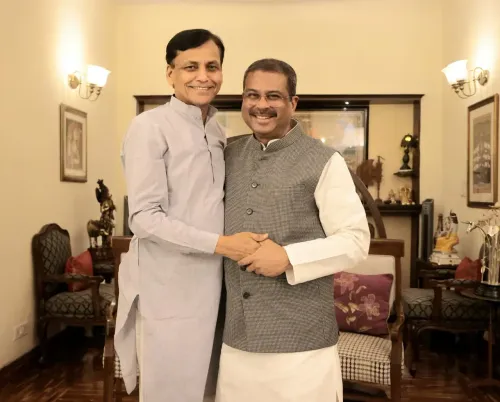
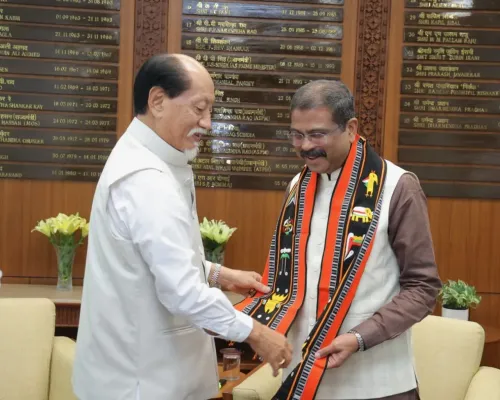
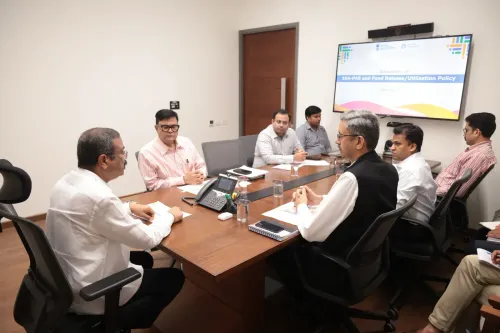
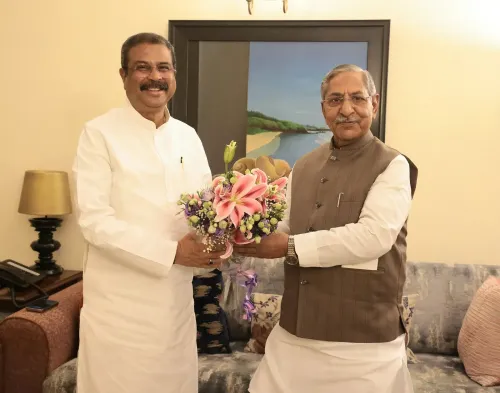
Union Education Minister Dharmendra Pradhan met Bihar Education Minister Sunil Kumar on Tuesday, June 9, 2026, for a wide-ranging discussion on strengthening the state's education system, covering school infrastructure, teacher capacity building, and reducing student dropout rates.
Context
Pradhan shared details of the meeting on X, noting that the discussion covered 'saarthak charcha' (meaningful dialogue) on key issues related to empowering Bihar's education system. He highlighted Bihar's centuries-old association with knowledge and learning, invoking Nalanda — the ancient seat of learning — as living proof of the state's intellectual heritage. 'Bihar's identity has been linked for centuries to the rich tradition of knowledge and education,' the minister wrote, adding that this legacy could be advanced through modern education systems.
The meeting addressed the effective implementation of the Samagra Shiksha Abhiyan, necessary education reforms, teacher capacity building, reducing school dropout rates, school infrastructure development, and expanding quality education across the state.
Policy Backdrop
The Samagra Shiksha Abhiyan, launched in 2018-19, is a centrally sponsored integrated scheme for school education that merged three earlier programmes — Sarva Shiksha Abhiyan, Rashtriya Madhyamik Shiksha Abhiyan, and the teacher education scheme — to improve access, infrastructure, and learning outcomes under a single administrative framework.
The scheme operates alongside the National Education Policy (NEP) 2020, which laid out a comprehensive framework for school and higher education reform, including vocational training and strategies to curb dropout rates. The Union Education Ministry has pursued regular coordination meetings with state counterparts to align central scheme implementation with NEP 2020 priorities, particularly in eastern states where infrastructure and retention gaps remain significant.
Stakeholders and Impact
The primary beneficiaries of the proposed measures are Bihar's school students and teachers. Pradhan stated that both the central and state governments are committed to bringing Bihar's children and teachers to the same level as other states across all major education benchmarks — 'sabhi pramukh shiksha maankon mein anya raajyon ke saman star par' (at a level equal to other states on all major education standards).
Bihar has historically faced challenges in school retention and infrastructure quality. The invocation of Nalanda's legacy alongside the 'Viksit Bihar' (Developed Bihar) vision signals that both governments are framing education investment as central to the state's broader development aspirations. The Nalanda International University project, reviving the ancient institution, further underscores this symbolic and policy alignment.
What's Next
The joint statement of intent from the meeting positions education as a key pillar of the 'Viksit Bihar' agenda, with both governments pledging continuous coordination and cooperation. Progress on Samagra Shiksha Abhiyan components in Bihar — including infrastructure targets and dropout reduction — is expected to surface in state-level progress reports and could feature in the next Union Budget or parliamentary discussions on education outcomes.
If the commitments made in this meeting translate into measurable benchmarks, Bihar could emerge as a test case for how historical educational identity can be harnessed to drive modern school reform under the NEP 2020 framework.
Point of View
Pradhan is threading a political narrative that frames school reform as both a civilisational duty and a development imperative. For Bihar, a state that has historically lagged on education indicators, the political salience of such meetings is high ahead of any state election cycle. The real test will be whether the coordination translates into verifiable improvements in Samagra Shiksha Abhiyan disbursements and utilisation certificates from the state.
NationPress
24 Oct 2026
Frequently Asked Questions
What did Dharmendra Pradhan discuss with Bihar Education Minister?
Pradhan met Bihar's Education Minister on June 9, 2026, to discuss strengthening Bihar's school education system, covering Samagra Shiksha Abhiyan implementation, teacher capacity building, reducing dropout rates, school infrastructure development, and expanding quality education.
What is Samagra Shiksha Abhiyan?
Samagra Shiksha Abhiyan is a centrally sponsored integrated school education scheme launched in 2018-19 by merging Sarva Shiksha Abhiyan, Rashtriya Madhyamik Shiksha Abhiyan, and teacher education schemes to improve access, infrastructure, and learning outcomes.
What is the 'Viksit Bihar' vision mentioned by Pradhan?
'Viksit Bihar' translates to 'Developed Bihar' and refers to the shared developmental aspiration of the central and Bihar state governments, with education being positioned as a key pillar of this vision alongside infrastructure and economic growth.
Why did Pradhan mention Nalanda in the context of Bihar education?
Pradhan cited Nalanda — the ancient, world-renowned centre of learning — as evidence of Bihar's deep-rooted intellectual heritage, arguing that this tradition can be built upon through modern education reforms to unlock the state's full potential.
How does NEP 2020 relate to Bihar's school education reforms?
The National Education Policy 2020 provides the overarching framework for school reform in India, including dropout reduction and vocational training. Samagra Shiksha Abhiyan is the primary scheme through which NEP 2020 goals are implemented at the state level, including in Bihar.