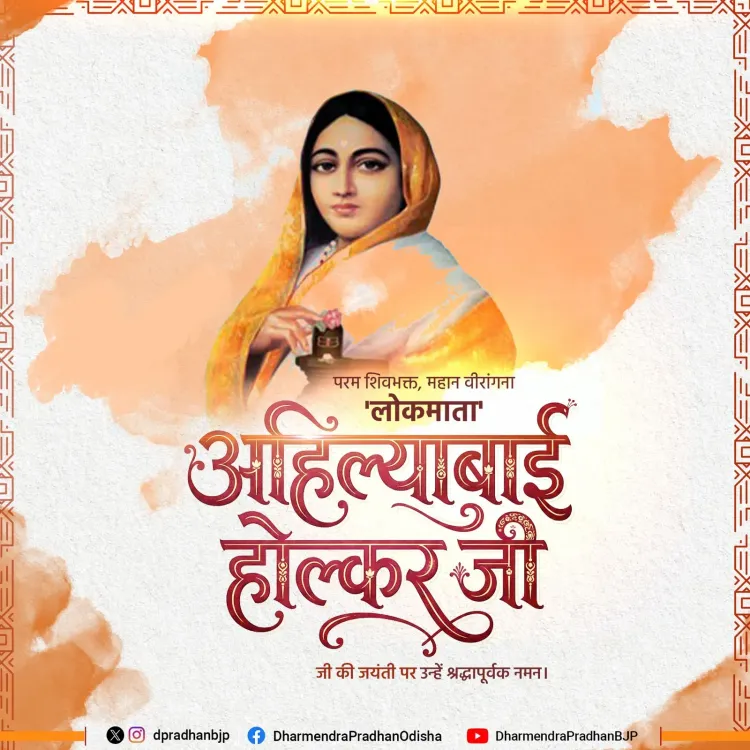
Pradhan pays tribute to Ahilyabai Holkar on her Jayanti
Synopsis
Union Education Minister Dharmendra Pradhan marked the jayanti of 18th-century Malwa ruler Ahilyabai Holkar on 31 May 2026, honouring her welfare-oriented governance, temple restorations at Kashi and Somnath, and enduring legacy on women's dignity and education.
Key Takeaways
Dharmendra Pradhan paid tribute to Ahilyabai Holkar on her birth anniversary on 31 May 2026 .
He described her as an 'unparalleled symbol of justice, service, compassion and good governance.' Holkar is credited with funding the restoration of the Kashi Vishwanath Temple in Varanasi and contributing to the rebuilding of the Somnath Temple in Gujarat .
The tribute highlighted her dedication to women's dignity, education and public welfare as an enduring inspiration.
The post reflects the BJP -led government's sustained practice of linking current heritage and education policy to pre-colonial women rulers.
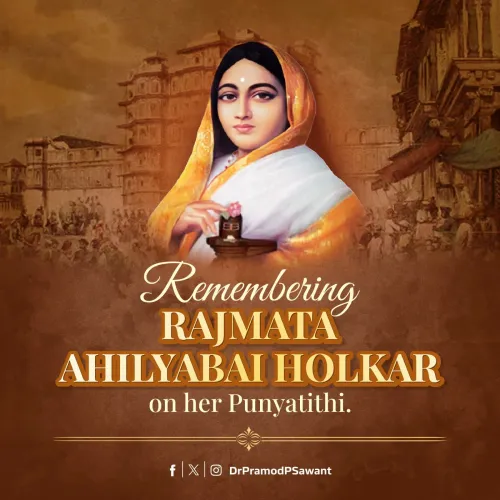
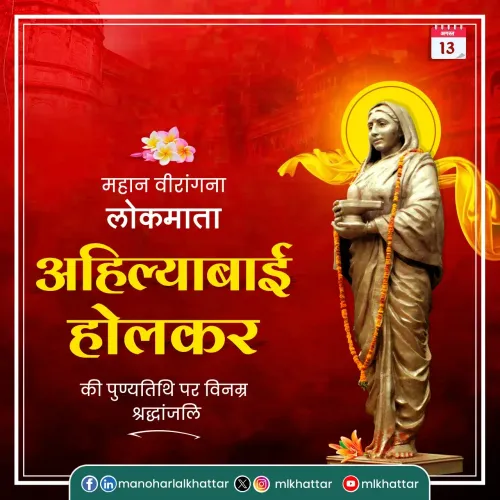
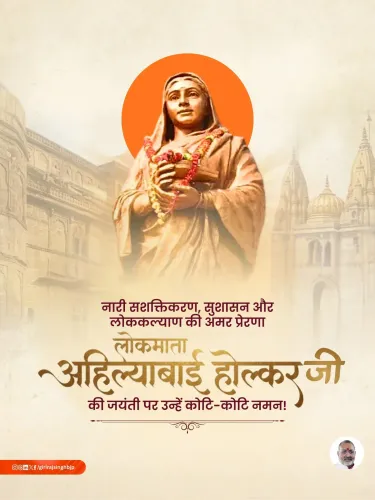
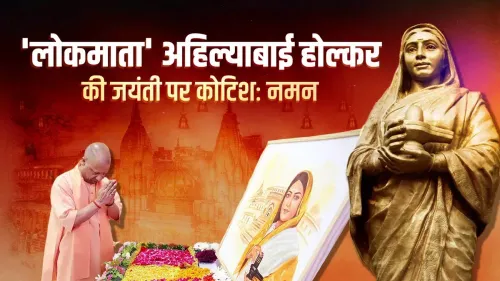
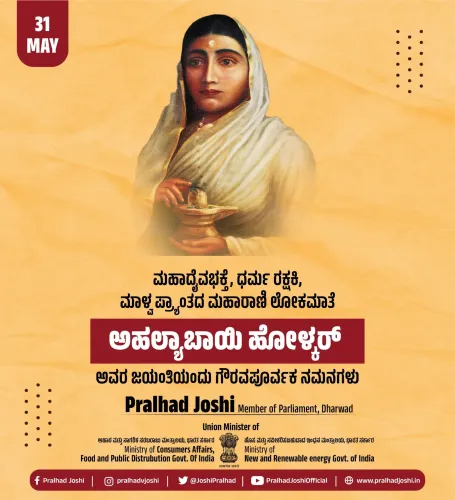
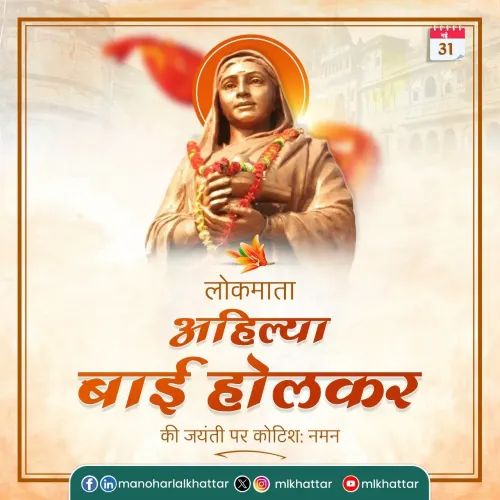
Union Education Minister Dharmendra Pradhan on Sunday, 31 May 2026 paid tribute to Ahilyabai Holkar, the 18th-century ruler of the Malwa kingdom, on her birth anniversary, hailing her as an unparalleled symbol of justice, service, compassion and good governance.
Context
Posting in Hindi on X, Pradhan offered kotishaḥ naman (countless salutations) to Ahilyabai Holkar, widely revered by the honorific Lokmata (Mother of the People). He wrote that she 'made public welfare the supreme objective of governance through her visionary leadership' and that her contribution to the revival of sacred pilgrimage sites — from Kashi to Somnath — 'is a golden chapter in the preservation of Indian heritage.' He further noted that her 'dedication to women's dignity, education, public interest and human values continues to inspire society today.'
Policy Backdrop
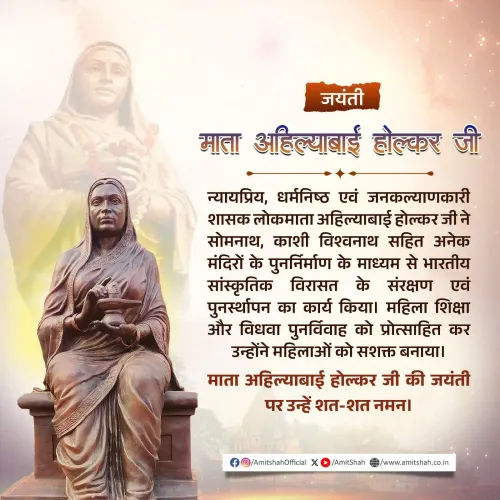
Ahilyabai Holkar ruled the Malwa Sultanate from 1767 to 1795 and is credited with funding the reconstruction of dozens of temples across the subcontinent, including the Kashi Vishwanath Temple in Varanasi and contributing to the restoration of the Somnath Temple in Gujarat following repeated invasions. Her administration is studied as an early model of welfare-oriented, justice-based rule. The modern Kashi Vishwanath Corridor, inaugurated in 2021, drew explicit reference to her earlier patronage as it expanded access and facilities around the same temple complex. The Swadesh Darshan scheme, launched in 2014–15, has similarly sought to develop pilgrimage and heritage circuits that include sites Holkar restored.
Tributes to Ahilyabai Holkar carry particular resonance for the BJP-led government, which has consistently invoked pre-colonial Hindu rulers — especially women exemplars of dharma-based governance — to contextualise contemporary cultural and heritage policy. Her jayanti has become a regular occasion for senior ministers to reaffirm this narrative linkage.
Stakeholders and Impact
The tribute speaks directly to two constituencies that the ruling party has foregrounded in recent policy cycles: women and pilgrims. Pradhan, as the minister overseeing implementation of the National Education Policy 2020, underscored Holkar's commitment to education and women's dignity — themes central to the NEP's stated goals of equity and cultural rootedness. For the pilgrimage economy, the invocation of Kashi and Somnath reinforces ongoing infrastructure investments at both sites. Historians and cultural organisations that document Holkar's legacy are also part of the audience for such commemorations, which help sustain public interest in her administrative record.
What's Next
Jayanti commemorations of figures like Ahilyabai Holkar have in the past preceded announcements on heritage circuit expansions or women-centric education programmes, though no specific new scheme was announced in this post. Parliamentary debates on cultural heritage policy and upcoming reviews of the Swadesh Darshan scheme are occasions where her legacy may be cited again. Pradhan's ministry is also expected to continue aligning NEP implementation milestones with historical narratives that emphasise India's indigenous intellectual and governance traditions.
Point of View
Women's empowerment and cultural nationalism. By naming both Kashi and Somnath — two sites central to the government's temple-corridor infrastructure push — the minister implicitly draws a line of continuity between Holkar's 18th-century patronage and present-day policy investments. For the Education Ministry, the emphasis on Holkar's commitment to learning and women's dignity dovetails neatly with the equity and cultural-rootedness goals of the National Education Policy 2020. Such jayanti messaging, while ceremonial in form, functions as soft political signalling ahead of potential policy announcements on heritage circuits or women-centric education schemes.
NationPress
19 Sept 2026
Frequently Asked Questions
Who was Ahilyabai Holkar and why is she celebrated?
Ahilyabai Holkar was the ruler of the Malwa kingdom from 1767 to 1795, celebrated for her justice-oriented governance, large-scale temple restorations at Kashi and Somnath, and her pioneering support for women's dignity and public welfare.
What did Dharmendra Pradhan say about Ahilyabai Holkar?
Pradhan called her an 'unparalleled symbol of justice, service, compassion and good governance' and said her contribution to restoring pilgrimage sites from Kashi to Somnath is 'a golden chapter in the preservation of Indian heritage.'
What is Ahilyabai Holkar's connection to Kashi and Somnath?
Ahilyabai Holkar funded the reconstruction of the Kashi Vishwanath Temple in Varanasi and contributed to the restoration of the Somnath Temple in Gujarat during the 18th century, both of which had been damaged by repeated invasions.
Why does the BJP frequently invoke Ahilyabai Holkar?
The BJP-led government regularly cites Holkar as a pre-colonial exemplar of dharma-based, welfare-oriented governance by a woman ruler, linking her legacy to contemporary policies on heritage preservation, temple infrastructure and women's empowerment.
What is the Kashi Vishwanath Corridor and how does it relate to Ahilyabai Holkar?
The Kashi Vishwanath Corridor, inaugurated in 2021, expanded access and facilities around the Varanasi temple complex; its development drew explicit reference to Holkar's earlier patronage of the same temple in the 18th century.