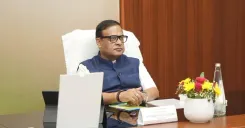
Pradhan shares Sanskrit verse on self-discipline in education

Synopsis
Union Education Minister Dharmendra Pradhan shared a Sanskrit subhashita on 16 July 2026 emphasising that self-knowledge belongs only to the disciplined and the striving — a message aligned with the NEP 2020 push to integrate Indian Knowledge Systems into mainstream education.
Key Takeaways
Dharmendra Pradhan posted a Sanskrit subhashita on 16 July 2026 under the hashtag #ShikshaSubhashitam .
The verse states that self-knowledge is unattainable by the weak, lazy, or undisciplined, and belongs only to the learned person who strives.
The post aligns with the National Education Policy 2020 , which calls for integrating Indian Knowledge Systems into curricula.
The Ministry of Education has established IKS cells in universities since 2021 to operationalise this mandate.
Revised NCERT textbooks incorporating IKS modules are under development, with parliamentary review of NEP implementation expected in 2024–25 .
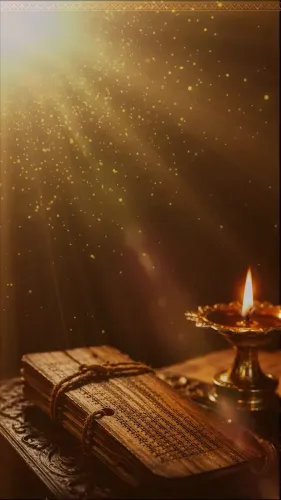
Union Education Minister Dharmendra Pradhan on Thursday, 16 July 2026, shared a Sanskrit subhashita on self-discipline and intellectual effort, invoking the idea that self-knowledge is attainable only by the diligent and the learned — not the weak, the lazy, or the undisciplined.
The post, shared under the hashtag #ShikshaSubhashitam, reads: 'Aatmagyan kamzor, aalsi aur asanyami vyakti ko prapt nahi hota. Jo vidwan purush prayas karta hai, wahi Brahm Gyan ko prapt karta hai.' In English: 'Self-knowledge is not attained by the weak, the lazy, or the undisciplined. Only the learned person who strives attains the knowledge of Brahman.'
Context
The verse belongs to a tradition of Sanskrit subhashitas — short, aphoristic sayings — that have long served as pedagogical tools in Indian educational thought. Pradhan has used such verses periodically on social media to underscore values of effort, discipline, and cultural rootedness, a practice that mirrors a broader pattern among senior ministers of invoking classical Indian wisdom in public communication.
The choice of a verse centring on self-effort and the pursuit of higher knowledge aligns closely with the Ministry's stated emphasis on character formation and values-based education alongside academic achievement.
Policy Backdrop
The post sits within the larger framework of the National Education Policy (NEP) 2020, which explicitly recommended the integration of Indian Knowledge Systems (IKS) — encompassing classical texts, philosophies, and pedagogical traditions — into mainstream curricula at every level. The Ministry of Education operationalised this through the creation of IKS cells in universities and higher education institutions beginning 2021.
The NEP's foundational philosophy draws on values such as discipline, self-reliance, and sustained effort — precisely the themes the shared verse articulates. Revised NCERT textbooks incorporating IKS modules have been under development, with parliamentary scrutiny of NEP implementation expected in the 2024–25 cycle.
Stakeholders and Impact
Students and educators are the primary audience for this messaging. For students, the verse reinforces the Ministry's consistent communication that academic success and deeper learning demand personal discipline and active effort — not passive attendance. For educators and curriculum designers, such public statements from the Minister signal continued political and administrative weight behind IKS integration.
The #ShikshaSubhashitam hashtag suggests a curated series of education-themed classical aphorisms, positioning the Ministry's social media presence as an extension of its pedagogical outreach — bringing classical Indian thought directly into public discourse.
What's Next
The broader rollout of IKS-integrated NCERT textbooks across school grades will be a key indicator of how this philosophical messaging translates into curriculum reality. Parliamentary discussions on the NEP implementation report are expected to bring renewed scrutiny to how values-based and knowledge-systems education is being embedded in classrooms. Pradhan's continued use of classical verses in public communication suggests the Ministry intends to keep cultural and intellectual heritage at the centre of India's education narrative well into the policy's implementation phase.
Point of View
Sustained strategy to embed classical Indian thought into the cultural vocabulary of education policy. By pairing philosophical messaging with an active IKS institutional agenda, the Ministry is attempting to make NEP 2020's cultural integration goals visible and personally relatable, not merely bureaucratic. The move reflects a post-2014 pattern in which cultural rootedness functions as both a policy signal and a political identity marker for the ruling dispensation. Whether this messaging translates into measurable pedagogical change will depend on the pace and fidelity of curriculum reform on the ground.
NationPress
16 Jul 2026
Frequently Asked Questions
What did Dharmendra Pradhan post on 16 July 2026?
He shared a Sanskrit subhashita stating that self-knowledge is not attained by the weak, lazy, or undisciplined, but only by the learned person who strives — posted under the hashtag #ShikshaSubhashitam.
What is the meaning of the Sanskrit verse Pradhan shared?
The verse means that self-knowledge, or knowledge of Brahman, is inaccessible to those who are weak, lazy, or lacking in self-control; it belongs only to the disciplined and intellectually striving individual.
What is #ShikshaSubhashitam?
It is a hashtag used by Dharmendra Pradhan on social media to share classical Sanskrit aphorisms related to education, discipline, and learning as part of the Ministry's broader cultural outreach.
How does this relate to NEP 2020?
The National Education Policy 2020 explicitly recommends integrating Indian Knowledge Systems — including classical texts and philosophical traditions — into modern curricula, and Pradhan's posts on classical verses reflect that policy emphasis.
What are IKS cells in Indian universities?
Indian Knowledge Systems cells are units established in universities from 2021 onward under the Ministry of Education to promote the study and integration of traditional Indian texts, philosophies, and pedagogical methods into higher education.