Pralhad Joshi dares Opposition: debate NEET or be seen fleeing facts
Synopsis
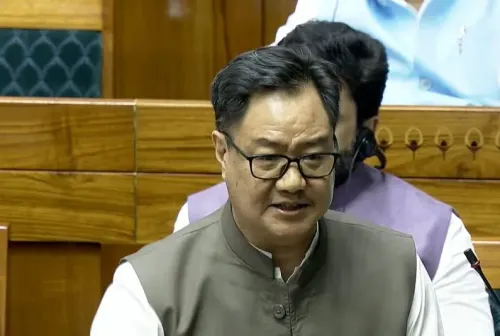
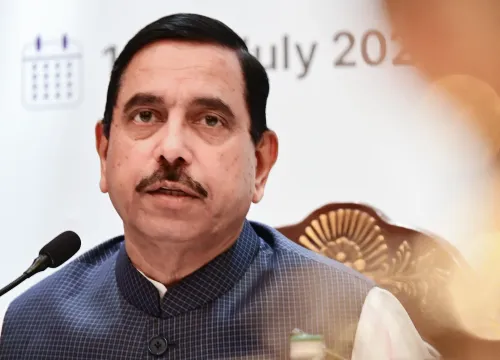
Union Minister Pralhad Joshi announced that Home Minister Amit Shah has formally written to Lok Sabha Speaker Om Birla seeking a House discussion on the NEET student movement. Declaring the government 'ready for the discussion,' Joshi challenged the Opposition to participate rather than walk out when facts are presented.
Key Takeaways
Home Minister Amit Shah has written to Lok Sabha Speaker Om Birla requesting a House discussion on the student movement over the NEET examination .
Minister Pralhad Joshi publicly declared the government 'ready for the discussion' on August 12, 2026 .
Joshi challenged the Opposition to remain in the House rather than walk out 'when the facts are placed before the nation.' The NEET-UG controversy erupted from 2024 onward with paper-leak allegations, Supreme Court review, and nationwide student protests.
Speaker Om Birla holds the authority to schedule and format the debate; no date has been confirmed yet.
Whether the Opposition accepts the debate floor or walks out will shape the political narrative around NEET accountability.
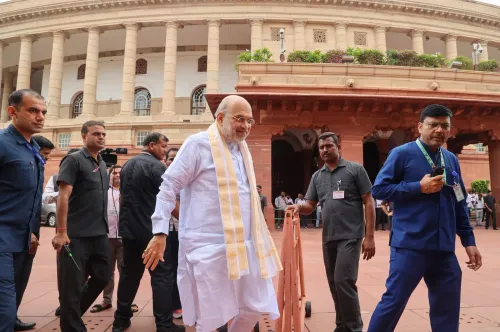
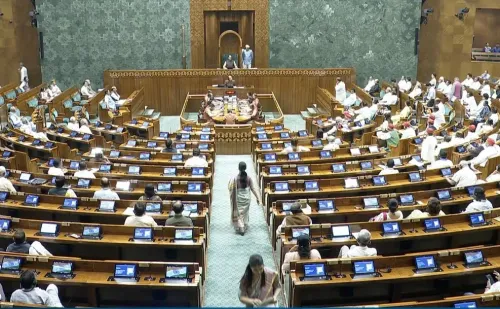
A direct challenge landed in Parliament's court on Wednesday, August 12 — and it came with the government's own hand raised first. Union Consumer Affairs Minister Pralhad Joshi declared that Union Home Minister Amit Shah has written to Lok Sabha Speaker Om Birla requesting a full House discussion on the student movement surrounding the NEET examination, and threw the next move squarely at the Opposition: show up, or own the walkout.
Shah's letter to Birla: the government blinks first — on its own terms
The move is a calculated one. By having Amit Shah — the government's most formidable parliamentary strategist — formally write to Speaker Om Birla, the ruling side reframes the NEET controversy from a liability into an invitation. The message to the Opposition is blunt: the government is not hiding from the debate; it is requesting one. Joshi's post put it plainly — 'The Government is ready for the discussion. Now, the Opposition must stay in the House and participate in the debate, rather than run away when the facts are placed before the nation.'
Om Birla, as Lok Sabha Speaker, holds the authority to schedule the discussion and determine its format — whether a short-duration motion, a calling-attention notice, or a full adjournment debate. The ball is now formally in his court, with the government on record as having asked for it.
Why NEET became a parliamentary flashpoint
The National Eligibility cum Entrance Test (NEET-UG), the single gateway to undergraduate medical admissions across India, was rocked from 2024 onward by a cascade of paper-leak allegations that triggered Supreme Court review and nationwide student protests. Medical aspirants — many of them sitting the exam for a second or third time — took to streets in multiple states, demanding accountability, re-examination, and structural reform of the testing system.
Opposition parties seized on the controversy as evidence of institutional failure under the current government, repeatedly demanding a dedicated parliamentary debate. Yet Indian parliamentary sessions have a well-worn pattern: opposition benches demand discussion, the government agrees or stalls, and when proceedings begin, one side walks out — leaving the other to claim the moral high ground on television. Joshi's post is a pre-emptive strike against exactly that script.
The walkout trap — and who it is aimed at
The political geometry here is sharp. If the Opposition accepts the debate, the government gets to present what it calls 'the facts' before a national audience — including whatever steps have been taken since 2024 on NEET reform, Supreme Court compliance, and examination integrity. If the Opposition walks out — as it has done on multiple occasions during contentious House proceedings — Joshi's framing turns that exit into a story: the side demanding accountability refused to hear the answers.
For medical aspirants watching from outside Parliament, the stakes are more immediate than the parliamentary chess match. A substantive Lok Sabha debate could surface timelines on pending Supreme Court orders, the status of any re-examination decisions, and the government's roadmap for preventing future irregularities — details that have remained scattered across court filings and committee reports.
Whether Speaker Om Birla schedules the discussion in the current session, and whether the Opposition chooses the floor over the footpath, will define the next chapter of the NEET controversy's long and unresolved arc.
Point of View
The BJP's most commanding parliamentary voice, the ruling side elevates the stakes and makes any opposition walkout politically costly. This fits a broader pattern in which the government uses procedural transparency as a shield against accountability narratives. The real test is whether the Lok Sabha discussion, if it happens, produces actionable commitments on examination reform or remains a televised point-scoring exercise for both sides.
NationPress
12 Aug 2026
Frequently Asked Questions
Why has Amit Shah written to Lok Sabha Speaker Om Birla about NEET?
Home Minister Amit Shah has written to Speaker Om Birla requesting that the Lok Sabha hold a dedicated discussion on the student movement surrounding the NEET examination, signalling the government's willingness to debate the controversy in Parliament.
What is the NEET controversy about?
The NEET-UG examination, India's single gateway to undergraduate medical admissions, faced widespread paper-leak allegations from 2024 onward, prompting Supreme Court review and large-scale student protests demanding accountability and reform.
What did Pralhad Joshi say about the NEET debate?
Minister Pralhad Joshi stated that the government is ready for a House discussion on NEET and challenged the Opposition to participate in the debate rather than walk out when facts are presented before the nation.
What role does Om Birla play in scheduling the NEET debate?
As Lok Sabha Speaker, Om Birla has the authority to schedule the discussion and decide its format — whether a short-duration motion, calling-attention notice, or adjournment debate.
Has the Lok Sabha scheduled the NEET discussion yet?
As of the announcement on August 12, 2026, no date has been confirmed. The scheduling depends on Speaker Om Birla's decision and the parliamentary calendar for the current or upcoming session.