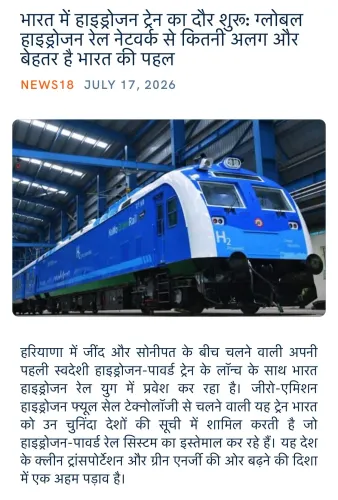
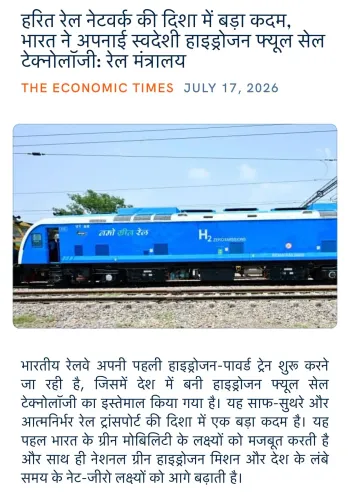
Pralhad Joshi hails India's first hydrogen train launch
Synopsis
On Independence Day 2026, PM Modi launched India's first hydrogen-powered train, hailed by Union Minister Pralhad Joshi as the world's longest and most powerful. The milestone follows the Rs 19,744 crore National Green Hydrogen Mission and Indian Railways' 2022-23 hydrogen train tender, marking a major step in India's net-zero transport strategy.
Key Takeaways
India launched its first hydrogen-powered train on August 15, 2026 , inaugurated by PM Narendra Modi .
Union Minister Pralhad Joshi described it as the world's longest and most powerful hydrogen train — specific technical specifications are pending independent verification.
The launch follows the National Green Hydrogen Mission , approved in January 2023 with an outlay of Rs 19,744 crore .
Indian Railways had issued a hydrogen fuel-cell train tender in 2022–23 as part of its net-zero roadmap.
The train carries the #MakeInIndia and #AtmanirbharBharat branding, signalling indigenous design and manufacturing ambitions.
The next phase requires scaling green hydrogen production and refuelling infrastructure along operational rail corridors.
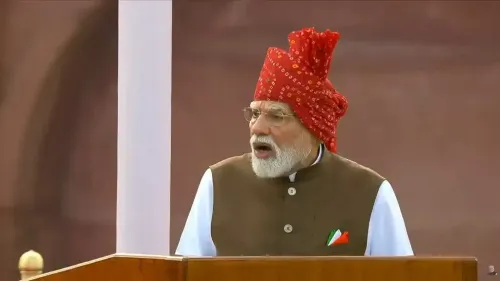
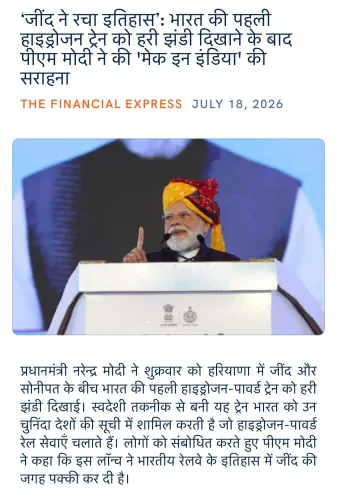
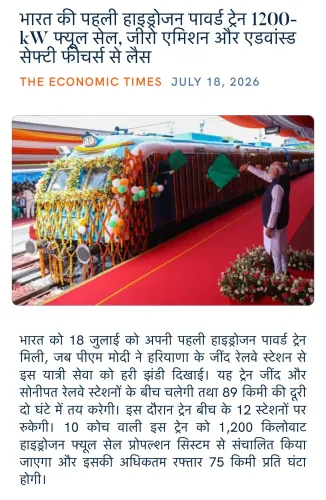
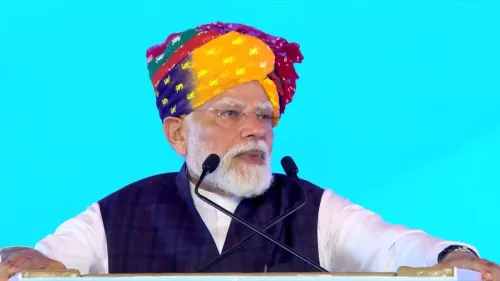
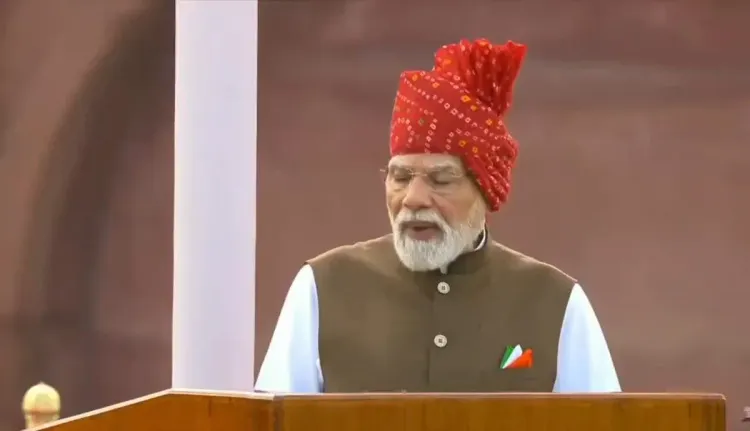
On Independence Day, August 15, 2026, India crossed a threshold that most nations are still planning for: the launch of the country's first hydrogen-powered train, inaugurated by Prime Minister Narendra Modi and celebrated by Union Minister Pralhad Joshi — who oversees New and Renewable Energy — as a defining moment in India's clean mobility journey.
Joshi described the development as a 'historic leap,' posting in both English and Kannada: 'ಐತಿಹಾಸಿಕ ಹೆಜ್ಜೆ' ['a historic step'] — India has started the country's first hydrogen-powered train service, marking the beginning of a new era of green mobility. He further described the train as the world's longest and most powerful hydrogen-powered train, a claim that underscores India's ambition even as independent verification of those specific superlatives is pending.
From a 2023 mission to a moving train
The launch does not arrive without groundwork. The National Green Hydrogen Mission, cleared by the Union Cabinet in January 2023 with an outlay of Rs 19,744 crore, was explicitly designed to build hydrogen ecosystems across sectors — transport included. Indian Railways had already floated a tender in 2022–23 for hydrogen fuel-cell-based trains as part of its net-zero decarbonisation roadmap. What was a procurement file three years ago is now, on Independence Day, a running train.
The timing is deliberate. Launching on August 15 folds the achievement into India's national narrative of self-reliance — the post's hashtags, #MakeInIndia and #AtmanirbharBharat, are not incidental. They signal that the train is meant to be read as a symbol of indigenous capability, not just an infrastructure upgrade.
Where hydrogen fits India's net-zero bet
India's decarbonisation strategy for transport has never been a single-track bet. Electrification of rail has advanced steadily, biofuels are being blended into aviation and road fuel, and now hydrogen enters the picture for heavy-rail corridors where overhead electrification is costly or impractical. Each technology fills a different gap in the 2070 net-zero pledge India made at COP26.
For Joshi, whose ministerial portfolio spans both consumer affairs and renewable energy, the hydrogen train is a convergence point — clean energy policy made visible and rideable. His framing of PM Modi as the architect of this 'new path in clean energy' is consistent with the BJP's broader electoral communication around green credentials ahead of state and national cycles.
What the next phase looks like
The launch of a first rake is a proof of concept, not a fleet. The real test lies in what follows: commissioning dedicated green hydrogen production and refuelling infrastructure along operational routes, and scaling from one train to a commercially viable network. Those supply-chain and logistics questions will determine whether this Independence Day moment becomes a turning point or a showcase.
India has put hydrogen on the tracks. Now it has to keep it running.
Point of View
The hashtags, and the ministerial amplification all serve the BJP's 'New India' self-reliance narrative. For Joshi, whose remit covers renewable energy, championing the train reinforces his portfolio's visibility ahead of electoral cycles. The deeper policy question is whether the Rs 19,744 crore Green Hydrogen Mission can now deliver the supply-chain depth — production, storage, refuelling — needed to make one showcase train a scalable network, which is where India's net-zero credibility will ultimately be judged.
NationPress
15 Aug 2026
Frequently Asked Questions
What is India's first hydrogen-powered train?
India's first hydrogen-powered train is a fuel-cell-based rail service launched by PM Narendra Modi on August 15, 2026, developed under Indian Railways' decarbonisation programme and the National Green Hydrogen Mission.
Is India's hydrogen train really the world's longest and most powerful?
Union Minister Pralhad Joshi described it as the world's longest and most powerful hydrogen train, but independent verification of those specific superlatives has not yet been confirmed by external sources.
What is the National Green Hydrogen Mission?
The National Green Hydrogen Mission is a central government scheme approved in January 2023 with an outlay of Rs 19,744 crore to develop green hydrogen production, storage, and end-use across sectors including transport.
When did Indian Railways start working on hydrogen trains?
Indian Railways issued a tender for hydrogen fuel-cell-based trains in 2022–23 as part of its broader net-zero carbon roadmap.
What comes next after India's hydrogen train launch?
The key next steps are commissioning dedicated green hydrogen production and refuelling infrastructure along operational routes and scaling from the initial rake to a commercially viable hydrogen train network.