Giriraj Singh hails India's world's longest hydrogen train
Synopsis
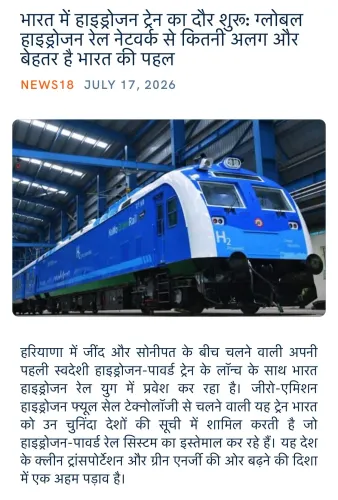
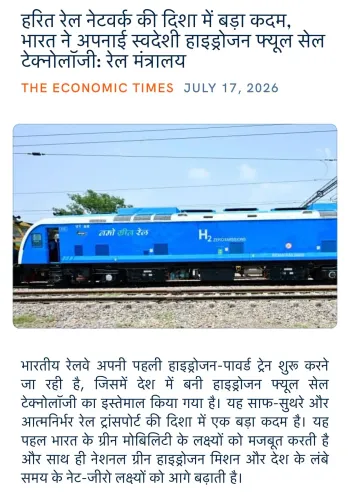
Union Textiles Minister Giriraj Singh on 17 July 2026 celebrated India's launch of what he described as the world's longest hydrogen train, calling it a new chapter in 21st-century rail technology and a landmark moment for India's presence on the global stage.
Key Takeaways
Giriraj Singh , Union Textiles Minister and senior BJP leader, posted on X on 17 July 2026 celebrating the launch of India's hydrogen train.
He described it as the world's longest hydrogen train , marking a new chapter in 21st-century rail technology.
Indian Railways has been exploring hydrogen fuel-cell trains since 2020 as part of its net-zero roadmap.
The initiative aligns with the National Green Hydrogen Mission (2023) and India's 2070 net-zero target pledged at COP26.
Similar hydrogen train pilots have been run in Germany, Japan and China , placing India in a select global cohort.
Operational details — including routes, capacity and hydrogen sourcing — are yet to be formally announced.
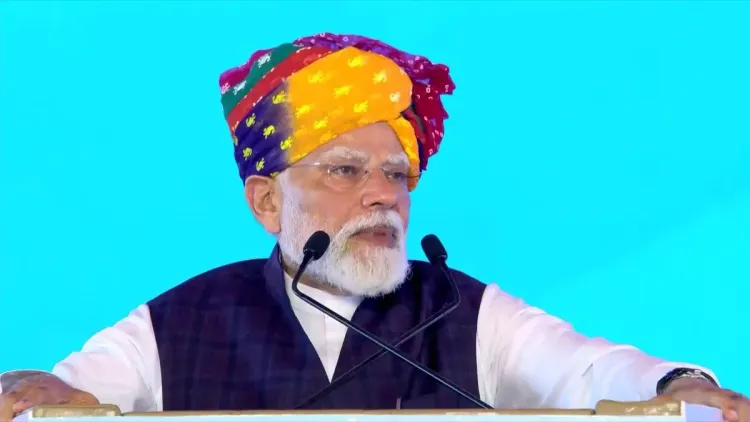
Union Textiles Minister Giriraj Singh on Friday, 17 July 2026, took to X to celebrate what he described as a landmark moment in India's railway history, declaring that the country has launched the world's longest hydrogen train and thereby established a strong presence on the global stage of 21st-century rail technology.
Posting with the hashtag #Hydrogen_train, the minister wrote: '21वीं सदी की रेल तकनीक में भारत ने एक नया अध्याय जोड़ा है' — 'India has added a new chapter in 21st-century rail technology. By running the world's longest hydrogen train at the very first attempt, India has registered its strong presence on the global stage.'
Context
Indian Railways, which operates one of the world's largest rail networks, has been actively pursuing decarbonisation and technology modernisation for several years. The development of hydrogen fuel-cell trains has been on the Railways' agenda since at least 2020, forming part of its broader net-zero roadmap. The minister's post, accompanied by a video, signals that a significant operational milestone has now been reached.
Giriraj Singh, a senior BJP leader and Lok Sabha MP from Begusarai, Bihar, shared the post in his capacity as a senior government figure celebrating a national achievement, even as the hydrogen train project falls under the Ministry of Railways' direct purview.
Policy Backdrop
India's hydrogen-in-transport ambitions are anchored in the National Green Hydrogen Mission, approved in 2023, which allocated funds to position India as a global hub for green hydrogen production and its application across sectors including mobility. The mission sits within India's broader commitment to reach net-zero emissions by 2070, a target announced at COP26 in 2021.
Hydrogen trains generate electricity through a chemical reaction between hydrogen and oxygen, emitting only water vapour. Several countries — including Germany, Japan and China — have run hydrogen train pilots, making India's claimed entry into this space, and specifically the assertion of the 'world's longest' such train, a notable competitive statement on the international stage.
Stakeholders and Impact
The primary beneficiaries of a successful hydrogen train programme would be rail passengers across India's vast network, who stand to gain from cleaner, quieter and potentially more energy-efficient services. Clean energy firms and domestic manufacturers aligned with the Atmanirbhar Bharat initiative also have a direct stake, as localising advanced hydrogen propulsion technology could generate significant industrial and employment opportunities.
The move further reinforces India's positioning as a serious player in green technology, complementing its renewable energy targets and its ambitions in electric mobility. If the 'world's longest' claim is independently validated, it would represent a significant reputational milestone for Indian engineering and public-sector innovation.
What's Next
Attention will now turn to the operational details of the hydrogen train's rollout — including specific routes, passenger capacity, frequency and the hydrogen sourcing model (green versus grey). Upcoming Railway Budget allocations and parliamentary sessions are expected to shed light on the scale and timeline of a wider deployment.
India's success in this domain, if sustained and independently verified, could accelerate international partnerships and technology-transfer agreements, further embedding hydrogen rail within the country's long-term infrastructure planning.
Point of View
The post fits a consistent BJP communications pattern of tying infrastructure achievements to national pride and Atmanirbhar Bharat, using social media as a first-mover channel before formal government press releases. Whether the hydrogen train programme achieves scale will depend on budget follow-through and the pace of domestic green hydrogen production — both of which remain works in progress.
NationPress
16 Oct 2026
Frequently Asked Questions
What is India's hydrogen train and why is it significant?
India's hydrogen train uses fuel-cell technology that combines hydrogen and oxygen to generate electricity, emitting only water vapour. It is significant because it represents a major step in decarbonising one of the world's largest rail networks and, if the 'world's longest' claim is verified, places India ahead of several advanced economies in this technology.
What did Giriraj Singh say about the hydrogen train?
Giriraj Singh posted on X on 17 July 2026 that India has 'added a new chapter in 21st-century rail technology' by running the world's longest hydrogen train at the very first attempt, registering India's strong presence on the global stage.
What is the National Green Hydrogen Mission?
The National Green Hydrogen Mission is a central government scheme approved in 2023 to position India as a global hub for green hydrogen production and its application across sectors, including transport and mobility.
Which countries have hydrogen trains already?
Germany, Japan and China have all run hydrogen train pilots before India's launch. India's entry into this space — and particularly the claim of operating the world's longest hydrogen train — marks a significant step in this global competition.
What is India's net-zero target and how does the hydrogen train relate to it?
India pledged to achieve net-zero carbon emissions by 2070 at the COP26 climate summit in 2021. The hydrogen train programme is a direct part of Indian Railways' decarbonisation roadmap, replacing diesel traction with zero-emission fuel-cell technology on select routes.