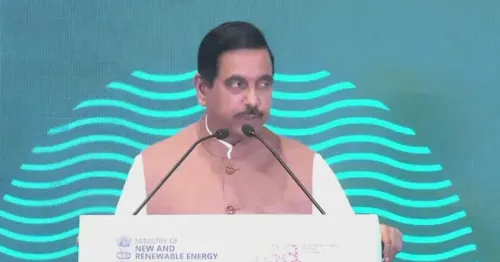
Pralhad Joshi Launches Bharat Renewable Energy Summit 2026

Synopsis
Union Minister Pralhad Joshi has announced the Bharat Renewable Energy Summit and Expo 2026 in New Delhi, framing it as a global platform to forge clean energy partnerships and help India meet its 500 GW non-fossil fuel target by 2030.
Key Takeaways
Pralhad Joshi , Union Minister of New and Renewable Energy, announced the Bharat Renewable Energy Summit & Expo 2026 on 2 November 2026 .
The summit is to be held in New Delhi and aims to convene global leaders, policymakers, and industry innovators around clean energy partnerships.
India has committed to 500 GW of non-fossil fuel capacity by 2030 and net-zero emissions by 2070 , pledges made at COP26 in 2021 .
The Ministry of New and Renewable Energy has driven India's renewables push since the National Solar Mission in 2010 .
India co-founded the International Solar Alliance as a multilateral clean-energy body with over a hundred member nations.
Exact summit dates, confirmed participant list, and investment targets had not been officially disclosed at the time of the announcement.
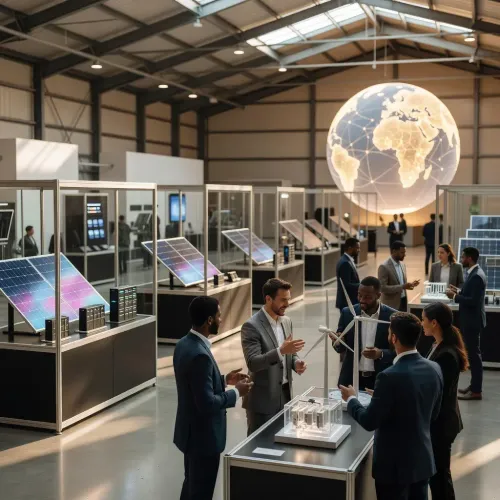
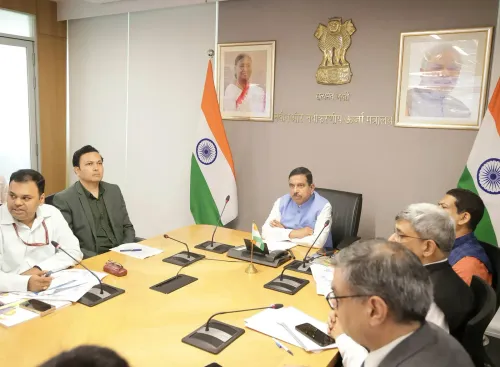
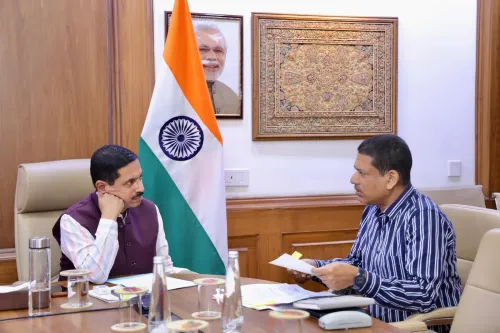
New Delhi is about to become the nerve centre of the global clean energy conversation. Union Minister of New and Renewable Energy Pralhad Joshi announced on Monday, 2 November 2026 that the capital is 'ready to power the global clean energy transition' — signalling the formal launch of the Bharat Renewable Energy Summit & Expo 2026, a high-stakes gathering designed to pull global leaders, policymakers, and industry innovators into a single room and get deals done.
What the BRE Summit promises to deliver
The summit's stated ambition goes well beyond speeches. Joshi framed the event as a platform to 'forge partnerships, unlock opportunities and accelerate the clean energy transition' — language that maps directly onto India's standing commitment to reach 500 GW of non-fossil fuel capacity by 2030, a target India placed on the global table at COP26 in Glasgow in 2021. That pledge also anchors India's longer arc: a net-zero emissions goal by 2070.
The Ministry of New and Renewable Energy, which Joshi heads alongside the Consumer Affairs portfolio, has been the institutional engine behind India's solar and wind scale-up since the National Solar Mission was launched in 2010. The BRE Summit is its latest instrument for turning domestic targets into internationally-backed investment.
New Delhi's role as India's clean-energy diplomacy stage
India has repeatedly used New Delhi summits to attract foreign capital and technology while advancing signature initiatives like the International Solar Alliance — co-founded with France and now a multilateral body with over a hundred member nations. Each such gathering serves a dual purpose: signalling policy seriousness to investors and locking in bilateral or multilateral clean-energy partnerships before global climate negotiations resume.
The 2026 edition fits that pattern precisely. With the global energy transition under intense pressure — grid reliability, green hydrogen economics, and critical minerals supply chains are all live fault lines — a summit in the world's most populous country, which is also one of its fastest-growing energy markets, carries genuine convening power.
Joshi's call to 'connect, collaborate and power a sustainable future'
The minister closed his post with a direct appeal: 'Let's connect, collaborate and power a sustainable future.' The hashtag #BRESummit signals an organised outreach push to draw international participants and media attention ahead of the event. Specific dates, confirmed national delegations, and investment commitment targets had not been officially disclosed at the time of the announcement.
What is clear is the strategic intent: position India not merely as a country racing to meet its own renewables targets, but as the convening power that sets the agenda for how the world gets to net zero — a role New Delhi has been building toward for more than a decade.
Point of View
The event is a chance to stamp his tenure at the Ministry of New and Renewable Energy with a signature moment of multilateral outreach. The timing — with global decarbonisation under political pressure in several major economies — gives India an opening to assert itself as a stabilising anchor for the clean energy transition. Whether the summit produces concrete investment commitments or remains a declaration of intent will determine how the market and diplomatic community read India's 2030 capacity ambitions.
NationPress
2 Nov 2026
Frequently Asked Questions
What is the Bharat Renewable Energy Summit and Expo 2026?
The Bharat Renewable Energy Summit and Expo 2026 is an international gathering announced by Union Minister Pralhad Joshi to be held in New Delhi, aimed at bringing together global leaders, policymakers, and industry innovators to forge clean energy partnerships and accelerate the global clean energy transition.
Who announced the BRE Summit 2026?
Union Minister of New and Renewable Energy Pralhad Joshi announced the summit on 2 November 2026 via a post on X, using the hashtag #BRESummit .
What are India's renewable energy targets?
India has committed to achieving 500 GW of non-fossil fuel electricity capacity by 2030 and reaching net-zero emissions by 2070 , both pledges announced at the COP26 climate summit in Glasgow in 2021 .
What is India's International Solar Alliance?
The International Solar Alliance is a multilateral initiative co-founded by India and France to promote solar energy globally. It now counts over a hundred member nations and is a key pillar of India's clean-energy diplomacy.
When and where is the BRE Summit 2026 taking place?
The summit is to be held in New Delhi , though exact dates and the confirmed participant list had not been officially disclosed at the time of the announcement on 2 November 2026 .