Pralhad Joshi meets Belagavi farmers at Delhi residence
Synopsis
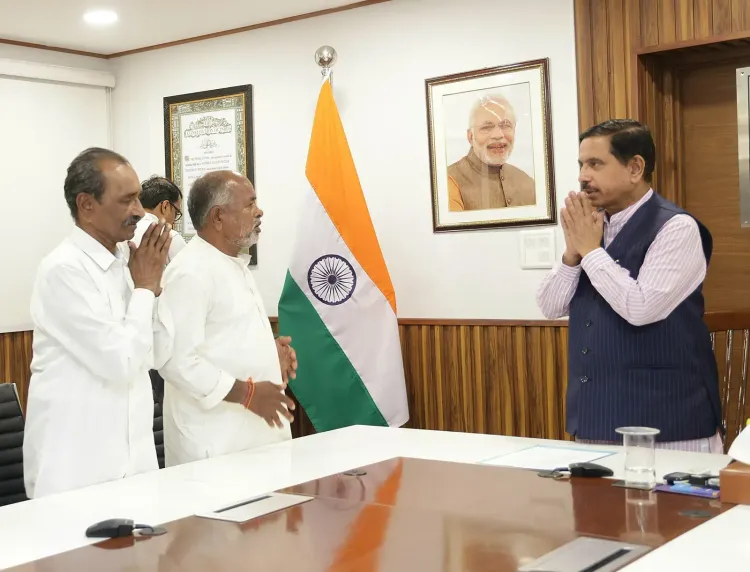
Union Minister Pralhad Joshi hosted a delegation of farmers from Gandigawad village, Khanapur taluk, Belagavi district, at his New Delhi residence on 30 September 2026, holding extended discussions on local and agriculture-related concerns. He reaffirmed that addressing farmer grievances remains a top priority.
Key Takeaways
Farmers from Gandigawad village, Khanapur taluk, Belagavi district met Union Minister Pralhad Joshi at his Delhi residence on 30 September 2026 .
Discussions covered various local constituency issues as well as agriculture-related concerns.
Joshi stated that responding to farmer grievances and resolving their problems is a stated priority.
No specific commitments or follow-up actions were publicly disclosed from the meeting.
Joshi holds dual portfolios — Consumer Affairs, Food and Public Distribution, and New and Renewable Energy — both relevant to farming communities.
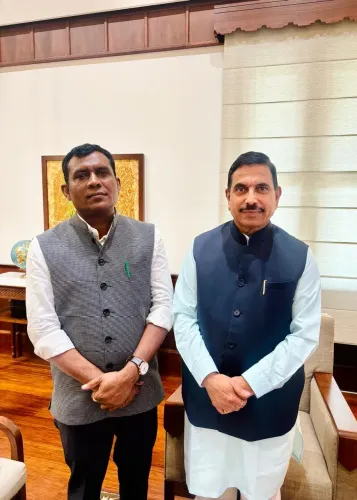
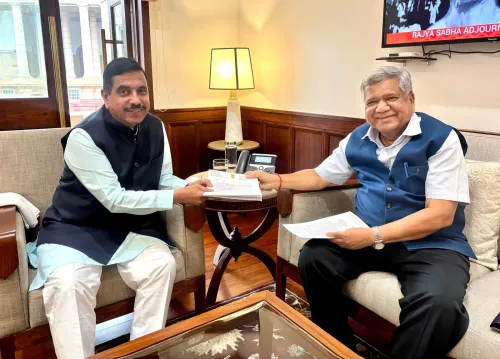
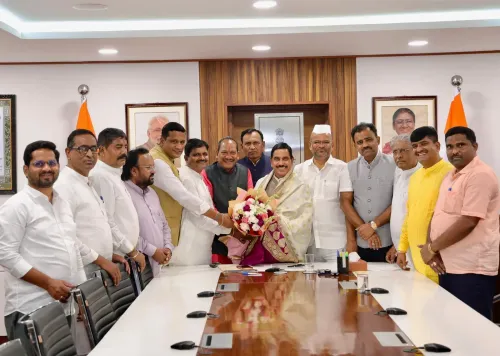
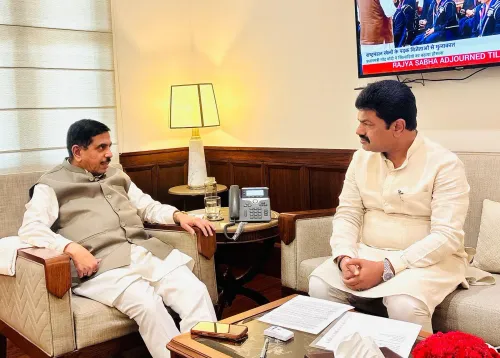
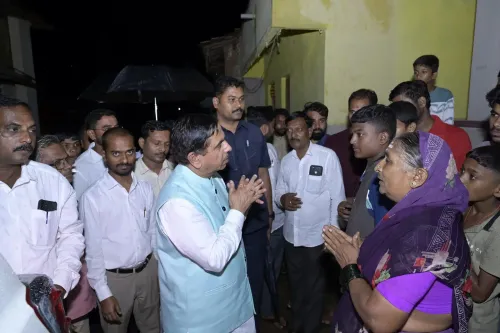
Farmers from Gandigawad village in Khanapur taluk, Belagavi district, travelled to New Delhi on Wednesday, 30 September 2026, to sit across the table with Union Consumer Affairs and New and Renewable Energy Minister Pralhad Joshi — bringing their fields, their frustrations, and their hopes straight to his home office.
Joshi shared photographs of the meeting on X, writing in Kannada: 'ಬೆಳಗಾವಿ ಜಿಲ್ಲೆಯ ಖಾನಾಪೂರ ತಾಲೂಕಿನ ಗಂದಿಗವಾಡ ಗ್ರಾಮದ ರೈತರು ಇಂದು ದೆಹಲಿಯ ನನ್ನ ಗೃಹ ಕಚೇರಿಯಲ್ಲಿ ಭೇಟಿಯಾಗಿ...' — 'Farmers from Gandigawad village, Khanapur taluk, Belagavi district, met me today at my residence in Delhi.' He added that the conversation ranged across various local issues as well as agriculture-related concerns, and underlined: 'Responding to the problems of our farmer brethren and addressing their grievances is our priority.'
Gandigawad to Delhi: a constituency call
Khanapur taluk sits in the forested, hilly belt of Belagavi district near the Karnataka-Goa border — an area where agriculture, land rights, and forest-boundary disputes have historically been live concerns for farming communities. The delegation's decision to make the journey to the capital underlines the weight they attach to their unresolved issues.
The specific grievances raised during the meeting were not disclosed publicly. Joshi's post did not detail any commitments or follow-up actions — standard practice for such constituent interactions, which often serve as the first step toward departmental referrals.
A minister's dual portfolio and its relevance to farmers
Pralhad Joshi holds two Union Cabinet portfolios that directly touch rural livelihoods: Consumer Affairs, Food and Public Distribution — which governs food security, the public distribution system, and price regulation — and New and Renewable Energy, which increasingly intersects with agriculture through solar pump schemes and rural electrification. Farmers visiting his residence in Delhi can, in principle, flag concerns that span both domains.
Central ministers routinely host constituent delegations at their Delhi residences as part of standard parliamentary outreach. Such meetings act as pressure-release valves and intelligence-gathering exercises, surfacing ground-level problems before they escalate into formal agitations.
Whether this particular meeting in Gandigawad's name translates into policy action — a departmental directive, a site visit, or a targeted scheme — will be the real measure of the conversation that happened behind those closed doors on Wednesday.
Point of View
Hosting farmer delegations from his home state is as much political maintenance as it is governance. Belagavi district — a historically contested and politically significant region — demands consistent attention, and a face-to-face meeting in Delhi signals accessibility. The open-ended nature of the post, however, leaves the substantive outcome unclear; the true test will be whether departmental follow-through matches the optics of the open door.
NationPress
30 Sept 2026
Frequently Asked Questions
Why did farmers from Belagavi travel to Delhi to meet Pralhad Joshi?
Farmers from Gandigawad village in Khanapur taluk, Belagavi district, travelled to Delhi to meet Union Minister Pralhad Joshi at his residence to discuss local constituency issues and agriculture-related grievances directly with him.
What issues were discussed at the meeting?
Joshi's post stated that various local issues and agriculture-related matters were discussed at length, but specific grievances or commitments were not publicly disclosed.
What portfolios does Pralhad Joshi hold that are relevant to farmers?
Pralhad Joshi is the Union Minister of Consumer Affairs, Food and Public Distribution — which covers food security and the public distribution system — and Minister of New and Renewable Energy, which includes solar pump and rural electrification schemes relevant to farming.
Where is Gandigawad village located?
Gandigawad is a village in Khanapur taluk of Belagavi district in Karnataka, situated in the hilly belt near the Karnataka-Goa border.
Is it common for Union ministers to meet farmer delegations from their home states?
Yes, central ministers routinely host constituent delegations from their home states at their Delhi residences as part of standard parliamentary and constituency outreach work.