President Murmu honours Bastar Dussehra traditions at Jagdalpur
Synopsis
President Droupadi Murmu attended Bastar Dussehra at Lalbagh Maidan, Jagdalpur, paying tribute to the Kutumb Yatra and the upcoming 27 October palanquin farewell of Maa Danteshwari and Devi Mawali — a 75-day tribal festival at the heart of Chhattisgarh's indigenous heritage.
Key Takeaways
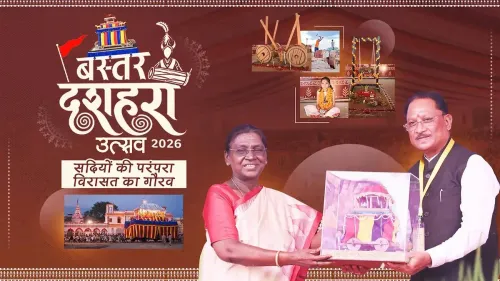
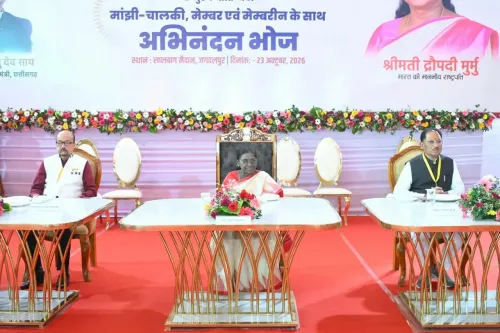
President Droupadi Murmu attended the Bastar Dussehra programme at Lalbagh Maidan, Jagdalpur on 23 October 2026 .
She saluted the Kutumb Yatra — the ceremonial farewell of village deities — as a hallmark of the festival's religious traditions.
The palanquin ( doli ) farewell of Maa Danteshwari and Devi Mawali is scheduled for 27 October 2026 .
Bastar Dussehra is a 75-day tribal festival centred on local goddess worship, distinct from the mainstream Dussehra narrative.
Murmu is India's first tribal woman President , sworn in July 2022, making her attendance especially symbolic for indigenous communities.
The visit aligns with the Government of India's Janjatiya Gaurav Diwas policy framework, instituted in 2021 to honour tribal heritage.
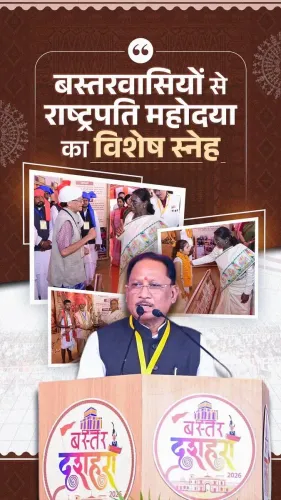
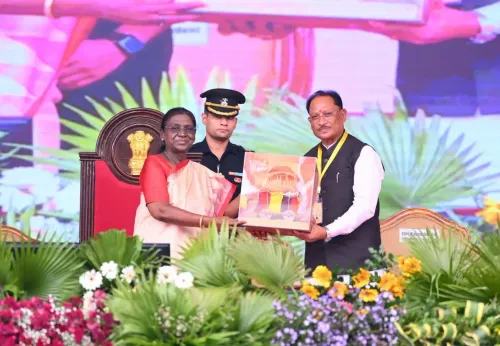
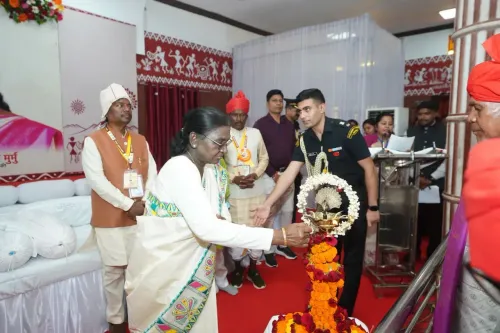
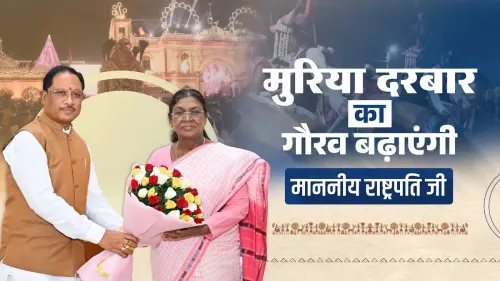
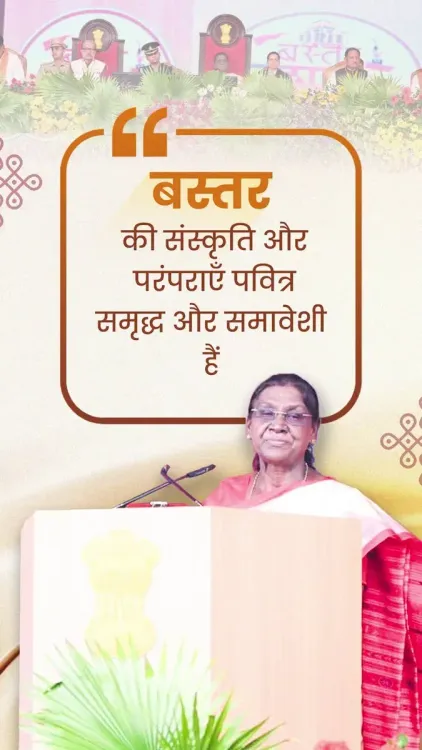
India's first tribal woman President stood at the heart of one of the country's oldest and most extraordinary festivals on Friday, 23 October 2026 — lending constitutional weight to a celebration that has endured for more than seven centuries. President Droupadi Murmu attended the Bastar Dussehra programme at Lalbagh Maidan, Jagdalpur, and paid tribute to the unique religious and cultural traditions that set this festival apart from every other Dussehra in India.
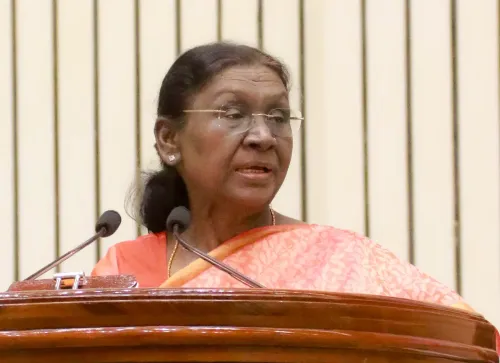
The Chief Minister's Office of Chhattisgarh shared the President's remarks on X, quoting her directly: 'Kutumb Yatra ke madhyam se gram devi-devataon ki vidaai tatha 27 October ko Maa Danteshwari aur Devi Mawali ki doli vidaai jaise aayojan is utsav ki vishisht dharmik evam sanskritik paramparaon ka parichayak hai.' ('The farewell of village deities through the Kutumb Yatra, and the palanquin farewell of Maa Danteshwari and Devi Mawali on 27 October, are hallmarks of this festival's distinctive religious and cultural traditions.') She added: 'I salute these cultural traditions.'
What makes Bastar Dussehra unlike any other
Bastar Dussehra is not a re-enactment of Ram's victory over Ravana — it is a 75-day tribal festival rooted in the worship of local deities, principally Maa Danteshwari, the presiding goddess of the Bastar region. The Kutumb Yatra — the ceremonial farewell of village gods and goddesses — and the doli (palanquin) procession mark the closing chapters of a celebration that draws tribal communities from across the dense forests and plateaus of Chhattisgarh.
The city of Jagdalpur, headquarters of Bastar district, transforms into the epicentre of this cultural confluence every year. The scale and continuity of these rituals, maintained through generations of indigenous communities, have made Bastar Dussehra one of the most distinctive folk-religious events in South Asia.
Murmu's presence and what it signals
President Murmu, sworn in as India's 15th President in July 2022, is the country's first tribal woman to hold the nation's highest constitutional office. Her presence at Jagdalpur carries resonance well beyond protocol — it places the republic's first citizen, herself from a tribal background, at the centre of a festival that is a living archive of India's indigenous civilisations.
Central and state governments have increasingly foregrounded tribal heritage in national discourse. The Government of India institutionalised Janjatiya Gaurav Diwas on 15 November in 2021 to honour tribal contributions, and Bastar Dussehra has featured prominently in that broader effort to bring indigenous traditions into the mainstream cultural conversation. The hashtags #JanJatiyaGaurav and #TribalPride accompanying the post reflect exactly that framing.
Countdown to the doli farewell on 27 October
With the palanquin farewell of Maa Danteshwari and Devi Mawali set for 27 October, the festival's most sacred closing ritual is days away. For the tribal communities of Bastar, this moment — the goddesses returning to their abode after weeks of communal celebration — is the emotional and spiritual culmination of the entire season.
A presidential visit to witness and honour these traditions is a rare affirmation: that the stories these communities have carried across centuries belong not just to Bastar, but to India.
Point of View
Which seeks to weave indigenous identity into the national mainstream rather than treat it as a peripheral concern. For the Chhattisgarh government, hosting the President at Jagdalpur elevates the event's national profile and reinforces the 'Viksit Chhattisgarh' branding visible in the post's own hashtags. The deeper question the visit raises is whether symbolic recognition translates into durable policy gains — land rights, forest access, cultural preservation funding — for the same communities being celebrated.
NationPress
24 Oct 2026
Frequently Asked Questions
What is Bastar Dussehra and why is it unique?
Bastar Dussehra is a 75-day tribal festival held in the Bastar region of Chhattisgarh, centred on the worship of local deities like Maa Danteshwari rather than the Ramayana narrative of mainstream Dussehra. It is one of the longest-running folk-religious festivals in India.
Why did President Droupadi Murmu attend Bastar Dussehra 2026?
President Murmu attended the Bastar Dussehra programme at Lalbagh Maidan, Jagdalpur on 23 October 2026 to honour the festival's distinctive tribal and cultural traditions, including the Kutumb Yatra and the upcoming doli farewell of Maa Danteshwari.
What is the Kutumb Yatra in Bastar Dussehra?
The Kutumb Yatra is the ceremonial farewell of village gods and goddesses, a key ritual within the Bastar Dussehra celebrations that President Murmu specifically highlighted in her remarks at the festival.
When is the doli farewell of Maa Danteshwari in 2026?
The palanquin farewell of Maa Danteshwari and Devi Mawali is scheduled for 27 October 2026, marking one of the most sacred closing rituals of Bastar Dussehra.
What is Janjatiya Gaurav Diwas and how does it relate to Bastar Dussehra?
Janjatiya Gaurav Diwas, instituted on 15 November 2021 by the Government of India, honours tribal contributions and heritage. Bastar Dussehra has become a prominent showcase within this broader national effort to recognise and mainstream indigenous traditions.