President Murmu joins AIIMS health camp in Mayurbhanj
Synopsis
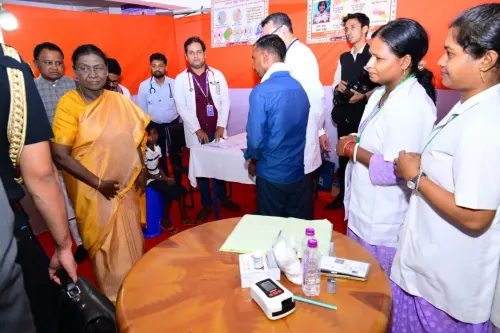
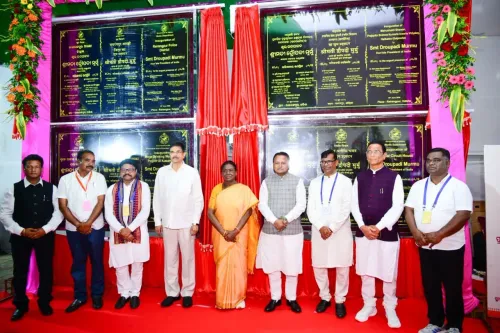
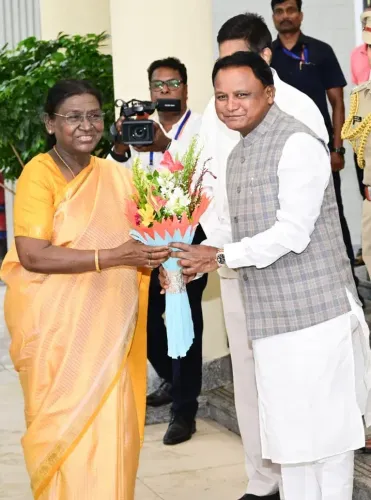
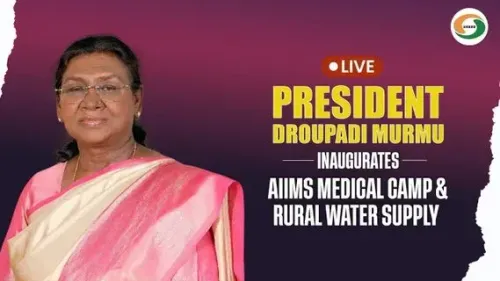
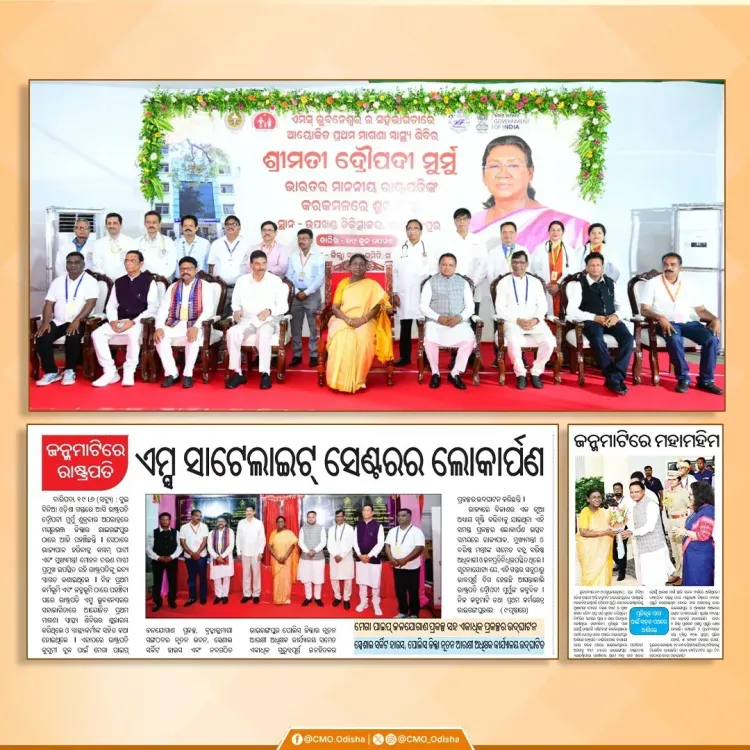
President Droupadi Murmu, Governor Dr Hari Babu Kambhampati, and Chief Minister Mohan Majhi jointly inaugurated an AIIMS Bhubaneswar-partnered health camp at Rairangpur in Mayurbhanj on 20 June 2026, alongside the launch of multiple public-welfare projects for the tribal-majority district.
Key Takeaways
A health camp was inaugurated at Rairangpur, Mayurbhanj on 20 June 2026 in partnership with AIIMS Bhubaneswar .
President Droupadi Murmu — who was born in Mayurbhanj — attended the event alongside Governor Dr Hari Babu Kambhampati and CM Mohan Majhi .
Multiple public-welfare projects were launched at the event for the benefit of local residents.
AIIMS Bhubaneswar was established under the Pradhan Mantri Swasthya Suraksha Yojana to address healthcare gaps in eastern India.
Mayurbhanj is a Scheduled Tribe-majority district with historically limited access to advanced medical facilities.
The event reflects ongoing state-centre coordination to extend specialist healthcare into tribal and remote districts of Odisha.
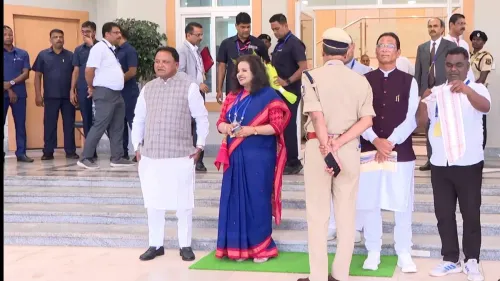
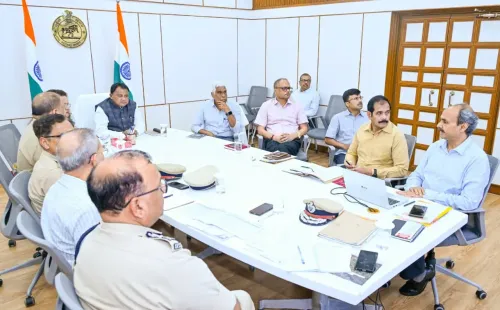
President Droupadi Murmu, Odisha Governor Dr Hari Babu Kambhampati, and Chief Minister Mohan Majhi inaugurated a health camp at Rairangpur in Mayurbhanj district on Saturday, 20 June 2026, organised in partnership with AIIMS Bhubaneswar. The event also saw the launch of several public-welfare projects aimed at improving access to healthcare and civic services for residents of the predominantly tribal district.
Context
The Chief Minister's Office of Odisha announced the event on X, noting that the health camp was held at Rairangpur in Mayurbhanj with AIIMS Bhubaneswar as the institutional partner. The post, written in Odia, stated that the occasion was used to launch multiple public-interest projects for the benefit of local people — 'ଲୋକଙ୍କ ସୁବିଧା ପାଇଁ ବିଭିନ୍ନ ଜନହିତକର ପ୍ରକଳ୍ପ' (various public-welfare projects for the convenience of the people).
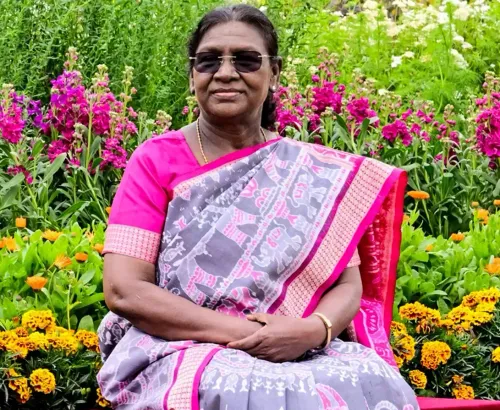
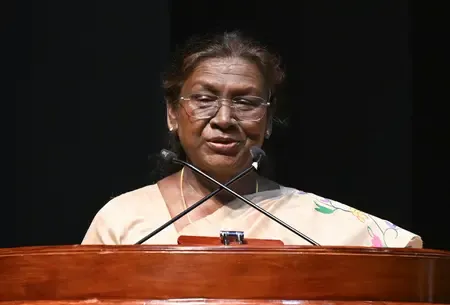
The presence of President Murmu at the event carries particular symbolic weight: she was born in Mayurbhanj and is the first tribal woman to hold the office of President of India, having assumed the role in 2022.
Policy Backdrop
AIIMS Bhubaneswar was sanctioned in 2006 and became operational under the Pradhan Mantri Swasthya Suraksha Yojana, a centrally funded scheme designed to address regional imbalances in tertiary healthcare, particularly in eastern and underserved parts of India. The institution has since become a key vehicle for extending specialist medical services beyond urban centres.
Mayurbhanj is a Scheduled Tribe-majority district in northern Odisha where doctor-patient ratios have historically remained low and access to advanced diagnostics and specialist care has been limited. Outreach camps of this kind represent a model the Odisha government has used repeatedly to bring institutional medical expertise directly to remote and tribal communities.
Stakeholders and Impact
The primary beneficiaries are the tribal and rural residents of Mayurbhanj and surrounding blocks who face significant barriers — geographic, financial, and infrastructural — to accessing tertiary-level care at Bhubaneswar. Health camps anchored to a premier institution like AIIMS can provide specialist consultations, diagnostics, and medicines that would otherwise be unavailable locally.
The participation of the President, the Governor, and the Chief Minister at a single district-level health event signals strong state-centre coordination on welfare delivery in a region that has historically been a focus of tribal welfare and infrastructure programmes. The hashtag #BikasharaDharaOdishaSara — broadly translating to 'the stream of development for all of Odisha' — frames the event within the ruling dispensation's broader development narrative.
What's Next
Attention will now turn to the roll-out timelines and utilisation data for the projects inaugurated at Rairangpur, as well as whether subsequent health-camp schedules are announced for other blocks within Mayurbhanj. The model of AIIMS-partnered outreach camps, if sustained, could serve as a template for similar interventions in other tribal-belt districts of Odisha.
For a district with the demographic and historical profile of Mayurbhanj, the durability of these health infrastructure investments — rather than the inauguration itself — will ultimately determine their impact on ground-level health outcomes.
Point of View
Governor, and Chief Minister at a single district health camp in Mayurbhanj is not incidental — it is a deliberate signal of institutional solidarity around tribal welfare, especially given President Murmu's personal roots in the district. For the Mohan Majhi government, anchoring such events to AIIMS Bhubaneswar lends credibility and institutional heft to what might otherwise be routine outreach. The 'Bikshar Dhara Odisha Sara' framing ties the event to a wider development branding exercise ahead of what is likely a politically sensitive period in the state. The real test, however, is whether the health infrastructure announced at Rairangpur translates into sustained service delivery rather than a one-time high-visibility inauguration.
NationPress
20 Jun 2026
Frequently Asked Questions
Why did President Droupadi Murmu attend the health camp in Mayurbhanj?
President Droupadi Murmu attended the AIIMS Bhubaneswar-partnered health camp at Rairangpur in Mayurbhanj on 20 June 2026 alongside the Odisha Governor and Chief Minister. Mayurbhanj holds personal significance for the President as her birthplace, and her presence underscored the event's focus on tribal welfare and healthcare access.
What is the AIIMS Bhubaneswar health camp at Rairangpur?
The health camp at Rairangpur is an outreach initiative organised in partnership with AIIMS Bhubaneswar to bring specialist medical services to residents of Mayurbhanj, a tribal-majority district in northern Odisha with limited access to advanced healthcare.
What projects were launched at Rairangpur on 20 June 2026?
The Chief Minister's Office of Odisha announced that multiple public-welfare projects were inaugurated at Rairangpur, Mayurbhanj on 20 June 2026, though the specific list of projects was not detailed in the official post.
What is the Pradhan Mantri Swasthya Suraksha Yojana and how does it relate to AIIMS Bhubaneswar?
The Pradhan Mantri Swasthya Suraksha Yojana is a central government scheme launched to address regional imbalances in tertiary healthcare across India. AIIMS Bhubaneswar was sanctioned in 2006 under this scheme to expand quality medical care and education in eastern India.
Why is Mayurbhanj significant for healthcare outreach in Odisha?
Mayurbhanj is a Scheduled Tribe-majority district in northern Odisha where doctor-patient ratios are historically low and access to specialist care is limited. The district has been a recurring focus of state and central government health and welfare programmes targeting tribal communities.