CM Yogi Hails Northeast India's Rise Under PM Modi

Synopsis
UP Chief Minister Yogi Adityanath marked #12YearsOfRisingNorthEast by crediting PM Modi with transforming Northeast India from a neglected periphery into a development frontier, invoking the 'Ashtalakshmi' symbolism and the Viksit Bharat vision to frame the region as central to India's 2047 ambitions.
Key Takeaways
CM Yogi Adityanath posted on 20 June 2026 praising PM Modi 's role in Northeast India's transformation over 12 years .
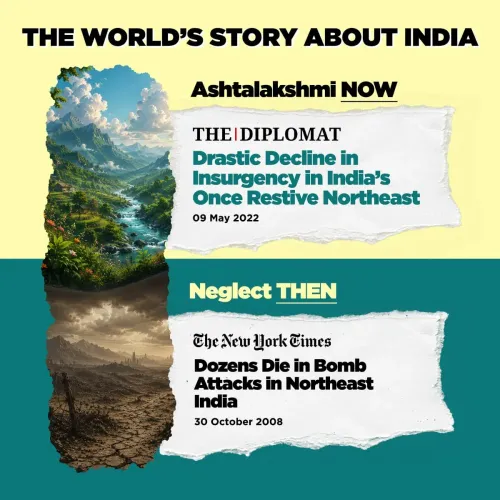
He described the journey as 'upeksha se utkarsh' — from neglect to eminence — under the Modi government .
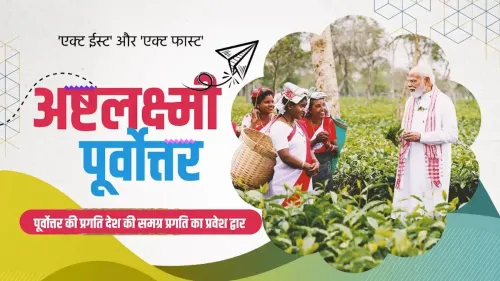
The eight northeastern states are referred to collectively as 'Ashtalakshmi' in official BJP and government communications.
The post links Northeast development to the broader Viksit Bharat goal of achieving developed-economy status by 2047 .
The Act East Policy (launched 2014 ) and expanded DoNER funding underpin the connectivity and investment narrative cited in the post.
Next Union Budget allocations and investor summits will be key indicators of whether the momentum continues.
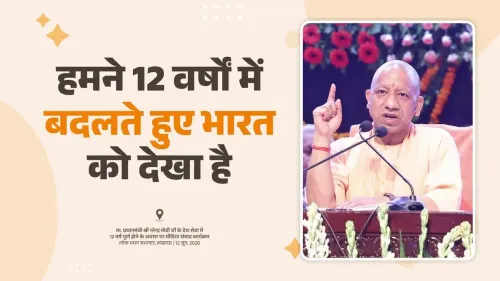
Uttar Pradesh Chief Minister Yogi Adityanath on Saturday, 20 June 2026, credited Prime Minister Narendra Modi's leadership for what he described as a historic transformation of Northeast India — from neglect to eminence — marking the occasion with the hashtag #12YearsOfRisingNorthEast.
Context
Writing in Hindi, CM Yogi said the region had completed an 'upeksha se utkarsh' (from neglect to eminence) journey under Modi's stewardship. He invoked the term 'Ashtalakshmi' — a symbolic reference to the eight northeastern states — to underline their collective potential, stating that the region now stands as a 'strong foundation of Viksit Bharat' (Developed India), backed by better connectivity, accelerated development, growing investment, and new aspirations.
The post concluded by calling this a 'new Northeast' defined by peace, prosperity, and possibility — and 'a bright chapter in India's progress.'
Policy Backdrop
The Act East Policy, launched in 2014, has been the central plank of the Narendra Modi government's Northeast strategy, seeking to integrate the region with Southeast Asian economies through road, rail, and trade corridors. The Ministry of Development of North Eastern Region (DoNER), created in 2001, was expanded significantly after 2014 with dedicated infrastructure funding to accelerate this agenda.
The broader Viksit Bharat vision — the government's stated goal of achieving developed-economy status by 2047 — has positioned the Northeast as a frontier region critical to that ambition. Central governments since 2014 have pursued a sustained push to reduce insurgency, expand road-rail-air links, and attract private investment, shifting the region's identity from security-centric to development-centric.
Stakeholders and Impact
Residents across the eight northeastern states — Arunachal Pradesh, Assam, Manipur, Meghalaya, Mizoram, Nagaland, Sikkim, and Tripura — are the primary stakeholders in this narrative of transformation. Improved connectivity and peace accords have gradually opened the region to infrastructure investors and private capital that had historically been deterred by insurgency and poor logistics.
The Ashtalakshmi framing, promoted in official communications, is designed to reposition the Northeast in the national imagination — from a troubled periphery to a gateway with cultural, economic, and strategic value. This shift in political vocabulary reflects a deliberate effort to attract both domestic and foreign investment into the region.
What's Next
Attention will now turn to the next Union Budget allocations for Northeast infrastructure, any follow-up investor summits, and the progress of ongoing peace negotiations with remaining insurgent groups. The #12YearsOfRisingNorthEast campaign signals that the ruling party intends to consolidate this developmental narrative as a key electoral and governance talking point heading into future cycles. Whether investment commitments translate into measurable on-ground outcomes will determine how durable this framing proves to be.
Point of View
Using the Northeast's transformation as proof-of-concept for the Modi government's governance model. By invoking the Ashtalakshmi metaphor and the Viksit Bharat vision in a single post, he ties regional achievement to a national aspirational framework — a classic top-down narrative consolidation. The timing around a 12-year milestone suggests a coordinated campaign rather than a spontaneous tribute, indicating that the party is institutionalising this developmental arc as a core political asset. The durability of this narrative, however, will hinge on whether infrastructure commitments and peace dividends reach ordinary citizens across all eight states.
NationPress
20 Jun 2026
Frequently Asked Questions
What did CM Yogi Adityanath say about Northeast India?
CM Yogi Adityanath said Northeast India has completed a historic journey from neglect to eminence under PM Modi's leadership, calling the region a strong foundation of the Viksit Bharat vision with better connectivity, growing investment, and new aspirations.
What is the meaning of Ashtalakshmi in the context of Northeast India?
Ashtalakshmi is a symbolic term used in official communications to refer collectively to the eight northeastern states — Arunachal Pradesh, Assam, Manipur, Meghalaya, Mizoram, Nagaland, Sikkim, and Tripura — highlighting their combined cultural and economic potential.
What is the Act East Policy and how does it relate to Northeast India?
The Act East Policy, launched in 2014, is the Modi government's strategy to integrate Northeast India with Southeast Asian economies through road, rail, and trade corridors, positioning the region as India's gateway to ASEAN.
What is Viksit Bharat and why is Northeast India important to it?
Viksit Bharat is the Modi government's national vision to achieve developed-economy status by 2047. Northeast India is considered a key frontier in this plan due to its strategic location, natural resources, and potential for cross-border trade with Southeast Asia.
What is the #12YearsOfRisingNorthEast hashtag about?
#12YearsOfRisingNorthEast marks approximately 12 years of the Modi government's Northeast-focused development agenda since 2014, highlighting gains in connectivity, peace, and investment across the eight northeastern states.