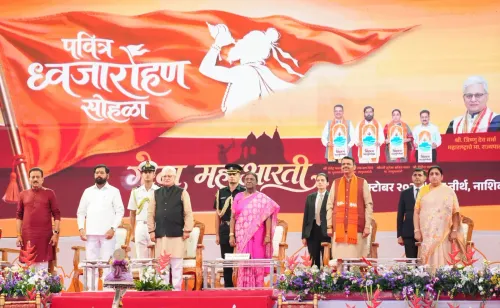
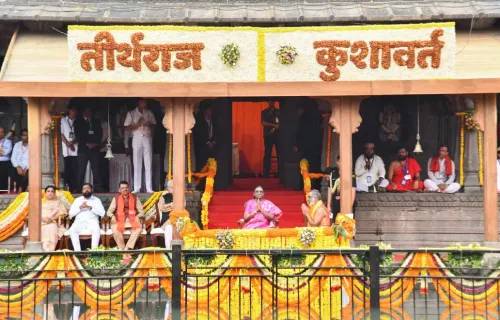
President Murmu leads Goda Maha Aarti at Nashik's Ramtirth
Synopsis
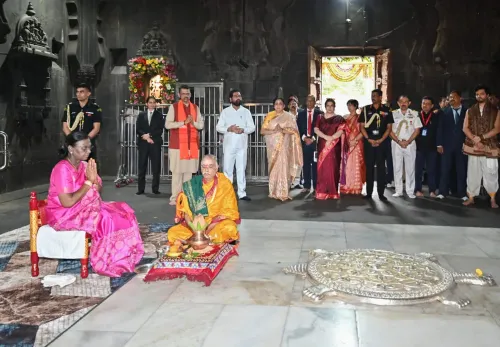
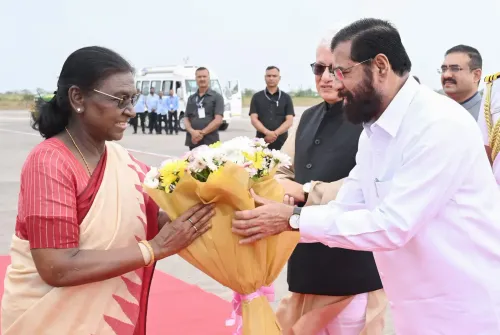
President Draupadi Murmu performed the Goda Maha Aarti at the historic Ramtirth ghat in Nashik on 31 October 2026, with Chief Minister Devendra Fadnavis in attendance, marking a landmark moment at Maharashtra's once-in-12-years Simhastha Kumbh Mela on the Godavari river.
Key Takeaways
President Draupadi Murmu led the Goda Maha Aarti at Ramtirth ghat, Nashik on 31 October 2026 .
Chief Minister Devendra Fadnavis was present, reflecting the Maharashtra government's active role in the Kumbh's organisation.
The event is part of the Simhastha Kumbh Mela , a 12-yearly Hindu pilgrimage held at Nashik on the Godavari river .
Ramtirth is a historically and spiritually significant ghat associated with Ramayana legends.
President Murmu is India's first President from a tribal community , having taken office in July 2022 .
Key shahi snan dates of the Simhastha Kumbh Mela are still ahead, keeping national attention on Nashik.
On the sacred banks of the Godavari at Ramtirth, Nashik, President Draupadi Murmu performed the Goda Maha Aarti — a grand river worship ritual — on Saturday, 31 October 2026, with Chief Minister Devendra Fadnavis in attendance, marking a high-profile state moment at the heart of the Simhastha Kumbh Mela.
What the Goda Maha Aarti means at Simhastha
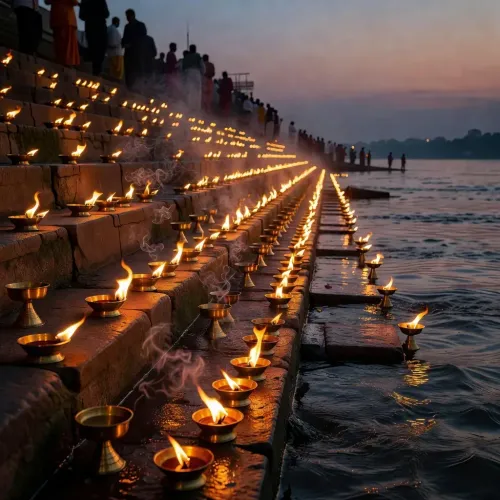
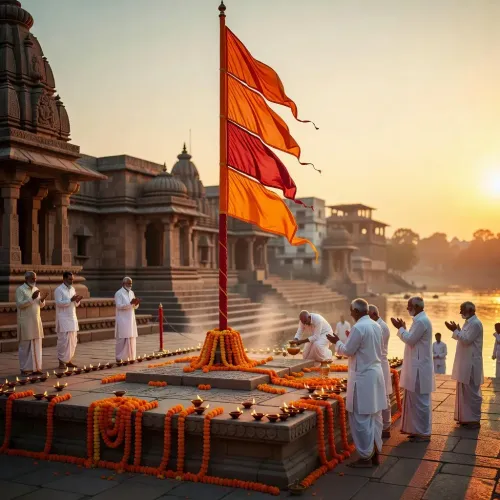
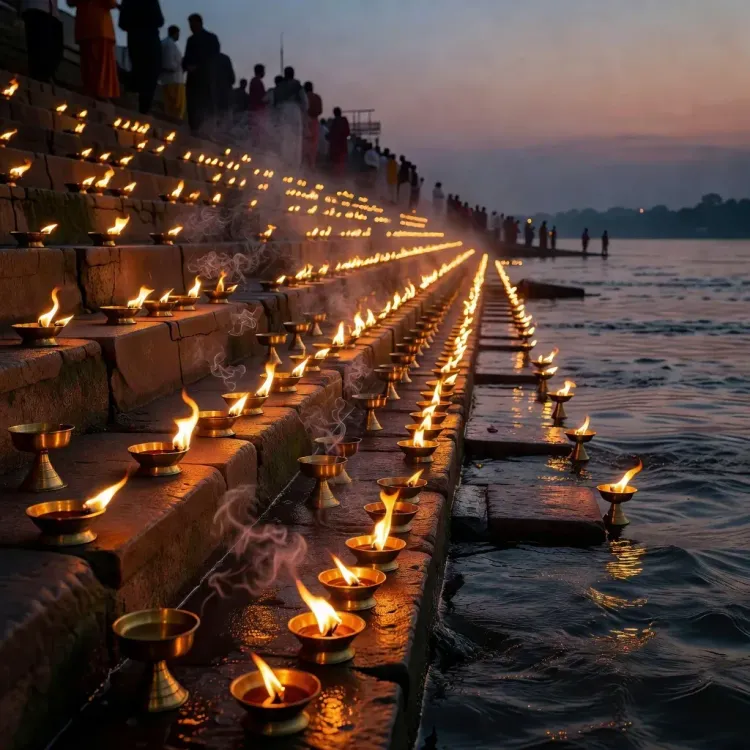
The Goda Maha Aarti — Goda being the reverent name for the Godavari river — is among the most visually arresting rituals of the Nashik Kumbh cycle. Dozens of priests move in choreographed unison, offering fire, flowers, and incense to the river as tens of thousands of pilgrims line the ghats. Having the President of India perform the aarti elevates it from a local ceremony to a national moment of spiritual symbolism.
Ramtirth is no ordinary ghat. Steeped in Ramayana lore, it is believed to be the site where Lord Ram bathed during his exile — lending the location a sanctity that draws pilgrims specifically to this stretch of the Godavari above all others during the Kumbh cycle.
President Murmu at Nashik — why the visit carries weight
Draupadi Murmu, who became India's first President from a tribal community when she assumed office in July 2022, has consistently engaged with India's indigenous and folk spiritual traditions. Her presence at the Simhastha Kumbh Mela follows a pattern of central leadership attending major religious gatherings across states — a gesture that signals both cultural affirmation and national unity.
Chief Minister Devendra Fadnavis, who returned to lead Maharashtra after the 2024 assembly elections, flanked the President — a pairing that underscores the Maharashtra government's active stewardship of the Kumbh's organisation and the political salience of hosting such a gathering smoothly.
Nashik's Simhastha — the Kumbh the Godavari hosts every 12 years
Unlike the better-known Prayagraj Maha Kumbh, Nashik's Simhastha Kumbh Mela unfolds on the banks of the Godavari and occurs once every 12 years, timed to Jupiter's transit into Leo. It is one of four sites in India that rotate the Kumbh cycle, and it draws millions of pilgrims from across the country and the diaspora. The scale of logistics — crowd management, water safety, sanitation, and security along the ghats — falls squarely on the Maharashtra state administration.
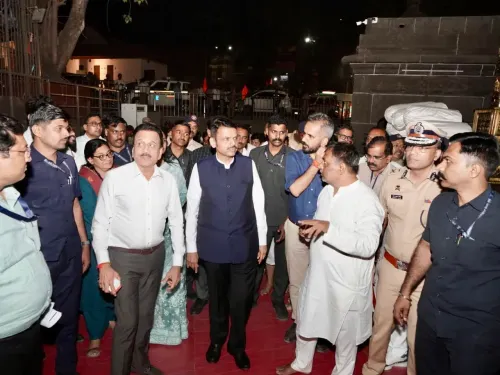
State governments routinely coordinate with local administration and central security agencies for Kumbh events of this magnitude, and a presidential visit adds another layer of protocol and preparation. For Nashik residents and the broader pilgrim community, the Maha Aarti led by the nation's first citizen is a moment that will be retold long after the Kumbh flags are folded.
The Simhastha cycle still has its defining shahi snan (royal bathing) dates ahead — and with the President having set the spiritual tone at Ramtirth, the spotlight on Nashik is only going to intensify.
Point of View
Particularly significant given President Murmu's identity as the country's first tribal head of state. For the Fadnavis administration, hosting the President at Nashik's most sacred ghat ahead of the Kumbh's peak bathing dates is a high-visibility governance moment that blends cultural stewardship with political optics. The Simhastha cycle, occurring only once every 12 years, gives Maharashtra a rare window to project both administrative competence and civilisational pride on a national stage. How the state manages the remaining shahi snan events will be the real test of that ambition.
NationPress
1 Nov 2026
Frequently Asked Questions
What is the Goda Maha Aarti at Nashik?
The Goda Maha Aarti is a grand river-worship ritual performed on the banks of the Godavari — revered as 'Goda' — at Nashik, involving priests offering fire, flowers, and incense to the river, especially during the Simhastha Kumbh Mela.
Why is President Draupadi Murmu at Nashik's Kumbh Mela?
President Draupadi Murmu attended the Simhastha Kumbh Mela at Nashik to perform the Goda Maha Aarti at Ramtirth on 31 October 2026, continuing a pattern of central leadership participating in major religious gatherings across India.
What is the Simhastha Kumbh Mela and when does it happen?
The Simhastha Kumbh Mela is a major Hindu pilgrimage held at Nashik on the Godavari river once every 12 years, timed to Jupiter's transit into Leo. It is one of four Kumbh Mela sites in India.
What is Ramtirth in Nashik?
Ramtirth is a historic ghat in Nashik associated with Ramayana legends, believed to be where Lord Ram bathed during his exile. It is one of the most sacred spots along the Godavari during the Kumbh Mela.
Who is Devendra Fadnavis and what is his role at the Kumbh Mela?
Devendra Fadnavis is the Chief Minister of Maharashtra, serving after the 2024 assembly elections. He was present alongside President Murmu at the Goda Maha Aarti, reflecting the state government's role in organising and facilitating the Simhastha Kumbh Mela.