President Murmu hoists Kumbh flag at Nashik's Ramkund, first woman to do so
Synopsis
For the first time in history, a woman hoisted the Kumbh Mela flag — and she was the President of India. Droupadi Murmu's flag-hoisting at Ramkund on 31 October formally opened the Simhastha Kumbh Mela at Nashik, with a 51-foot Panchadhatu pole, 6,500-strong Goda Aarti, and the full weight of state ceremony marking what organisers are calling a landmark edition of the pilgrimage.
Key Takeaways
President Droupadi Murmu hoisted the sacred Dharma Dhwaja at Ramkund, Nashik on 31 October 2026 , inaugurating the Simhastha Kumbh Mela .
Murmu is the first woman in history to hoist the Kumbh Mela flag.
The main flagpole at Ramkund stands 51 feet tall , crafted from Panchadhatu (five-metal alloy), bearing symbols of the 14 Ratnas of the Samudra Manthan.
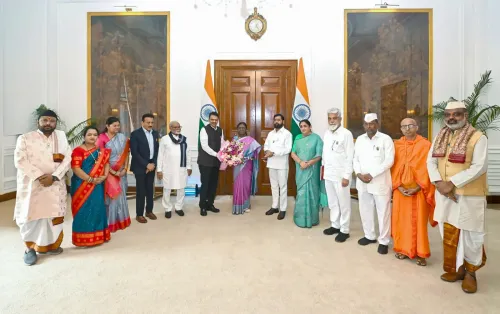
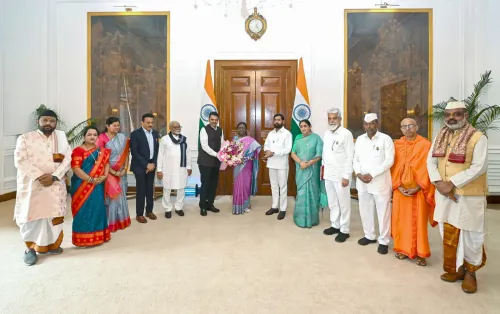
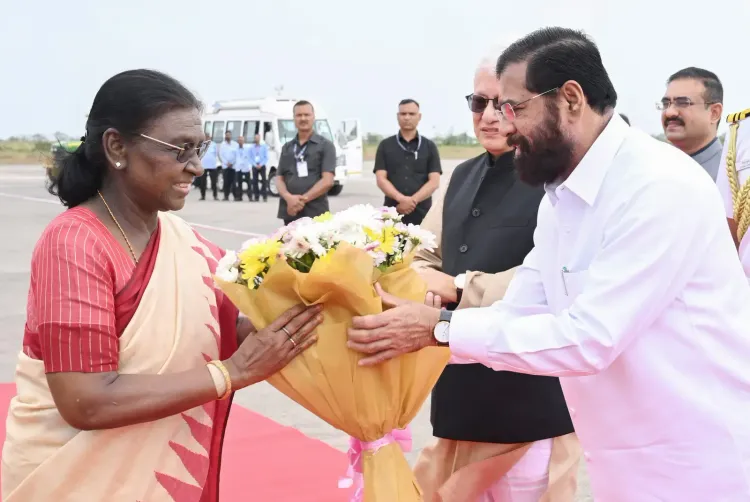
Deputy CMs Eknath Shinde and Sunetra Pawar , Governor Jishnu Dev Varma , and Mahants of the 13 Akhadas were present.
A Goda Aarti featuring 6,500 tribal participants is planned at Ramkund in the evening, aiming for a world record .
President Murmu was scheduled to subsequently visit Trimbakeshwar Temple and Kushavart Kund .
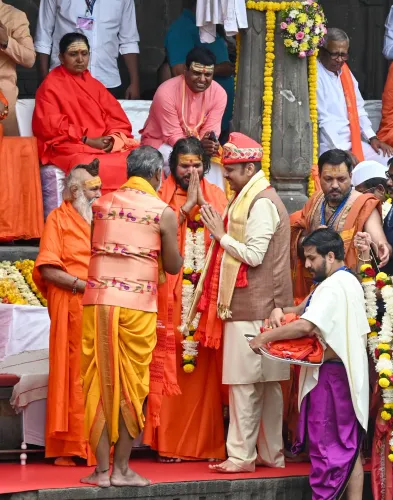
President Droupadi Murmu on Saturday, 31 October 2026, hoisted the sacred Dharma Dhwaja at Ramkund, Nashik, formally inaugurating the Simhastha Kumbh Mela amid chants of 'Jai Shree Ram' and elaborate Vedic ceremonies. In a historic first, Murmu became the first woman in history to hoist the Kumbh Mela flag, marking a landmark moment for one of Hinduism's holiest pilgrimages.
Key Ceremonies and Dignitaries Present
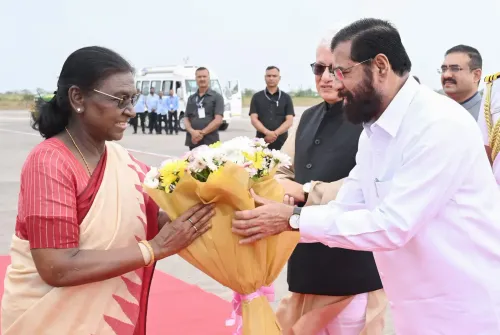
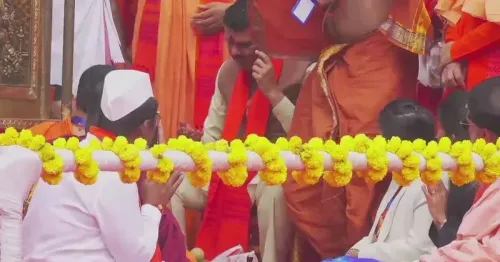
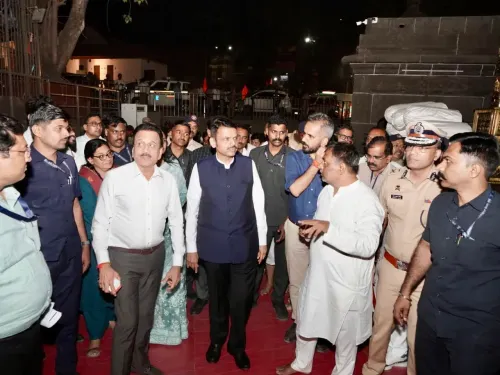
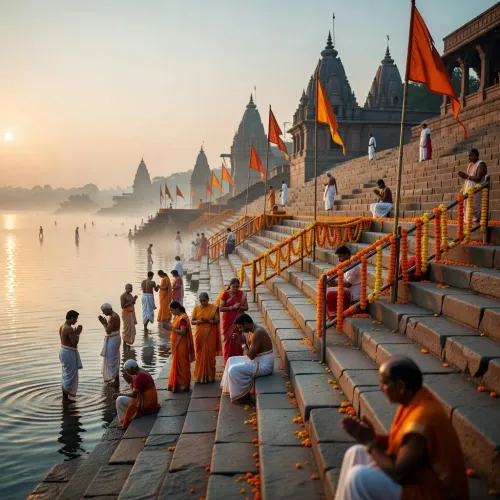
Prior to the flag hoisting, religious rituals were conducted in the presence of President Murmu, including the worship of the Dharma Dhwaja, Ganga Pujan, and the consecration of the flagpole. Deputy Chief Ministers Eknath Shinde and Sunetra Pawar, Governor Jishnu Dev Varma, and the Mahants of the 13 Akhadas were among the dignitaries present at the ceremony. Thousands of Nashik residents lined the banks of the Godavari River to witness the occasion, as the city was bathed in saffron and the Godavari riverfront was illuminated with spectacular lighting.
The Flagpoles: Design, Symbolism and Scale
The main Dharma Dhwaja was simultaneously raised at Ramkund, while a second flag was hoisted atop the Ganga-Godavari Temple. The primary flagpole at Ramkund stands 51 feet tall and is crafted from Panchadhatu (an alloy of five metals). It bears symbols of the 14 gems (Ratnas) that emerged from the Samudra Manthan (the mythological churning of the ocean), along with an image of Garuda holding the Amrit Kalash (the pot of nectar).
The second flagpole, erected near the Shri Ganga Godavari Mata Temple, stands 31 feet tall and is likewise made of Panchadhatu. It too depicts the 14 Ratnas of the Samudra Manthan, including Halahal (poison), Kamadhenu (the divine cow), Uchaishravas (horse), Airavata (elephant), Kaustubha Mani (jewel), Kalpavriksha Parijat (divine tree), Rambha (celestial nymph), Mahalaxmi, Varuni, Chandra Dev (moon), Dhanvantari Vaidya (physician of the gods), Dhanush (Hari's bow), Panchajanya Shankh (conch), and Amrit (pot of nectar).
The Sacred Flags: Iconography and Meaning
The main Dharma Dhwaja measures 15.5 feet long and 5.5 feet high. One face of the flag depicts Jupiter's vehicle — the Lion — alongside the Sun and Moon as symbols of Time, signifying that the Kumbh Mela will endure as long as celestial bodies persist. The lion also represents bravery. The reverse side features the Amrit Kalash, symbolising immortality and liberation associated with Mother Godavari. The flag bears the auspicious Hindu symbols 'Shree' and 'Om', and is adorned with 12 silk tassels, 15 bells representing the inner and cosmic sound (Antarnaad and Brahmanaad), three ghungroos, and golden zari lace along all four borders.
The flag of the Shri Ganga Godavari Purohit Sangh measures 9 feet long and 5 feet high, featuring the Amrit Kalash, the auspicious symbols 'Shree' and 'Om', and on its reverse, a crocodile — the vehicle of the Godavari River — alongside the Sun and Moon. It carries 9 bells, 6 silk tassels, and 3 ghungroos, with the tassels representing social unity and collective strength.
What Follows the Inauguration
Following the Nashik ceremony, President Murmu was scheduled to travel by road to Trimbakeshwar to offer prayers and view the flagpoles at the Trimbakeshwar Temple and Kushavart Kund. In the evening, a grand Goda Aarti involving 6,500 tribal participants is set to be performed in the President's presence at Ramkund, in an attempt to set a world record. The commencement of the Simhastha Kumbh Mela at Nashik is expected to draw millions of pilgrims to the banks of the Godavari in the days ahead.
Point of View
Fusing constitutional authority with religious tradition in a way that signals the government's intent to project inclusive ownership over India's largest pilgrimage circuits. That the first woman to perform this ritual is also India's first tribal President adds a layer of symbolism that will resonate well beyond Nashik. Yet the optics also raise a question mainstream coverage sidesteps: as the Head of State presides over a religious inauguration of this scale, the boundaries between state protocol and religious ceremony deserve scrutiny in a constitutional republic. The world-record Goda Aarti involving 6,500 tribal participants is itself a social-outreach statement — tribals at the centre of a Brahminical pilgrimage tradition is a deliberate inversion, one that the ruling coalition will want widely amplified ahead of forthcoming state elections.
NationPress
31 Oct 2026
Frequently Asked Questions
What is the Simhastha Kumbh Mela at Nashik?
The Simhastha Kumbh Mela is a major Hindu pilgrimage held at Nashik and Trimbakeshwar on the banks of the Godavari River, occurring once every twelve years when Jupiter (Simhastha) transits into a specific zodiac position. It draws millions of pilgrims for ritual bathing and religious observances.
Why is President Murmu's flag hoisting historically significant?
President Droupadi Murmu is the first woman in history to hoist the Kumbh Mela flag. The flag-hoisting ceremony at Ramkund formally marks the commencement of the Simhastha Kumbh Mela, making her participation a landmark moment in the pilgrimage's recorded history.
What does the Dharma Dhwaja symbolise?
The main Dharma Dhwaja at Ramkund depicts the Lion (Jupiter's vehicle), the Sun, and the Moon as symbols of Time, signifying the eternal continuity of the Kumbh Mela. The reverse side features the Amrit Kalash, representing immortality and liberation associated with Mother Godavari.
What events are planned following the flag hoisting?
Following the ceremony at Ramkund, President Murmu was scheduled to travel by road to Trimbakeshwar to offer prayers at the Trimbakeshwar Temple and Kushavart Kund. In the evening, a Goda Aarti involving 6,500 tribal participants is set to take place at Ramkund, with organisers aiming to set a world record.
Who else attended the Simhastha Kumbh Mela inauguration?
The inauguration was attended by Deputy Chief Ministers Eknath Shinde and Sunetra Pawar, Governor Jishnu Dev Varma, and the Mahants of the 13 Akhadas, along with thousands of Nashik residents who gathered on the banks of the Godavari River.