President Murmu leads Goda Maha Aarti, Nashik sets Guinness Record
Synopsis
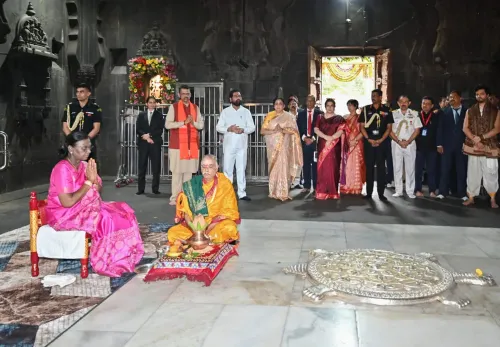
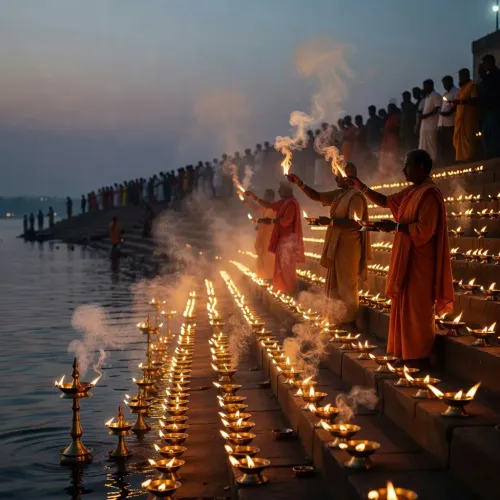
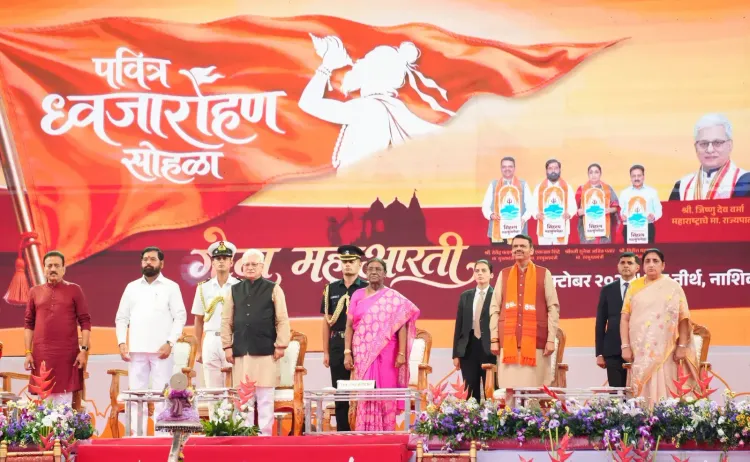
President Droupadi Murmu performed the Goda Maha Aarti at Ramtirth, Nashik, on 31 October 2026, marking the Pavitra Dhwajarohan ceremony for the Nashik-Trimbakeshwar Simhastha Mahakumbh Mela 2027. A mass aarti by 6,233 participants from 650 villages, including tribal communities, earned a Guinness World Record.
Key Takeaways
President Droupadi Murmu performed the Goda Maha Aarti at Ramtirth, Nashik on 31 October 2026 .
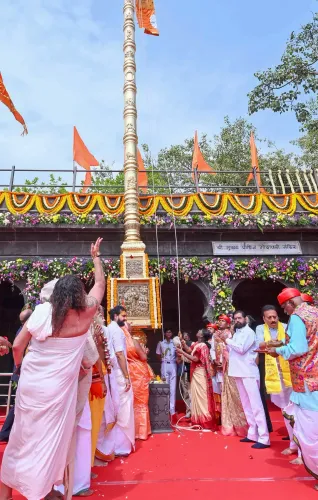
The ceremony marked the Pavitra Dhwajarohan (flag-hoisting) for the Nashik-Trimbakeshwar Simhastha Mahakumbh Mela 2027 .
6,233 participants from 650 villages , including tribal community members, joined the mass aarti, earning a Guinness World Record .
Governor Jishnu Dev Varma , CM Devendra Fadnavis , DCM Eknath Shinde , DCM Sunetra Ajit Pawar , and Minister Girish Mahajan were present.
The Simhastha Kumbh Mela at Nashik follows a 12-year astrological cycle ; the previous edition was held in 2015 .
The Nashik-Trimbakeshwar Kumbh Mela Authority (NTKMA) is leading administrative preparations for the 2027 event.
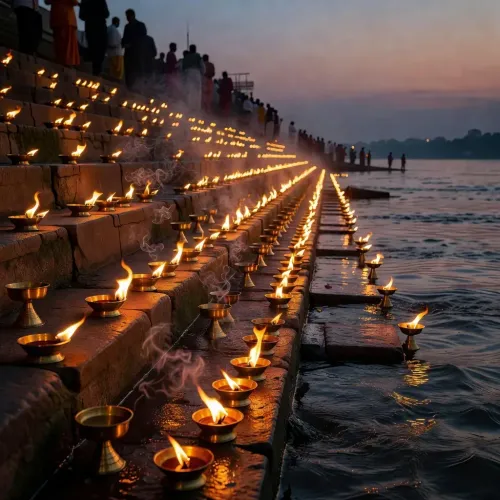
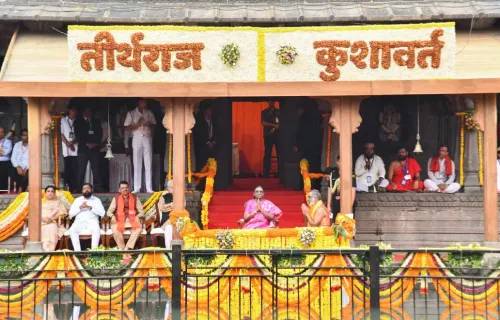
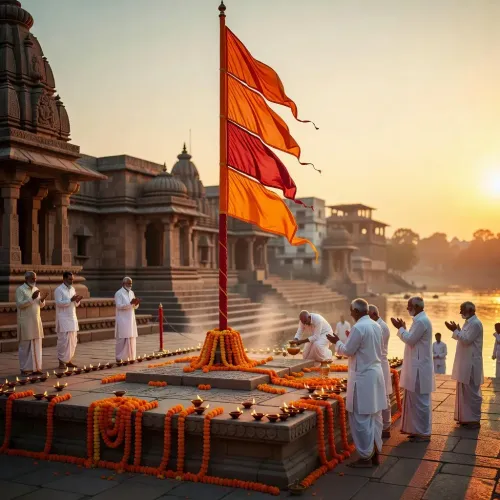
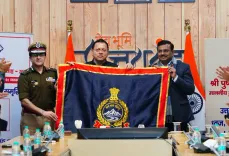
At the banks of the sacred Godavari River in Nashik, a moment of rare religious and civic scale unfolded on 31 October 2026: President Droupadi Murmu performed the Goda Maha Aarti at Ramtirth, marking the formal flag-hoisting — Pavitra Dhwajarohan — that inaugurates the countdown to the Nashik-Trimbakeshwar Simhastha Mahakumbh Mela 2027. The mass aarti drew 6,233 participants from 650 villages, earning Nashik a certified entry in the Guinness World Records.
A Sanskrit verse sets the stage for 2027
The Chief Minister's Office opened its announcement with a Sanskrit shloka: 'Simharashim gate surye simharashyam brihaspatau, Godavaryam bhavet kumbho bhaktimuktipradadayakah' — 'When the sun and Jupiter both occupy Leo, a Kumbh is held at the Godavari, bestowing devotion and liberation.' That astronomical alignment, recurring every 12 years, is the theological heartbeat of the Simhastha Kumbh. The previous edition was held in 2015; the 2027 mela will mark the next cycle.
From the President's hands to 650 villages
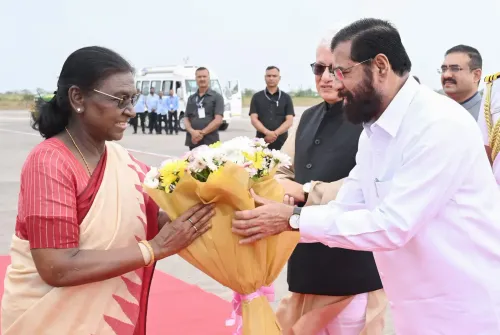
President Murmu performed the aarti in the presence of Governor Jishnu Dev Varma and Chief Minister Devendra Fadnavis — a constitutional trifecta lending the ceremony rare institutional weight. Alongside them stood Deputy CM Eknath Shinde, Deputy CM Sunetra Ajit Pawar, and Minister Girish Mahajan, along with Sant-Mahants from various akharas. The breadth of political representation underlines the scale of state investment in the 2027 mela.
What made the moment extraordinary was its grassroots reach. Members of tribal communities were specifically highlighted as joining citizens from across 650 villages in the simultaneous aarti — a collective act of devotion large enough to claim a world record.
Maharashtra's Kumbh machine gears up 12 months early
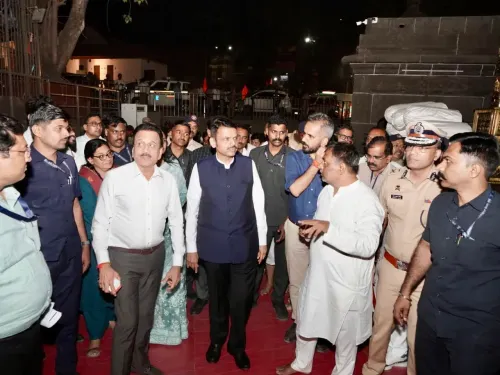
The Nashik-Trimbakeshwar Kumbh Mela Authority (NTKMA) has been tagged in the official post, signalling active administrative mobilisation. Kumbh Melas at Nashik sit alongside those at Prayagraj, Haridwar, and Ujjain in the Hindu pilgrimage calendar, drawing tens of millions of devotees to the Godavari ghats. Maharashtra state governments have historically coordinated with akharas and local bodies for logistics across the ghats — a preparation cycle that typically ramps up months, sometimes years, in advance.
With the Dhwajarohan now completed and a Guinness record already in hand, the machinery of one of India's most logistically demanding religious events has officially been set in motion. Every akhara placement, every ghat improvement, every crowd-management protocol now ticks toward a 2027 deadline — and the President's aarti at Ramtirth has drawn the starting line.
Point of View
Competing for attention with Prayagraj's Mahakumbh. The inclusion of tribal communities in a Guinness-record bid is equally pointed: it frames the mela as inclusive civic spectacle, not just elite religious ritual. The 12-month-early flag-hoisting also gives the Fadnavis government a symbolic administrative head-start, projecting governance competence ahead of a logistically demanding event. Kumbh Melas have historically served as soft-power showcases for whichever state government hosts them — and Maharashtra has just opened its campaign.
NationPress
1 Nov 2026
Frequently Asked Questions
What is the Nashik Simhastha Mahakumbh Mela 2027?
The Nashik-Trimbakeshwar Simhastha Mahakumbh Mela is a major Hindu pilgrimage held every 12 years on the banks of the Godavari River in Nashik, Maharashtra, when the sun and Jupiter both occupy the zodiac sign Leo. The 2027 edition follows the previous mela held in 2015.
Why did Nashik earn a Guinness World Record at the Goda Maha Aarti?
Nashik earned a Guinness World Record because approximately 6,233 people from 650 villages — including members of tribal communities — simultaneously participated in the Goda Maha Aarti at Ramtirth on 31 October 2026, constituting a record-breaking mass religious ceremony.
What is the Pavitra Dhwajarohan ceremony?
The Pavitra Dhwajarohan is the sacred flag-hoisting ceremony that formally inaugurates the preparations for the Simhastha Kumbh Mela in Nashik. It marks the official commencement of the mela's spiritual countdown.
Who attended the Nashik Kumbh Mela flag-hoisting ceremony on 31 October 2026?
President Droupadi Murmu performed the Goda Maha Aarti. Governor Jishnu Dev Varma, Chief Minister Devendra Fadnavis, Deputy CMs Eknath Shinde and Sunetra Ajit Pawar, Minister Girish Mahajan, Sant-Mahants from various akharas, and other dignitaries were present.
Where is the Goda Maha Aarti performed in Nashik?
The Goda Maha Aarti is performed at Ramtirth on the banks of the Godavari River in Nashik, which is the central pilgrimage site for the Nashik-Trimbakeshwar Simhastha Kumbh Mela.