Education Ministry exempts private unaided schools from SMC Guidelines 2026
Synopsis
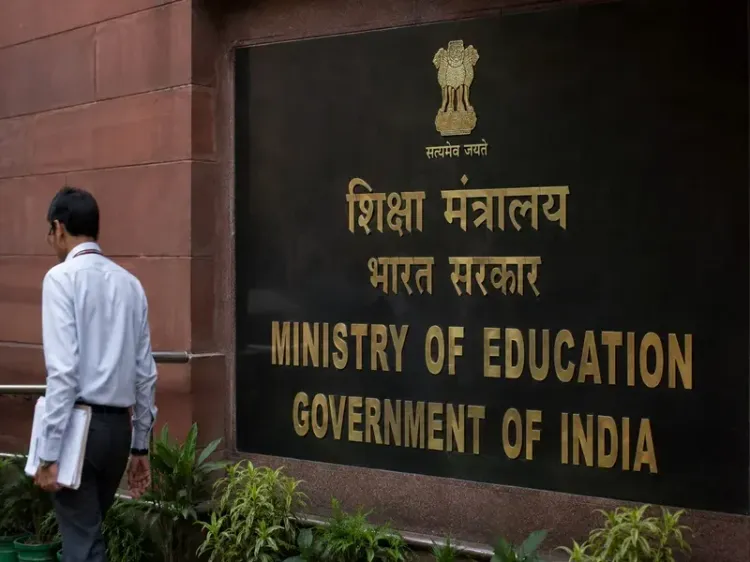
The Education Ministry has carved out private, unaided schools from its new SMC Guidelines 2026, which mandate parent-headed governance panels for schools. Issued just weeks after the guidelines were released, the clarification follows representations from private school stakeholders — and raises fresh questions about where state oversight of fee-charging, self-funded schools begins and ends.
Key Takeaways
The Union Education Ministry on 21 May 2026 clarified that SMC Guidelines 2026 will not be binding on private, unaided schools .
Schools under Section 2(n)(iv) of the RTE Act, 2009 — those receiving no government aid — are explicitly excluded from the mandatory framework.
The guidelines, issued on 6 May 2026 , replace earlier SMDCs and extend parent-led governance to secondary and senior secondary schools .
Private, unaided schools are encouraged — but not required — to voluntarily form SMCs.
The clarification followed representations from sections of society citing concerns under Section 21 of the RTE Act.
The Union Education Ministry on Thursday, 21 May 2026 clarified that its School Management Committee (SMC) Guidelines 2026 — which mandate the formation of parent-headed panels to oversee school governance — will not be binding on private, unaided schools across India. The exemption was communicated formally to all States and Union Territories.
What the Clarification Says
In a statement issued on Thursday, the Ministry specified that schools falling under Section 2(n)(iv) of the Right to Education (RTE) Act, 2009 — defined as private, unaided institutions that receive no grants or financial aid from any government or local authority — will remain outside the scope of the new guidelines. The clarification came after the Ministry received representations from certain sections of society raising concerns about the applicability of the guidelines to differently managed schools, particularly in the context of Section 21 of the RTE Act.
What the SMC Guidelines 2026 Entail
The guidelines, issued on 6 May 2026, were described by Education Minister Dharmendra Pradhan as an initiative to hand over school management to society at large. They envisage the creation of SMCs headed by a parent, with the school principal serving as its member secretary. Notably, the framework replaces the earlier School Management Development Committees (SMDCs) and extends the governance structure to secondary and senior secondary schools — a significant expansion from the previous scope.
Why Private Schools Are Excluded
Section 2(n)(iv) of the RTE Act defines private, unaided schools as institutions that, despite receiving no government funding, remain bound by the Act's social mandates — including the requirement to reserve entry-level seats for children from disadvantaged and weaker sections. The Ministry's position is that since these schools operate without public funds, mandating a government-prescribed governance structure over them would raise questions of jurisdictional overreach. This comes amid a broader national debate about the regulatory boundaries between the state and the private education sector.
Voluntary Adoption Encouraged
While keeping private, unaided schools outside the mandatory ambit, the Ministry emphasised that such institutions are encouraged to voluntarily constitute SMCs to promote greater transparency, accountability, and participatory governance. 'Education is a shared responsibility of the Government, schools, parents and the community, and strengthening collaboration among all stakeholders remains essential for improving school functioning and ensuring better learning outcomes for children,' the Ministry said in its statement.
Broader Objective of the Guidelines
The SMC Guidelines 2026 were formulated with the stated objective of strengthening community participation in school education and promoting decentralised, participatory governance. The intent, according to the Ministry, is to create community ownership of schools by bringing all stakeholders — parents, teachers, local bodies, and administrators — onto a concurrent platform. The guidelines are expected to directly impact the functioning of government and government-aided schools across the country, where parental and community involvement has historically been limited.
Point of View
Unaided schools is legally defensible but politically telling. The RTE Act has always walked a fine line between imposing social obligations on private schools and respecting their operational autonomy — and this clarification reaffirms that line. What it does not resolve is the accountability vacuum in the private school sector, where fee hikes and governance opacity remain persistent grievances for parents. Encouraging voluntary SMC formation without any compliance mechanism is unlikely to move the needle. The Ministry's real challenge is not the legal boundary but the trust deficit between private school managements and the communities they serve.
NationPress
5 Oct 2026
Frequently Asked Questions
What are the SMC Guidelines 2026 issued by the Education Ministry?
The SMC Guidelines 2026, issued on 6 May 2026, mandate the formation of School Management Committees headed by a parent, with the school principal as member secretary, to strengthen community participation in school governance. They replace the earlier School Management Development Committees and extend the framework to secondary and senior secondary schools.
Why are private, unaided schools exempt from the SMC Guidelines 2026?
Private, unaided schools are exempt because they fall under Section 2(n)(iv) of the RTE Act, 2009, which defines them as institutions that receive no government grants or aid. The Ministry clarified that the guidelines are not binding on such schools, following representations raising concerns about applicability under Section 21 of the RTE Act.
Are private schools completely free from any RTE obligations?
No. Even though private, unaided schools are exempt from the SMC Guidelines 2026, they remain bound by other RTE Act mandates — most notably, the requirement to reserve entry-level seats for children from disadvantaged and weaker sections of society.
Can private schools still form SMCs voluntarily?
Yes. The Education Ministry has encouraged private, unaided schools to voluntarily constitute School Management Committees to promote transparency, accountability, and participatory governance, even though it is not mandatory for them.
Which schools will the SMC Guidelines 2026 apply to?
The SMC Guidelines 2026 will apply to government and government-aided schools. They extend the parent-led governance framework to secondary and senior secondary levels, replacing the earlier SMDC structure across these institutions.