Priyanka Gandhi leads 'Vote Bachao, Desh Bachao' March in Delhi
Synopsis
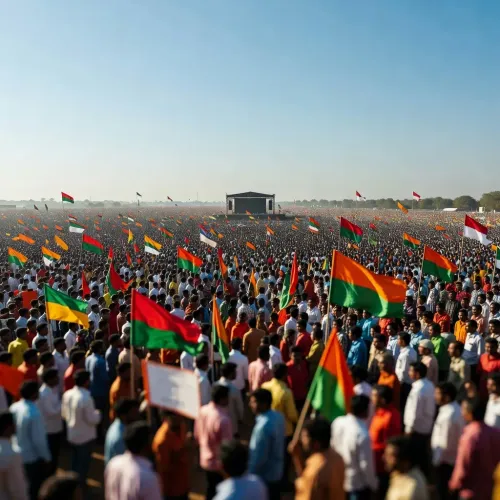
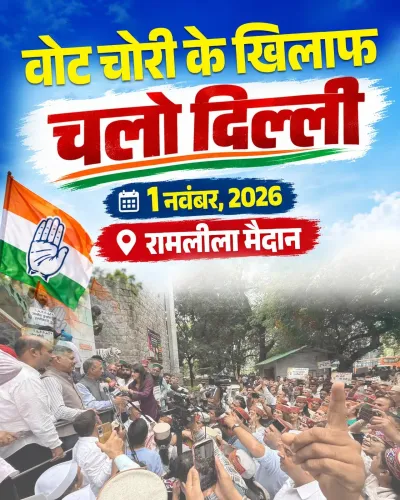
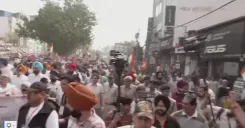
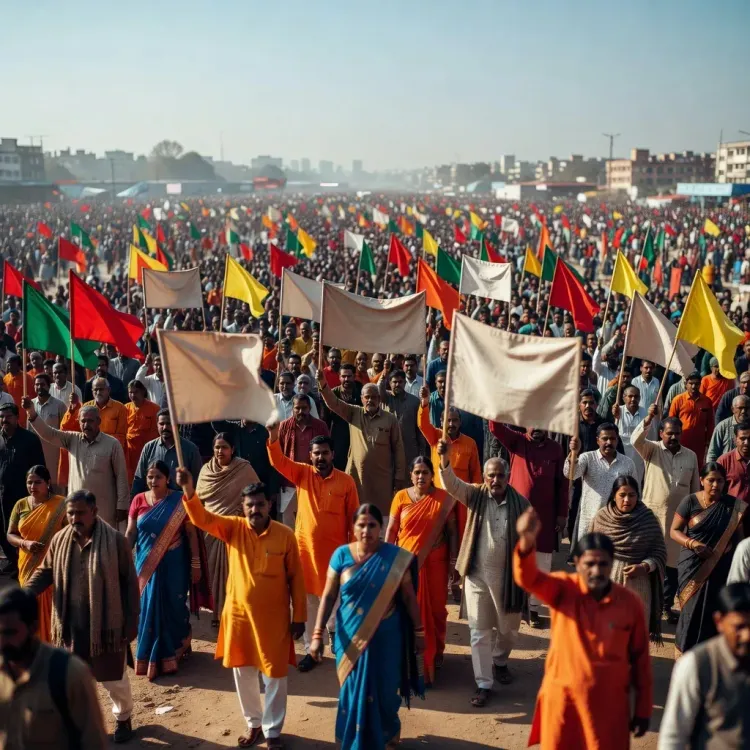
Congress general secretary Priyanka Gandhi Vadra live-streamed the 'Vote Bachao, Desh Bachao' Maha March on November 1, 2026, as thousands marched from Connaught Place's Minto Road Junction to Ramlila Maidan in New Delhi, demanding protection of electoral integrity.
Key Takeaways
Priyanka Gandhi Vadra broadcast the 'Vote Bachao, Desh Bachao' Maha March live on X on November 1, 2026 .
The march route ran from Connaught Place Minto Road Junction to Ramlila Maidan in New Delhi.
The Indian National Congress framed the mobilisation around the protection of electoral processes and democratic institutions.
Ramlila Maidan , a historic venue for landmark political gatherings, was the designated endpoint, lending the march symbolic weight.
The event adds to a pattern of opposition parties using Delhi's central landmarks for high-visibility democratic protests.
Follow-up attention will focus on any Election Commission response and whether the demands feature in the next parliamentary session.
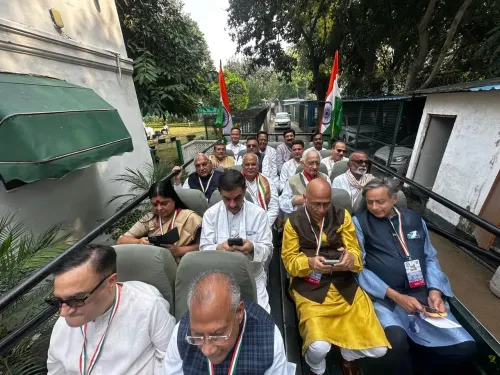
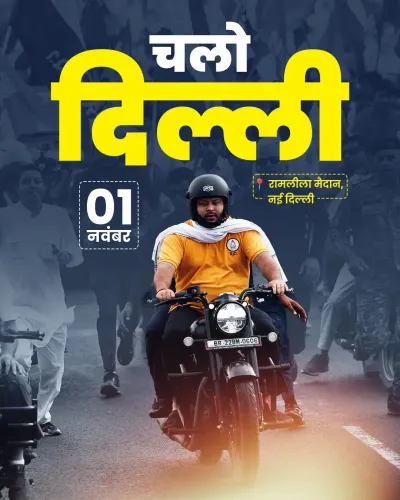
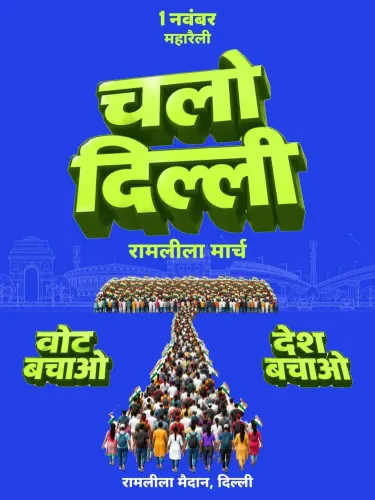
Thousands converged on central New Delhi on Sunday, November 1, 2026, as Congress general secretary Priyanka Gandhi Vadra went live on X to broadcast the 'Vote Bachao, Desh Bachao' Maha March — a mass mobilisation winding from Connaught Place's Minto Road Junction to the historic Ramlila Maidan, with the message that India's ballot box itself is under threat.
'Vote Bachao, Desh Bachao': What the march's name is saying
The title is a direct political declaration. 'Vote bachao, desh bachao' — 'Save the vote, save the nation' — frames electoral integrity not as a procedural concern but as an existential one. By broadcasting the march live, the Indian National Congress sought to extend its audience far beyond the streets of Delhi, turning a ground-level mobilisation into a national-scale message.
The route itself is deliberate. Connaught Place, the commercial heart of the capital, provided a high-visibility launch point, while Ramlila Maidan — the sprawling ground that has hosted landmark moments in India's democratic history — lends the gathering historical weight. Opposition parties have long understood that a march ending at Ramlila Maidan lands differently than one ending anywhere else.
A recurring opposition playbook, sharpened for 2026
India's opposition parties have periodically organised large Delhi marches to spotlight concerns over democratic institutions — from electoral roll management to the autonomy of constitutional bodies. What distinguishes the 2026 Maha March is its framing: the demand to 'save the vote' places the health of the electoral process front and centre, making voters themselves the protagonists, not just party workers.
For Priyanka Gandhi Vadra, who holds the Congress charge for Uttar Pradesh — the state with the largest Lok Sabha contingent — and represents Wayanad in Kerala, such a march carries dual symbolism: it signals her own active street presence ahead of any electoral cycle, and it keeps the Congress visible in the national capital's public sphere at a time the party is rebuilding its organisational muscle.
What follows the march
The immediate focus shifts to whether the Election Commission of India responds to the march's underlying demands, and whether the concerns raised find their way into debates in the coming parliamentary session. Opposition unity — how many parties joined the procession and on what terms — will also be a key measure of the march's political reach beyond Congress's own base.
A march that fills the road from Minto Road to Ramlila Maidan is a spectacle. What it becomes in the days after — a petition, a parliamentary motion, a sustained campaign — will determine whether 'Vote Bachao, Desh Bachao' is a moment or a movement.
Point of View
Desh Bachao' march represents the Congress party's effort to keep electoral integrity at the centre of national political discourse, a theme that resonates with coalition-building across a fragmented opposition. By routing the march through Connaught Place to Ramlila Maidan and live-streaming it, the party is simultaneously targeting ground-level mobilisation and a digital audience — a dual-track strategy that reflects how Indian political communication has evolved. For Priyanka Gandhi Vadra specifically, a high-profile street presence reinforces her identity as a mass-contact leader, distinct from purely parliamentary or organisational roles. Whether the march translates into concrete electoral or legislative outcomes will be the true test of its political utility.
NationPress
1 Nov 2026
Frequently Asked Questions
What is the 'Vote Bachao, Desh Bachao' march about?
The 'Vote Bachao, Desh Bachao' — meaning 'Save the Vote, Save the Nation' — march is a Congress-led protest mobilisation in New Delhi demanding the protection of electoral integrity and democratic institutions in India.
Where did the Maha March take place?
The march was held in New Delhi on November 1, 2026 , starting from Connaught Place's Minto Road Junction and ending at the historic Ramlila Maidan .
Why is Ramlila Maidan significant for political rallies?
Ramlila Maidan is a large, historic open ground in central New Delhi that has hosted many landmark political rallies and mass protests in India's post-independence history, giving events held there added symbolic and public visibility.
What is Priyanka Gandhi Vadra's role in Congress?
Priyanka Gandhi Vadra is the General Secretary of the Indian National Congress in charge of Uttar Pradesh, and is also the Lok Sabha Member of Parliament from Wayanad, Kerala.
What could happen after the Vote Bachao march?
Observers are watching for any formal response from the Election Commission of India and whether the demands raised during the march are taken up in the next session of Parliament as part of broader electoral reform discussions.