PSPCL strike: Punjab AAP chief Aman Arora urges employees to end walkout
Synopsis
Punjab’s power utility workers have been on strike since 21 July, and AAP minister Aman Arora’s public appeal underscores how badly the walkout is hitting the state’s paddy transplantation season. With a government-constituted committee already in talks and three crore residents affected, the next 48 hours could determine whether dialogue or escalation defines the outcome.
Key Takeaways
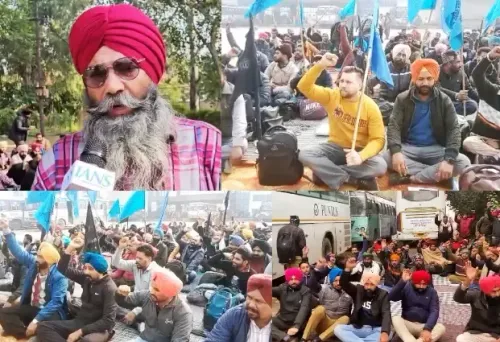
PSPCL employees have been on a statewide strike since 21 July , entering their sixth day on Sunday.
Punjab AAP president and minister Aman Arora publicly urged workers on 26 July to withdraw the action.
The strike is disrupting electricity supply during the critical paddy transplantation season , affecting farmers and nearly three crore people.
A high-level committee with government and union representatives was formed 20–25 days ago to address pending demands.
The Bhagwant Mann government has pledged to accept every genuine recommendation from the committee.
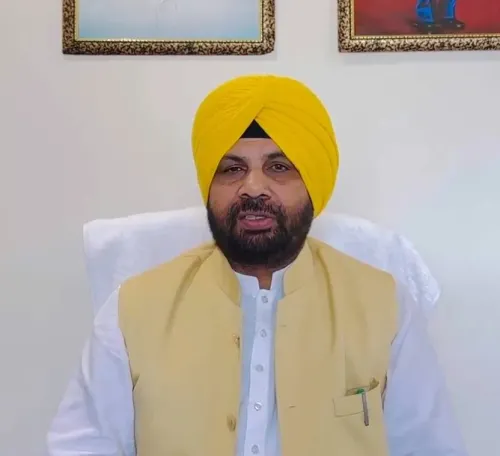
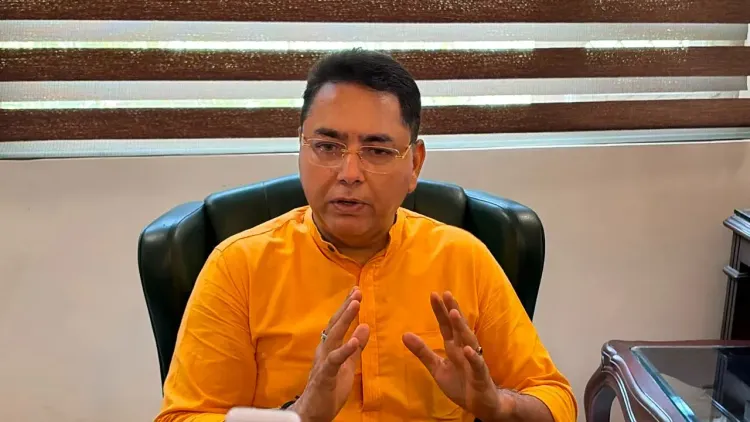
Punjab Aam Aadmi Party (AAP) president and Cabinet Minister Aman Arora on Sunday, 26 July appealed to striking Punjab State Power Corporation Ltd (PSPCL) employees to call off their statewide industrial action, warning that the walkout is inflicting serious hardship on farmers at a critical point in the paddy transplantation season and disrupting essential services for nearly three crore residents of Punjab.
What Arora Said
Addressing the striking workforce, Arora stated that PSPCL employees have been off the job since 21 July, causing widespread inconvenience across the state. “The ongoing paddy transplantation season is at a crucial stage, and disruption of electricity services has added to the hardships faced by farmers. Besides farmers, domestic consumers, traders, our mothers, sisters and the general public are also facing serious inconvenience due to disruption in power-related services,” he said.
The minister emphasised that the Bhagwant Mann government remains open to dialogue and has already taken concrete steps to address employee grievances, including regularising thousands of contractual workers, extending service benefits, and resolving long-pending demands across multiple departments.
The High-Level Committee
Arora pointed out that a high-level committee was constituted approximately 20 to 25 days ago at the explicit request of the employee unions themselves. The panel includes senior officers from the Finance, Power, and Personnel Departments, along with four representatives from the employee unions. He said the committee has been in continuous deliberation and assured that every genuine recommendation it produces will be accepted by the government.
Background and Stakes
The strike, which entered its sixth day on Sunday, has put Punjab’s agricultural calendar under strain. Paddy transplantation is a water- and power-intensive operation, and any prolonged disruption to electricity supply risks crop losses that could ripple through the rural economy. This comes amid a broader pattern of labour unrest in state utilities across India, where contractual regularisation and pay parity remain unresolved flashpoints.
Notably, the AAP government has framed its response around a dialogue-first approach rather than invoking essential-services legislation — a posture that reflects both political sensitivity toward public-sector unions and the party’s own electoral base in Punjab.
What Happens Next
The ball is now in the employee unions’ court. If the strike continues, the pressure on the state government to either escalate or make pre-emptive concessions will grow with each passing day of the transplantation window. The high-level committee’s next sitting is expected to be closely watched as a potential off-ramp for both sides.
Point of View
Not just an administrative one — the party cannot afford to be seen as anti-labour in a state where public-sector unions carry electoral weight. But the optics of farmers struggling through the transplantation season without reliable power could prove equally damaging. The high-level committee was formed at the unions’ own request, which means the government has some moral cover; the question is whether that cover holds if the strike drags on. The real test of the dialogue-first approach is whether it produces a binding settlement or merely defers the confrontation.
NationPress
25 Oct 2026
Frequently Asked Questions
Why are PSPCL employees on strike?
PSPCL employees went on a statewide strike from 21 July over a set of pending demands, including issues related to service conditions and regularisation. The specific demands are being deliberated by a high-level committee comprising government officials and four union representatives.
How is the PSPCL strike affecting Punjab?
The strike has disrupted electricity supply across Punjab, hitting farmers hardest during the water- and power-intensive paddy transplantation season. According to minister Aman Arora, nearly three crore residents — including domestic consumers and traders — are facing serious inconvenience.
What is the high-level committee formed to address PSPCL demands?
The high-level committee was constituted approximately 20 to 25 days before 26 July at the employee unions’ own request. It includes senior officers from the Finance, Power, and Personnel Departments along with four union representatives, and is tasked with deliberating on all pending employee demands.
What has the Punjab government offered to end the PSPCL strike?
The Bhagwant Mann government has assured that every genuine recommendation of the high-level committee will be accepted. It has also cited past actions such as regularisation of contractual employees, extension of service benefits, and resolution of long-pending demands as evidence of its pro-employee stance.
Who is Aman Arora and why is he involved?
Aman Arora is the Punjab AAP president and a Cabinet Minister in the Bhagwant Mann government. As a senior party and government figure, he has been tasked with publicly appealing to striking PSPCL employees to return to work while reinforcing the government’s dialogue-first position.