CM Bhagwant Mann's Punjab Completes Lift Irrigation Scheme for Samlah, Pahadpur
Synopsis
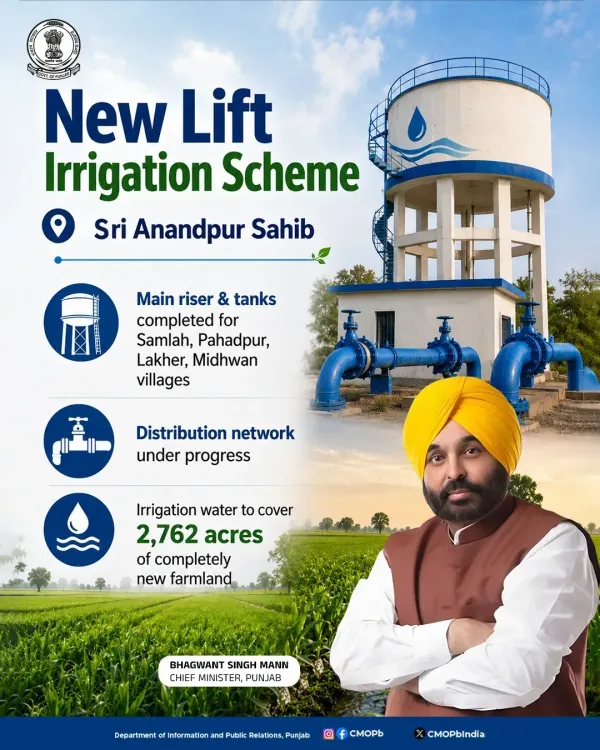
The Chief Minister's Office of Punjab announced completion of the main riser and tanks for a new lift irrigation scheme in the Changer area of Sri Anandpur Sahib, with distribution work ongoing. The scheme will open 2,762 acres of entirely new farmland to irrigation in the Shivalik foothills.
Key Takeaways
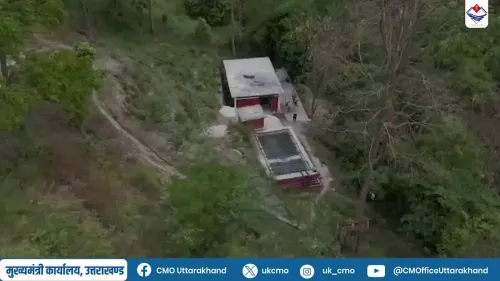
The Chief Minister's Office of Punjab confirmed completion of the main riser and tanks of a new lift irrigation scheme on June 5, 2026 .
The scheme serves villages Samlah and Pahadpur in the Changer area of Sri Anandpur Sahib , Rupnagar district.
Distribution network construction is currently in progress; water has not yet reached fields.
The scheme will bring irrigation to 2,762 acres of entirely new farmland, previously unirrigated.
The project continues Punjab's decades-long policy of extending surface water access to the sub-montane Kandi belt to reduce groundwater dependence.
Chief Minister Bhagwant Mann of the Aam Aadmi Party is credited with the initiative by the official CMO post.
The Chief Minister's Office of Punjab announced on Friday, June 5, 2026, that the state government has successfully completed the construction of the main riser and tanks of a new lift irrigation scheme serving the villages of Samlah and Pahadpur, with distribution work currently under way.
According to the official post, the scheme will bring irrigation water to 2,762 acres of entirely new farmland in the Changer area of Sri Anandpur Sahib. The announcement credits the progress to the leadership of Chief Minister Bhagwant Mann.
Context
The Changer area lies in the sub-montane Shivalik foothills of Rupnagar district, where undulating terrain has historically prevented gravity-fed canal irrigation from reaching higher-elevation villages. Lift irrigation schemes — which use pumping infrastructure to push water uphill — have been the primary tool for extending surface water access to such zones since the 1970s. The completion of the main riser and storage tanks marks the structural backbone of the project; the ongoing distribution network will connect individual fields to that supply.Policy Backdrop
Punjab's agricultural economy has faced a deepening groundwater crisis driven by decades of water-intensive wheat-paddy cultivation. Successive state governments have targeted the Kandi belt — the foothill strip running through districts including Rupnagar, Hoshiarpur, and Pathankot — with lift scheme investments to reduce farmer dependence on tubewells and stabilise crop yields. The Bhagwant Mann government, in office since March 2022, has continued this policy lineage, framing surface irrigation expansion as part of a broader push to protect farm incomes and conserve groundwater. The Sri Anandpur Sahib constituency has been among the blocks targeted for incremental additions to irrigated command area under this approach.Stakeholders and Impact
The primary beneficiaries are farming households in Samlah, Pahadpur, and surrounding Changer area villages, who currently rely on rain-fed cultivation or expensive tubewell irrigation for their fields. Access to canal-sourced lift water across 2,762 acres of previously unirrigated land could enable year-round or multi-crop cultivation, directly affecting farm incomes in one of Punjab's more topographically challenged agricultural belts. Broader stakeholders include the state's water management agencies responsible for maintaining the scheme once distribution is complete and water release schedules are formalised.What's Next
The immediate milestone to watch is the completion of the distribution network, after which the government is expected to announce water release schedules and formal beneficiary coverage details. The Punjab government has indicated similar lift schemes are under active consideration in other constituencies, suggesting this project may be part of a wider expansion of surface irrigation in the state's sub-montane zones. How quickly the completed riser and tank infrastructure translates into water reaching farmers' fields will be the practical measure of the scheme's impact.Point of View
Where gravity-fed canals cannot reach. For the Bhagwant Mann government, completing visible infrastructure in a constituency like Sri Anandpur Sahib carries both developmental and political weight ahead of future electoral cycles. The real test, however, lies in the distribution phase: past Punjab lift schemes have sometimes stalled between structural completion and actual water delivery to farms. If the Changer project delivers water on schedule, it could reinforce the government's credibility on agricultural welfare; delays would invite scrutiny on execution.
NationPress
21 Oct 2026
Frequently Asked Questions
What is the new lift irrigation scheme in Punjab for Samlah and Pahadpur?
It is a pumping-based irrigation infrastructure project in the Changer area of Sri Anandpur Sahib, Punjab, designed to deliver canal water uphill to villages that cannot be served by gravity-fed canals. The main riser and tanks have been completed; distribution work is ongoing.
How many acres will the Sri Anandpur Sahib lift irrigation scheme irrigate?
The scheme will provide irrigation water to 2,762 acres of entirely new farmland in the Changer area of Sri Anandpur Sahib, according to the official CMO Punjab announcement.
What is the Changer area in Punjab?
The Changer area is a sub-montane zone in the Shivalik foothills within the Sri Anandpur Sahib constituency of Rupnagar district. Its undulating terrain makes conventional gravity irrigation difficult, making lift schemes essential for agricultural water supply.
What is Bhagwant Mann's role in Punjab's irrigation projects?
Bhagwant Mann has been Chief Minister of Punjab since March 2022 , representing the Aam Aadmi Party. His government has continued the state's policy of expanding surface irrigation in the Kandi belt to reduce groundwater depletion from tubewell-dependent farming.
What is a lift irrigation scheme and why does Punjab need them?
A lift irrigation scheme uses pumps to raise water from canals or rivers to higher-elevation fields that gravity flow cannot reach. Punjab needs them in its Shivalik foothill zones because the terrain prevents conventional canal distribution, and they help reduce over-reliance on groundwater tubewells.