CM Office: Newli Lift Irrigation Scheme Brings Water to Tehri Farmers
Synopsis
The Uttarakhand Chief Minister's Office has confirmed that the Newli Lift Irrigation Scheme in Tehri district is now operational, delivering irrigation access to farmers in a hilly region where conventional gravity canals are impractical. The project aligns with national and state efforts to modernise hill agriculture and curb rural out-migration.
Key Takeaways
The Newli Lift Irrigation Scheme in Tehri district , Uttarakhand, is now operational and delivering water to farmers, per the CMO's announcement on 27 July 2026 .
Lift irrigation is the preferred solution in Garhwal's steep terrain where gravity-fed canals are not feasible.
The project aligns with the Pradhan Mantri Krishi Sinchayee Yojana , launched in 2015 , which supports irrigation expansion in hilly states.
Assured irrigation can enable multi-season cropping, improving farm income and reducing rural out-migration in Uttarakhand's hill districts.
Sustained operation — including reliable power for pumping and network maintenance — will determine the scheme's long-term effectiveness.
The Chief Minister's Office of Uttarakhand announced on Monday, 27 July 2026 that farmers in Tehri district are now benefiting from irrigation facilities delivered through the Newli Lift Irrigation Scheme (न्यूली लिफ्ट सिंचाई योजना), a state-backed infrastructure project designed to bring water to terraced farmlands in the Garhwal hills.
Context
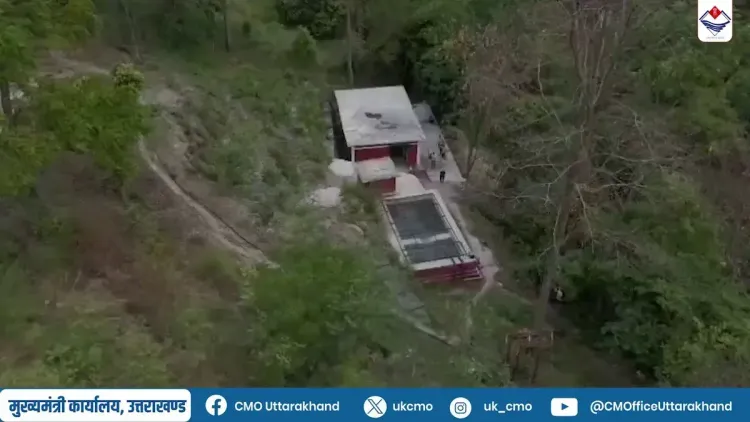
Tehri district sits in the rugged Garhwal region of Uttarakhand, where steep slopes and broken terrain make conventional gravity-fed canals largely impractical. Lift irrigation schemes — which pump water uphill through pipelines and distribution networks — are the primary engineering solution for delivering assured water supply to farms in such topography. The CMO post, shared with a video, confirms that the Newli Lift Irrigation Scheme is now operational and delivering water to cultivators in the area.
Uttarakhand, carved out as a separate Himalayan state in 2000, has long grappled with rain-dependent agriculture and limited irrigated area in its hill districts. Successive state governments have treated lift irrigation expansion as a key plank of agricultural policy, particularly in districts like Tehri where paddy, wheat, and horticultural crops suffer from erratic monsoon distribution.
Policy Backdrop
The scheme fits within a broader national framework anchored by the Pradhan Mantri Krishi Sinchayee Yojana (PMKSY), launched in 2015, which earmarked funds for expanding irrigation coverage across hilly and rain-shadow states through micro-irrigation and lift technologies. Uttarakhand has been a beneficiary state under PMKSY, using central allocations to complement its own budget outlays for hill-specific water delivery infrastructure.
Lift irrigation projects in Himalayan states are also viewed through a socio-economic lens: assured water supply raises cropping intensity and farm income, which policymakers link directly to reducing rural out-migration — a persistent challenge in Uttarakhand's hill districts where working-age populations have moved to plains cities in search of livelihoods. Similar lift schemes have been rolled out in comparable terrain across Himachal Pradesh and Uttarakhand's other Garhwal and Kumaon districts.
Stakeholders and Impact
The direct beneficiaries are farming households within Tehri district whose landholdings fall within the command area of the Newli scheme. Access to reliable irrigation allows farmers to shift from single-crop rain-fed cultivation to multi-season cropping, potentially improving household incomes and food security at the local level.
State irrigation officials and the rural development machinery are the implementing stakeholders, while the Uttarakhand government gains a visible infrastructure deliverable ahead of ongoing rural development reviews. For the broader agricultural ecosystem, functional lift schemes can also support horticulture expansion — a priority sector for Uttarakhand given its climate suitability for fruits and off-season vegetables.
What's Next
Attention will now turn to the scheme's sustained operation — including power supply reliability for pumping stations and maintenance of distribution networks — which historically determine whether lift irrigation projects deliver long-term value or fall into disuse. State budget allocations in the coming fiscal cycle for additional lift irrigation works in Tehri and other hill districts will be a key indicator of policy commitment. Any reported changes in irrigated area or crop output in Tehri over the next two agricultural seasons will serve as a practical measure of the scheme's on-ground impact.
Point of View
The post signals the state's intent to demonstrate infrastructure delivery in rural constituencies ahead of potential political cycles. The deeper policy test, however, is not commissioning but continuity — Uttarakhand's track record with lift schemes has historically been mixed on sustained operations and maintenance funding. If the Tehri scheme holds up over multiple cropping seasons, it could become a replicable template for the state's remaining unirrigated hill blocks.
NationPress
26 Oct 2026
Frequently Asked Questions
What is the Newli Lift Irrigation Scheme in Tehri?
The Newli Lift Irrigation Scheme is a government infrastructure project in Tehri district, Uttarakhand, that pumps water uphill through pipelines to deliver irrigation to farmers on steep hill terrain where gravity canals cannot reach.
Why is lift irrigation used in Uttarakhand's hill districts?
Lift irrigation is used because Uttarakhand's hilly and mountainous terrain — especially in the Garhwal region — makes conventional gravity-fed canals impractical. Pumping systems can deliver water to terraced farmlands at higher elevations.
Which national scheme supports lift irrigation in hilly states like Uttarakhand?
The Pradhan Mantri Krishi Sinchayee Yojana (PMKSY), launched in 2015, supports irrigation expansion including lift and micro-irrigation projects in hilly states like Uttarakhand.
How does irrigation help reduce out-migration from Uttarakhand's hills?
Reliable irrigation enables farmers to grow crops across multiple seasons, raising farm income. Higher agricultural productivity makes rural livelihoods more viable and reduces the pressure on working-age residents to migrate to plains cities.
Who announced the Newli Lift Irrigation Scheme becoming operational?
The Chief Minister's Office of Uttarakhand announced on 27 July 2026 via its official X account that the Newli Lift Irrigation Scheme in Tehri district is now providing irrigation facilities to farmers.