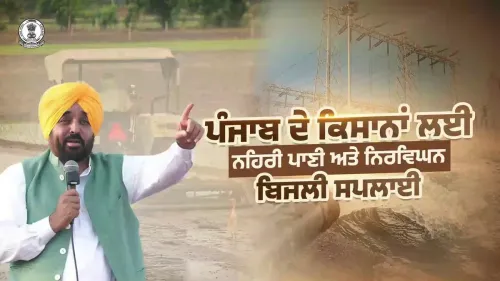
CM Bhagwant Mann Revives Defunct Lift Irrigation Scheme in Punjab

Synopsis
The Punjab Government under CM Bhagwant Mann has revived a lift irrigation scheme dormant for over a decade, repairing motors, panels, and the pump house with farmer participation to restore canal water access to 1,539 acres across five villages including Nikku, Nangal, and Raipur.
Key Takeaways
The Punjab Government revived a lift irrigation scheme serving villages Nikku, Nangal, Dukli Meghpur, Raipur, and Patti .
The scheme had been non-functional for more than a decade before the current administration intervened.
Restoration work covered motors, electrical panels, and the pump house, carried out with farmer participation .
Canal water has been restored to 1,539 acres of farmland.
The revival reduces farmers' dependence on groundwater in a state facing severe aquifer depletion.
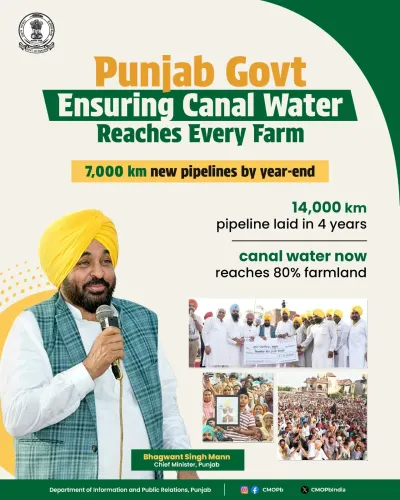
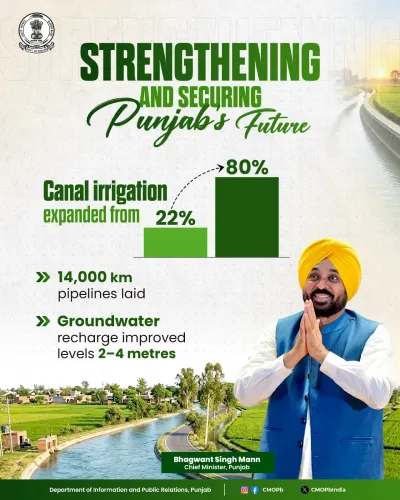
The initiative is part of a broader pattern of reviving defunct surface water infrastructure under CM Bhagwant Mann .
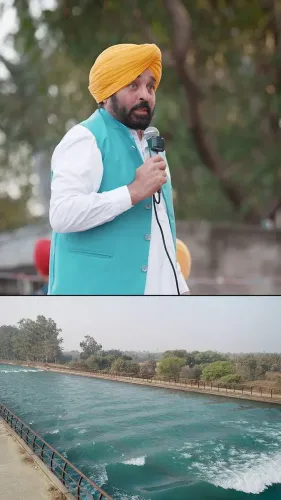
The Chief Minister's Office of Punjab announced on Friday, 5 June 2026 that the Punjab Government, under Chief Minister Bhagwant Mann, has revived a long-neglected lift irrigation scheme restoring canal water supply to 1,539 acres of farmland across five villages.
According to the official post, the revived scheme now serves the villages of Nikku, Nangal, Dukli Meghpur, Raipur, and Patti. The scheme had remained non-functional for more than a decade before the current state government undertook its restoration.
Context
The lift irrigation scheme had fallen into disuse over more than ten years, leaving farmers in the affected villages without access to canal water for their fields. Motors, electrical panels, and the pump house had deteriorated to the point where the system could no longer function. The revival was carried out with direct participation from local farmers, underscoring a community-driven approach to restoring the infrastructure.Policy Backdrop
Punjab developed a network of lift irrigation schemes from the 1980s onward, particularly in the Kandi and sub-mountainous belts, to extend canal coverage to elevated or tail-end farmlands where gravity-fed flow is unavailable. These schemes draw from the canal network anchored by the Bhakra Nangal dam system. Over successive administrations, many such pumping installations fell into disrepair due to funding shortfalls and inadequate maintenance budgets, leaving large tracts of agricultural land dependent on groundwater extraction. Revival of defunct lift schemes has periodically featured in state government agendas as a means of optimising surface water use and reducing pressure on rapidly depleting underground aquifers.Stakeholders and Impact
The primary beneficiaries are farmers across the five villages who had been deprived of assured canal water supply for over a decade. Restoration of 1,539 acres of irrigated farmland directly reduces those farmers' dependence on costly and ecologically damaging groundwater pumping. Punjab faces acute groundwater stress, with a significant portion of its agricultural blocks classified as over-exploited, making surface water revival schemes particularly consequential for long-term farm viability. The farmer-participation model used in this restoration also signals a potential template for community-led maintenance of rural water infrastructure.What's Next
The announcement is likely to be followed by similar revival efforts at other defunct lift irrigation installations across the state. Observers will watch whether the Punjab Government backs these interventions with dedicated budgetary allocations for irrigation operations and maintenance in its forthcoming fiscal plan. Sustained funding for pump upkeep and electricity costs remains the critical variable that has historically caused such schemes to lapse after initial restoration. The broader test for the Bhagwant Mann administration will be whether revived schemes remain operational over multiple crop seasons rather than falling back into disuse.Point of View
High-visibility rural infrastructure fixes to consolidate its agrarian support base ahead of future electoral cycles. Restoring defunct canal infrastructure, rather than building anew, is fiscally prudent and politically resonant in a state where farmer distress remains a dominant political theme. However, the long-term credibility of such announcements hinges on sustained operations and maintenance funding — the precise gap that caused these schemes to collapse under previous administrations. If the state can institutionalise community-based upkeep, this model could meaningfully contribute to Punjab's urgent groundwater conservation challenge.
NationPress
21 Oct 2026
Frequently Asked Questions
What is the lift irrigation scheme revived in Punjab?
It is a pumping-based canal water supply system that delivers water to elevated or tail-end farmlands in villages including Nikku, Nangal, Dukli Meghpur, Raipur, and Patti, which had been non-functional for over a decade before being restored by the Punjab Government in 2026.
How many acres of farmland benefit from the revived Punjab lift irrigation scheme?
The revival of the scheme has restored canal water access to 1,539 acres of farmland across the five affected villages.
What work was done to revive the lift irrigation scheme in Punjab?
Motors, electrical panels, and the pump house were repaired as part of the restoration, which was carried out with the participation of local farmers.
Why did the Punjab lift irrigation scheme shut down in the first place?
Like many such schemes across the state, it fell into disuse due to funding shortfalls and inadequate maintenance over successive administrations, remaining non-functional for more than a decade.
How does reviving lift irrigation schemes help Punjab farmers?
Restoring canal water supply reduces farmers' dependence on groundwater pumping, which is both costly and environmentally damaging in Punjab, a state where a large share of agricultural blocks are classified as over-exploited for groundwater.